
How to Check LCD Brightness and Color Consistency?
Wholesale buyers should check LCD brightness and color consistency by testing multiple samples from the same batch, measuring brightness output, checking panel uniformity, and comparing color performance before approving a bulk order - not by relying on a single unit or a spec sheet number. For repair shops, refurbishment companies, and distributors buying in volume, this is not a cosmetic detail - it is a purchasing risk control step. Two screens with identical listed specifications can still perform differently once installed, and that gap is where warranty claims and customer complaints usually start.
This guide is written for buyers evaluating iPhone replacement LCD screens before a bulk order - not for end users replacing a single screen. It's one part of a broader iPhone LCD Screen Quality Control Guide for Wholesale Buyers, and covers what brightness and color consistency actually mean in a wholesale context, how to test for them during sample evaluation, and what a supplier's internal quality process should look like before you commit to a production run.

Quick Answer: How Do Buyers Check LCD Brightness and Color Consistency?
Before placing a bulk order, professional buyers typically evaluate:
- Brightness level - measured output compared against the supplier's stated specification
- Brightness uniformity - whether output is consistent across different areas of the same panel
- Color temperature - whether whites appear neutral rather than shifted warm or cool
- White balance - how evenly color renders across a full white screen
- Viewing consistency - how the panel looks at different viewing angles
- Sample-to-batch consistency - whether the approved sample matches what actually ships in bulk
Each of these is explained in more detail below, along with how to test for it during sample evaluation.
Why LCD Brightness and Color Consistency Matter in Wholesale Purchasing?
For a repair shop or refurbishment business, a screen isn't just a component - it's the first thing a customer notices when they pick up their phone. If brightness or color looks noticeably different from the original display, that difference gets attributed to the repair, not to the part. This turns a component-level issue into a reputation issue for the business that installed it.
The financial impact compounds from there. A batch with inconsistent brightness or an off color tone tends to generate a higher rate of warranty claims and return requests, even when the individual units are technically functional. For a business ordering in volume, that means added labor to process returns, replacement stock to cover claims, and - over time - a harder conversation with the shop's own customers about display quality.
This is also one of the more reliable ways to evaluate a supplier before committing to a larger order. A supplier that can consistently deliver even brightness and stable color across a full batch is demonstrating something about their production controls that a spec sheet alone cannot show. Poor display consistency can create additional operational costs even when the unit price looks attractive, which is why experienced buyers treat display testing as part of supplier evaluation, not just product evaluation.
Understanding LCD Brightness Specifications
LCD brightness is typically expressed in nits (candelas per square meter) - a measurement of how much light the panel outputs. In practice, this number only tells part of the story for a buyer.
A few things worth understanding before comparing supplier specifications:
- Measured brightness varies by testing environment. Ambient light, the measurement tool used, and the point on the screen being measured can all produce different readings, even for the same panel.
- A single brightness figure doesn't describe uniformity. A screen can hit its stated peak brightness in the center while running visibly dimmer near the edges or corners - a common issue that a spec sheet number won't reveal.
- Two suppliers listing the same nits figure can still perform differently. Panel source, backlight quality, and production consistency all affect how that number holds up across a full batch, not just on a single tested unit.
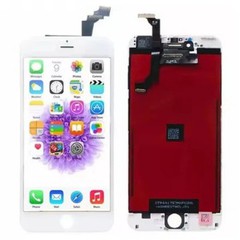
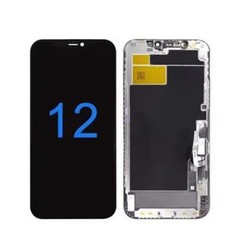
None of this means a specific brightness number is inherently "good" or "bad" in isolation - the more useful question for a buyer is whether the brightness is consistent across samples and across the batch, and whether it holds up against what the supplier actually states. This matters just as much for older, high-volume models as it does for newer ones: an iPhone 11 replacement LCD screen and an iPhone 12 replacement LCD screen will carry different baseline specifications, but the same testing logic applies to both.
How to Test LCD Brightness Before Bulk Ordering?
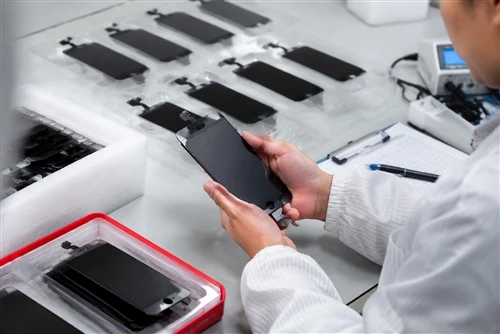
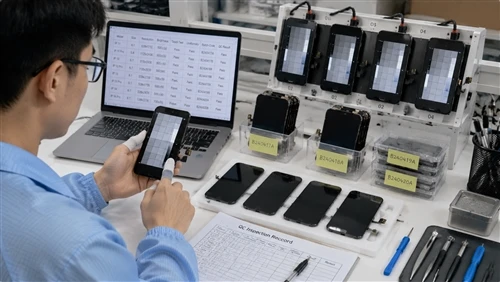
Testing brightness at the sample stage is a distinct step from testing color, and it's worth doing deliberately rather than as a quick glance. The goal isn't to judge one screen - it's to check whether performance holds steady across several units from the same production run.
LCD Brightness Testing Checklist
- Test multiple samples from the same batch, not just one unit
- Compare maximum brightness level against the supplier's stated specification
- Check brightness consistency across screens from the same order
- Test different display areas on each screen (center, edges, corners)
- Record test results for each sample, including any deviation
- Compare sample performance against supplier specifications and flag any gap before approving the order
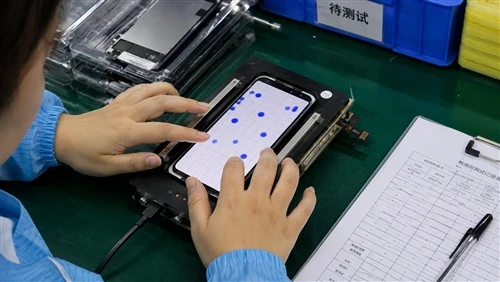
A single well-performing sample is useful information, but it is not proof of batch stability. Wholesale purchasing means the buyer is effectively trusting that the tested sample represents hundreds or thousands of units that haven't been individually inspected yet - which is why testing more than one unit at this stage matters more than it might for a single-screen repair. Brightness is only one part of this evaluation; most buyers run it alongside a fuller iPhone LCD sample-testing checklist that also covers touch response and physical build quality.
Request representative LCD samples and our sample-testing checklist before placing a bulk order so your team can run this evaluation against your own criteria before committing to volume.

How to Check Color Consistency on Replacement LCD Screens?
Color consistency is evaluated separately from brightness, though the two are often tested side by side. Buyers typically check:
- White balance - does a full white screen render evenly, or does it show patches of warm or cool tint?
- Color temperature - does white appear neutral, or does it lean visibly yellow or blue compared to an original display?
- Saturation - do colors appear accurate, or noticeably muted or oversaturated?
- Brightness difference across the panel - uneven brightness often shows up as an uneven color appearance as well, since the two are visually linked.
- Image uniformity - when displaying a solid color or a standard test image, does the panel look consistent edge to edge?
Color deviation between batches is a common source of downstream problems for repair businesses. A shop that installed screens from an earlier order with a neutral white tone, then receives a later batch with a visibly warmer tone, will often see this reflected in customer dissatisfaction, installation complaints, and increased pressure on warranty terms - even if each individual batch technically passed inspection on its own.

Common LCD Brightness and Color Problems Buyers Should Identify
| Problem | Possible Cause | Business Impact | How Buyers Check |
|---|---|---|---|
| Uneven brightness | Backlight assembly inconsistency or panel defect | Visible dimming in certain areas, customer complaints after installation | Compare brightness across center, edges and corners on multiple samples |
| Yellow tint | Color temperature drift or backlight variation | Screen looks aged or mismatched next to original display | Compare white balance against a reference screen under consistent lighting |
| Cold color tone | Panel or backlight color calibration variance | Noticeable color mismatch, especially on skin tones and white backgrounds | Side-by-side comparison with a known-good reference unit |
| Inconsistent white display | Uneven backlight diffusion | Patchy or blotchy appearance on white screens | Display a full white image and inspect for uniformity across the panel |
| Dark corners | Backlight leakage or assembly gap | Reduced brightness perception at panel edges | Check brightness specifically at all four corners, not just center |
| Batch variation | Inconsistent production or sourcing between runs | Approved sample doesn't match what actually ships | Test units from different points within the same shipment, not just the first box opened |
Dark corners and uneven brightness near the edges are often the visible symptom of a deeper panel issue rather than a standalone defect, which is why it's worth pairing brightness testing with a dedicated dead pixels and backlight leakage inspection rather than treating the two checks separately.
Sample Testing vs Bulk Order Quality Verification
One of the more common gaps in wholesale purchasing is treating sample approval as the final quality decision. A good sample does not always guarantee stable bulk production. Sample units are sometimes produced with more individual attention than a full production run, or sourced from a different batch than what eventually ships.
This is why professional procurement teams build verification steps into the order itself rather than relying solely on the pre-order sample - including sample-to-bulk consistency controls such as spot-checking units from different points within a shipment, requesting batch test records, and comparing early-order performance against the original approved sample. A supplier that welcomes this kind of ongoing verification, rather than treating the sample as the end of the conversation, is generally signaling a more mature quality process.
How Professional LCD Manufacturers Control Brightness and Color Quality?
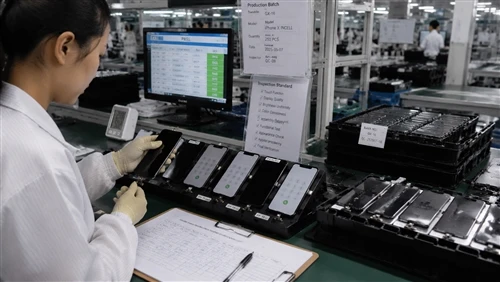
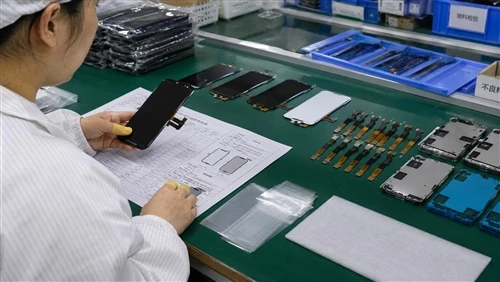
A manufacturer with mature quality control typically has checkpoints at several stages of production rather than a single inspection at the end. In general, this includes:
- Incoming material inspection - checking panels, backlight components and related materials before they enter production
- In-production inspection - checkpoints during assembly rather than only after the unit is complete
- Brightness testing - measuring output at defined points during or after production, not only on request
- Color checking - evaluating white balance and color temperature against an internal reference standard
- Batch records - documentation that ties test results to specific production runs, so issues can be traced back if they appear later
- Pre-shipment inspection - a final check before units leave the factory, ideally covering a sample set drawn from across the batch rather than a single unit
Buyers evaluating a new supplier should ask how each of these steps is actually performed, rather than assuming a quality control process exists because it's mentioned on a website. Suppliers who can describe their process in specific, procedural terms - what is checked, at what stage, and how results are recorded - are generally easier to verify than those who answer only with general assurances.
Need to verify LCD quality before your next bulk purchase?
Request our latest iPhone LCD sample package and QC checklist, and see how our brightness and color testing process works before you commit to a full order.

Comparison: What Buyers Are Actually Evaluating?
| Inspection Item | Why It Matters | Buyer Risk |
|---|---|---|
| Brightness Level | Directly affects the customer's viewing experience after installation | Customer complaints and negative reviews for the repair business |
| Color Consistency | Affects how closely the replacement matches the original display | Return requests and installation disputes |
| Batch Testing | Confirms whether supply is stable across a full order, not just the sample | Larger financial exposure on bulk orders if quality drifts mid-batch |
Common Mistakes When Evaluating LCD Display Quality
- Checking only price. A lower unit price can be offset many times over by return processing costs if brightness or color consistency is unreliable.
- Testing only one sample. A single unit says little about how consistent the rest of a batch will be.
- Ignoring batch consistency. Approving a sample without a plan to verify later shipments leaves quality unmonitored after the order is placed.
- Trusting specifications without verification. A stated nits value or color rating is a starting point for evaluation, not a substitute for testing.
- Comparing different quality grades together. Comparing an aftermarket panel's brightness and color performance directly against a different grade without accounting for that difference can lead to an unfair - and misleading - supplier comparison.
FAQ
How many LCD samples should buyers test before bulk ordering?
Testing a single unit is generally not enough to judge batch consistency. Most buyers test several samples - ideally drawn from different points within the sample shipment - to get a more realistic picture of what a full order will look like.
Can two LCD screens with the same specifications have different brightness?
Yes. Listed specifications describe a target, not a guarantee for every unit. Production variation, backlight assembly differences, and testing conditions can all produce measurable differences between two screens rated at the same nits value.
How do manufacturers control color consistency?
Through checkpoints at multiple stages of production - checking incoming materials, testing during assembly, and verifying finished units against an internal reference standard before shipment - rather than relying on a single inspection at the very end.
What information should buyers request from an LCD supplier?
Buyers evaluating a new supplier typically ask for details on brightness and color testing procedures, how batch records are kept, and what pre-shipment inspection covers, in addition to standard product specifications.
How can wholesalers reduce LCD return rates?
Testing multiple samples before ordering, verifying batch consistency once the order ships, and working with a supplier that documents its quality process are the main levers buyers use to reduce returns tied to display quality.

Ready to move forward? Send us your required iPhone models, quantities and quality requirements to receive a wholesale quotation, and our team will include our current sample-testing checklist so you can evaluate brightness and color consistency yourself before committing to a full order.