


Sample Quality vs Bulk-Order Quality
Introduction
A sample that passes every test on your bench answers only the first half of a wholesale purchasing decision. It confirms that a specific iPhone LCD configuration is capable of meeting your display, touch, and assembly requirements. It does not confirm that a much larger production quantity will perform the same way. For wholesale buyers moving from an approved sample to a bulk order, the real question is whether the supplier can reproduce that approved quality consistently as order volume increases. This guide shows buyers what to compare, what to document, and what to verify before scaling up.
Quick Answer: Does Good Sample Quality Guarantee Good Bulk Quality?
Not automatically. A sample evaluates one unit or a small number of units, which may not fully represent the variation present across a larger production batch. A bulk order, by contrast, involves consistency across a much larger quantity, produced across different production runs and component lots. Sample approval and batch consistency are related but separate verification tasks - and buyers who approve a supplier based only on a general impression such as "the sample looked good" are skipping the second task entirely. What should be approved instead is a measurable, documented specification that later shipments can be checked against.
| What the Buyer Is Verifying | Sample Stage | Bulk-Order Stage |
|---|---|---|
| Product compatibility | Yes | Yes |
| Basic display performance | Yes | Yes |
| Touch performance | Yes | Yes |
| Physical assembly quality | Yes | Yes |
| Approved specification | Yes | Must remain consistent |
| Batch-to-batch consistency | Limited evidence | Requires ongoing verification |
| Variation within a larger shipment | Cannot be fully confirmed | Can be inspected through batch controls and sampling |
| Supplier process consistency | Partially evaluated | Verified over repeated production and delivery |

Why Sample Quality and Bulk-Order Quality Can Differ?
A difference between an approved sample and a later bulk shipment doesn't automatically mean a supplier acted in bad faith. In most cases the gap comes from ordinary production variables that buyers can investigate rather than assume:
- Component sourcing differences between the batch the sample came from and later batches
- Display panel or touch component variation across different component lots
- Backlight-related variation between production runs
- Assembly process variation, including differences in operator handling or line setup
- Changes to production materials or processes that were not communicated to the buyer
- Inconsistent execution of quality-control steps from one batch to the next
- Insufficient batch testing before shipment
- Mixed lots within a single shipment
- An approved specification that was never clearly written down in the first place
- A communication gap between what was approved at sample stage and what production actually built to
- The possibility that the approved sample did not fully represent the variation present in normal production output
Rather than assuming intent, the more useful procurement question is this: is the approved sample representative of normal production, and does the supplier have controls that connect the approved requirements to what actually ships later? That question - not a search for blame - is what the rest of this article works through.
What Buyers Should Compare Between the Approved Sample and Bulk Screens?
Display Performance
Compare brightness consistency, color appearance, and visual uniformity between the approved sample and units from a later batch under the same viewing conditions. Look for display artifacts, dead pixels, abnormal lines, and uneven backlight illumination. Numerical specification claims should only be compared against verified source data from the supplier - don't rely on assumed industry averages.
Touch Performance
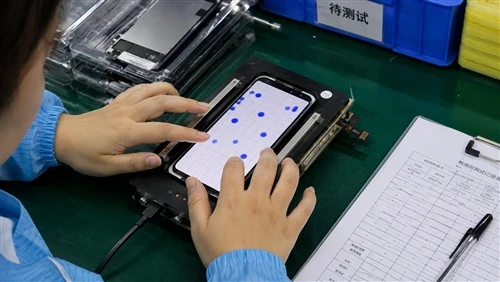
Check full-screen touch coverage, edge and corner response, and multi-touch behavior. Watch for intermittent or delayed response that wasn't present on the approved sample. Wherever practical, use the same test conditions and acceptance criteria for both the sample and later batches so the comparison is actually meaningful rather than anecdotal.
Backlight and Visual Uniformity
Judge visual uniformity across several units, not a single screen, since brightness can vary unit-to-unit even within a batch that is broadly acceptable. Compare edge illumination where applicable, and keep test conditions (ambient light, viewing angle, power source) consistent between comparisons. Not every visible difference between units is automatically a manufacturing defect - some variation falls within normal production tolerance, which is exactly why documented acceptance criteria matter more than a visual impression.
Physical and Assembly Consistency
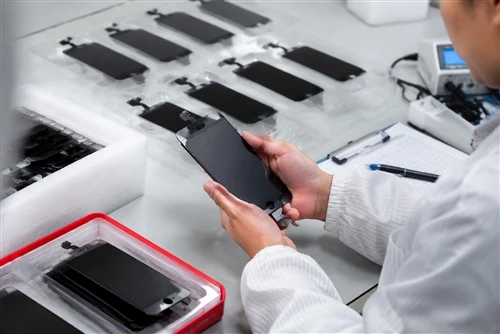
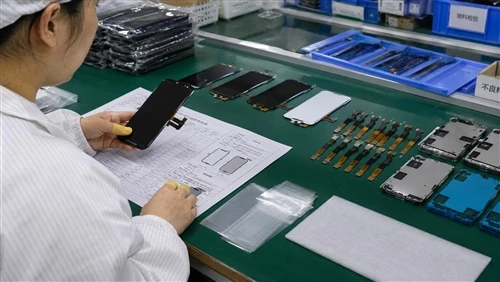
Inspect flex cable condition, connector condition, frame or assembly fit, protective components, visible workmanship, and packaging condition. Physical inspection should distinguish between a manufacturing defect, shipping damage, handling damage, and installation-related damage - treating all four the same way makes it harder to hold the right party accountable and easier to make an unfair accusation.
Compatibility and Functional Verification
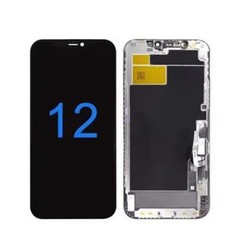
Confirm the functional requirements relevant to the specific iPhone models being purchased, and verify those requirements against the actual product specification and intended repair use rather than assuming compatibility carries over automatically between similar-sounding product listings. Buyers should apply the same documented criteria to each iPhone series and product configuration rather than assuming that one model's sample results will represent another - a good starting reference for building out this checklist is the iPhone 12 Series LCD Screens lineup.

The Biggest Risk: Approving a Sample Without Defining What Was Approved
"The sample looks good" is a weaker procurement position than most buyers realize. It's an impression, not a record, and it gives a supplier nothing concrete to be held to when a later batch is evaluated. A documented sample approval standard should record:
- Product model and configuration
- Product type or quality level as defined by the supplier
- Sample identification or reference number
- Relevant specification
- Visual inspection criteria
- Display test criteria
- Touch test criteria
- Any known, acceptable limitations
- Packaging requirements, where relevant
- Date of approval
- Batch or lot information, if available
- Buyer and supplier reference information
This documentation doesn't eliminate every future dispute, but it does reduce ambiguity considerably. When a later shipment is evaluated, the buyer is comparing it against a written standard rather than a memory of how the sample looked weeks or months earlier.
How to Build a Sample-to-Bulk Consistency Check?
Step 1: Define the Product Being Approved
Identify exactly what is being evaluated - iPhone model, the supplier's specific product designation, display configuration, specification or quality requirement, and intended market or repair application. Don't assume different suppliers use identical quality-grade terminology; a name or grade label alone rarely defines actual performance.
Step 2: Test More Than a Single Point of Performance
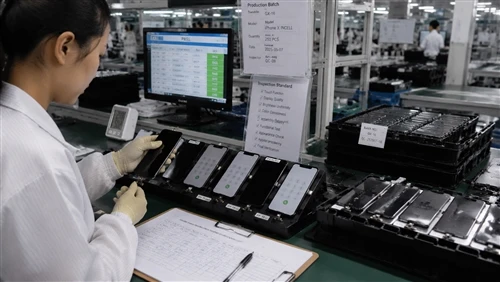
The goal is to evaluate every relevant performance area - display, touch, visual inspection, assembly, and relevant functional checks - not simply power on one screen and call it approved. A structured approach here matters more than most buyers assume, and following an iPhone LCD sample-testing checklist before committing to a supplier is what separates a documented evaluation from a quick glance at one unit.
Step 3: Record the Approved Criteria
Keep inspection records, photos where appropriate, test records, sample identification, and the agreed specification. This becomes the reference point every later batch gets compared against.
Step 4: Ask How the Supplier Controls Production Consistency
Investigate the supplier's process instead of relying only on how the approved sample looked. Useful questions include: How are incoming components checked? How are production lots identified or managed? What testing happens before shipment? How are abnormal units separated out? How are material or process changes handled and communicated? What records are retained, and how can a buyer compare a later batch against the approved reference? Don't assume or invent a supplier's answers - ask directly and document what's actually said.
Step 5: Verify the First Bulk or Trial Batch
A controlled initial order provides more evidence than a small sample ever can. It exposes packaging, delivery, and batch consistency at closer to real operating scale, and it is where delivery performance and defect handling first get tested under real conditions.
Step 6: Use Incoming Inspection to Compare Actual Batch Performance
Set up incoming inspection procedures sized to your actual purchasing volume and risk tolerance. Buyers who skip this step are relying entirely on the supplier's own outgoing checks, with no independent verification. A structured iPhone LCD incoming inspection checklist applied consistently to every arriving batch turns "the last shipment seemed fine" into an actual comparison against the approved reference.
Step 7: Review Results Before Increasing Volume
Weigh evidence from sample testing, first-batch performance, consistency observations, delivery performance, defect handling, and communication quality before scaling up. One successful batch is a good sign - it is not proof that every future batch will behave the same way.

A Practical Sample-to-Bulk Quality Verification Matrix
Use this matrix to separate one-time approval checks from the checks that should be repeated on every incoming batch.
| Verification Area | Approved Sample | First Trial/Initial Batch | Later Bulk Orders | What the Buyer Should Record |
|---|---|---|---|---|
| Display appearance | Checked | Re-checked | Spot-checked | Photos, brightness/color notes |
| Touch response | Checked | Re-checked | Spot-checked | Pass/fail per test area |
| Brightness/visual consistency | Baseline set | Compared to baseline | Compared to baseline | Any deviation noted |
| Dead pixels or visible defects | Checked | Checked | Checked each batch | Count, location, unit ID |
| Backlight/illumination consistency | Baseline set | Compared to baseline | Spot-checked | Deviation description |
| Physical assembly | Checked | Checked | Sampled per shipment | Photos of any issue |
| Packaging | Reviewed | Reviewed | Reviewed each shipment | Damage/condition notes |
| Batch identification | N/A | Recorded | Recorded every batch | Batch/lot reference |
| Defect handling process | Discussed | Tested in practice | Monitored ongoing | Response time, resolution |
| Supplier communication | Established | Evaluated | Evaluated ongoing | Responsiveness log |
Sample Approval vs Batch Consistency: The Key Difference
These are two different questions, and conflating them is where most procurement risk hides.
- Sample approval asks: "Does this product meet my requirements?"
- Batch consistency asks: "Can the supplier repeatedly deliver products that remain within the requirements I approved?"
The first question can be answered in a single test session. The second can only be answered over time, through documented comparison across multiple shipments. Product capability and production repeatability are different things, and only one of them is confirmed by a sample. For a wholesale buyer, sample approval is the reference point - not the end of quality verification. Later batches still need to be checked against the same requirements, which is the core idea behind our broader iPhone LCD quality-control framework for wholesale buyers.
Warning Signs Buyers Should Investigate Before Scaling Up
- The supplier can't clearly identify the approved product specification. This matters because without a shared reference, "consistent quality" becomes a matter of opinion. Ask for the specification in writing before increasing order size.
- Samples and quotation descriptions are inconsistent. A mismatch between what was tested and what's being quoted is worth resolving before payment, not after delivery.
- Product quality terminology is vague ("premium grade," "high quality") without a defined meaning. Ask the supplier to define exactly what the term covers.
- No clear sample reference exists to compare later batches against. Request one before placing a larger order.
- The supplier can't explain how batch testing is performed. This doesn't necessarily mean testing isn't happening, but it does mean the buyer has no way to verify it.
- Product changes aren't communicated. Ask directly whether any component, material, or process changes have occurred since the sample was approved.
- Later units visibly differ from the approved sample. This is the clearest signal to slow down and investigate before the next order.
- Inspection results can't be traced to a batch or shipment, where such traceability is relevant to the buyer's risk level.
- Repeated inconsistencies aren't investigated or documented by the supplier when raised.
- Defect handling criteria are unclear - ask what happens, specifically, when a defect is confirmed.
Common Buyer Mistakes When Moving from Samples to Bulk Orders
Mistake 1: Approving a Product Based Only on a General Impression. A documented, measurable requirement is something both sides can be held to; "it looked fine" is not.
Mistake 2: Testing Only One Performance Area. A screen that passes a display check can still fail on touch response or assembly - all three areas matter.
Mistake 3: Increasing Order Volume Without Reviewing Batch Evidence. A successful sample is only the starting reference, not a green light on its own. Before increasing volume, review the results of the first trial batch, incoming inspection, and any documented deviations.
Mistake 4: Increasing Order Volume Before Testing a Representative Batch. A controlled progression - sample, trial batch, then larger orders - surfaces problems while the exposure is still small.
Mistake 5: Failing to Record What Was Approved. Without a record, later disagreements become he-said-she-said rather than a comparison against an agreed standard.
Mistake 6: Comparing Bulk Orders Against Memory Instead of Documented Criteria. Memory of how a sample looked fades and shifts; a written record doesn't.
Mistake 7: Treating Every Problem as a Manufacturing Defect. Not every issue found on arrival originated at the factory. Buyers should distinguish manufacturing issues, shipping damage, handling damage, and installation-related damage before raising a claim - understanding the difference between installation damage versus a manufacturing defect protects the buyer's credibility with the supplier and avoids disputing a claim that won't hold up.
What Buyers Should Request From a Supplier Before a Larger Order?
- Available model list
- Product descriptions
- Relevant specifications
- Sample information and reference
- Test or inspection information where available
- Packaging information
- Batch or shipment identification practices, where applicable
- Warranty terms
- Defect reporting procedure
- Quotation including models and quantities
- MOQ information
- Lead time information
The purpose here isn't paperwork for its own sake. The goal is to reduce the gap between what the buyer tested and what the supplier actually ships later. Not every supplier will provide this information in identical formats, and that's expected - what matters is that the substance is available and verifiable.
Buyers finalizing which models to carry can request our current model list, including coverage for iPhone X Series Replacement Screens, alongside the specifications and sample policy for each configuration.
Buyer Checklist: How to Verify Sample-to-Bulk Consistency?
Before approving samples
- Confirm the exact iPhone models and product configuration being evaluated
- Define the relevant quality and performance requirements
- Test display performance
- Test touch response
- Inspect physical assembly and connectors
- Record important observations
- Identify the approved sample or reference information
Before placing the first larger order
- Confirm that the quoted product matches the approved product description
- Confirm how the supplier manages production or batch consistency
- Confirm relevant testing or inspection procedures
- Confirm packaging and shipment requirements
- Confirm warranty and defect-reporting procedures
- Decide on a practical incoming inspection plan
After the batch arrives
- Inspect the shipment using defined acceptance criteria
- Compare relevant performance with the approved reference
- Record any meaningful variation
- Separate confirmed defects from handling or installation issues
- Report issues with clear model, quantity, and evidence
- Review results before increasing future order volume
- Following this checklist reduces uncertainty in the purchasing process - it does not guarantee zero defects, and no checklist can promise that.

Need to verify a supplier before your next order?
If you're evaluating replacement LCD suppliers before committing to bulk volume, request representative samples so you have a documented reference to compare later batches against.
Request Representative Samples
FAQ
Does a good iPhone LCD sample guarantee that the bulk order will be the same?
No. A good sample confirms that a specific product configuration can meet your requirements. It does not by itself confirm that every future production batch will match it - that requires ongoing verification through documented comparison and incoming inspection.
How many samples should a wholesale buyer test before placing a larger order?
There's no universal number. The right sample quantity should be based on the model mix involved, the value of the order you're working toward, your history with the supplier, and the level of consistency risk you need to control. A first-time supplier relationship generally warrants more testing than a supplier you've ordered from repeatedly with consistent results.
What should buyers record when approving an LCD sample?
At minimum: the product model and configuration, sample reference, agreed specification, display and touch test criteria, any known limitations, packaging requirements, and the date of approval. This record becomes the standard later batches are checked against.
How can buyers check consistency when the first bulk shipment arrives?
By applying defined acceptance criteria through an incoming inspection process, and comparing the results directly against the documented sample-approval reference rather than a general impression of how the sample looked.
What should buyers do if bulk screens perform differently from the approved sample?
Collect evidence - photos, unit identification, model and quantity affected, and inspection results - and raise it with the supplier against the documented approval record. Distinguish manufacturing issues from shipping, handling, or installation damage before framing it as a defect claim.
Should buyers place a trial order before increasing purchase volume?
In most cases, yes. A controlled trial order provides evidence about batch consistency, packaging, delivery performance, and how the supplier responds to issues - evidence that a small sample alone can't provide.
Conclusion
A well-performing sample tells a wholesale buyer that a product can meet their requirements. It doesn't tell them whether the supplier can deliver that same performance consistently as order volume grows. Closing that gap takes a documented approval standard, a structured comparison framework, a controlled trial batch, and ongoing incoming inspection.
We supply iPhone LCD screens for wholesale, distribution, and repair-business purchasing. We do not provide local phone repair services or single-screen installation.
Send us your required models, estimated quantities, target market, and quality requirements, and we can discuss representative samples, batch consistency controls, and a suitable wholesale quotation.