



How to Compare Two iPhone LCD Manufacturers?
Two iPhone LCD factories can quote similar prices and still be offering different screen specifications, quality-control methods, MOQs, warranty terms or lead-time bases. Until those conditions are aligned, comparing prices or scoring the factories can point you to the wrong supplier.
The short answer: fix one purchasing specification first. Then compare what each manufacturer actually controls, what evidence supports its quality claims, how its samples perform under identical tests, and whether its delivery and commercial terms fit your order. Check mandatory requirements before any scoring, and verify the result with a trial order before committing to volume.
This comparison is one stage of choosing and verifying an iPhone LCD manufacturer, and it applies once you already have two candidates and need to compare iPhone LCD manufacturers on equal terms. The method has five layers: a comparison baseline, evidence verification, mandatory qualification, an evidence-based scorecard and validation before scale.

Start With the Same Purchasing Requirements
Before comparing manufacturers, make sure both are asked to supply the same requirement. Give each factory one written sheet that fixes:
- the iPhone model and your own purchasing specification for it
- display technology and assembly configuration
- display, touch, brightness, color and appearance requirements
- packaging and labeling
- quantity per model and in total
- sample conditions
- delivery destination and delivery terms
- warranty expectations
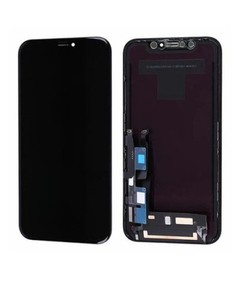
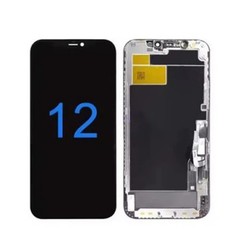
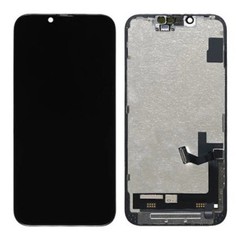
Same iPhone model does not mean the same replacement screen specification. When both factories quote an iPhone 11 replacement LCD screen assembly, confirm that both offers meet the same display-technology, assembly and acceptance requirements. Suppliers will use different internal SKUs, so record each supplier's own product reference and map it to your purchasing specification before any price goes into a shared table.
AAA and Premium are grades that each supplier defines for itself. OEM and Original are claims about origin that need supporting evidence, and Incell names a construction type. None of them replaces a written specification. If the two offers turn out to be different products, mark the difference and decide whether you accept both options, instead of comparing prices as if they were equivalent.
Verify What Each Manufacturer Actually Does
Compare responsibility, not size. For specification management, component purchasing, assembly or processing, testing, inspection, rework, packaging, warehousing, subcontracted steps and defect handling, ask whether the step is performed in the factory, managed directly by the manufacturer, outsourced, bought in, or only coordinated by the supplier.
Do not assume either manufacturer produces its own LCD cells, driver ICs or glass. Many assemble from purchased components, which can be entirely legitimate when the process is controlled and the responsibility is clear.
Floor area, photographs and equipment counts do not show who answers for your specific product. The useful question is who carries verifiable responsibility for the product, process, quality and after-sales service you are buying. Gathering that evidence is a separate task; here you only need each factory's answers in a form you can put side by side.

Compare Product Specifications, Not Grade Names
Grade names, origin claims and construction terms describe different things, so none of them says enough until it is tied to a stated specification. Ask each factory to confirm in writing:
- the actual display technology, and its own product reference mapped to your specification
- the assembly configuration
- display and touch performance, plus brightness and color requirements
- appearance and fitting requirements
- compatibility with the target model
- the test conditions and acceptance criteria that apply
Do not assume one technology suits every iPhone model. Some model families include both LCD and OLED original designs, so an aftermarket LCD offered for an OLED model is a different technology from the original part. For a model such as an iPhone XR replacement screen assembly, have both factories state the display technology and configuration they are quoting, and treat any mismatch as a specification difference. Price and quality comparisons only mean something when the two products are comparable enough to measure against the same requirement.
Compare Quality-Control Processes Using Evidence
Factories do not all run identical QC, so compare the answers to four questions rather than the names of the steps.
- What is tested? Where applicable: display function, touch, brightness, color, backlight, appearance, connector or flex condition, and the state of the finished assembly.
- What are the acceptance criteria? A test without a stated pass or fail rule cannot be compared.
- At what stage is it performed? Incoming material inspection, in-process checks, final inspection and pre-shipment inspection catch different problems. Ask how failed units are isolated, reworked and re-inspected.
- How are results recorded? A record tied to a product, order or batch is stronger than a general statement.
Treat "100% tested" as a claim to investigate, not as a guarantee. It does not tell you what was tested, to what standard, or what happened to the units that failed.
Compare Evidence, Not QC Marketing Claims
Not all evidence proves the same thing. This five-level ladder is an editorial framework for organizing your review, not an official certification scheme.
| Level | Evidence | What It Can Support | What It Cannot Prove |
|---|---|---|---|
| 1 | Supplier statement (verbal or email) | A record of what the supplier commits to | Independent proof of product performance or process execution |
| 2 | Written specification or procedure | What the supplier says it intends to do | That it is followed on your order |
| 3 | Product-specific records | Checks on a named product, order or batch | That every other batch is the same |
| 4 | Live, remote or independent verification | The process as observed at that time | Future batches |
| 5 | Buyer-side validation (your samples, trial order, arrival data) | Real performance in your conditions | Long-term consistency without ongoing monitoring |
One live demonstration does not cover all future production, and one QC record does not cover every unit. Record the level reached for each claim from each factory. The levels complement one another: buyer testing does not replace identity verification, and a live audit does not replace product-specific inspection records.

Test Samples From Both Manufacturers Under Comparable Conditions
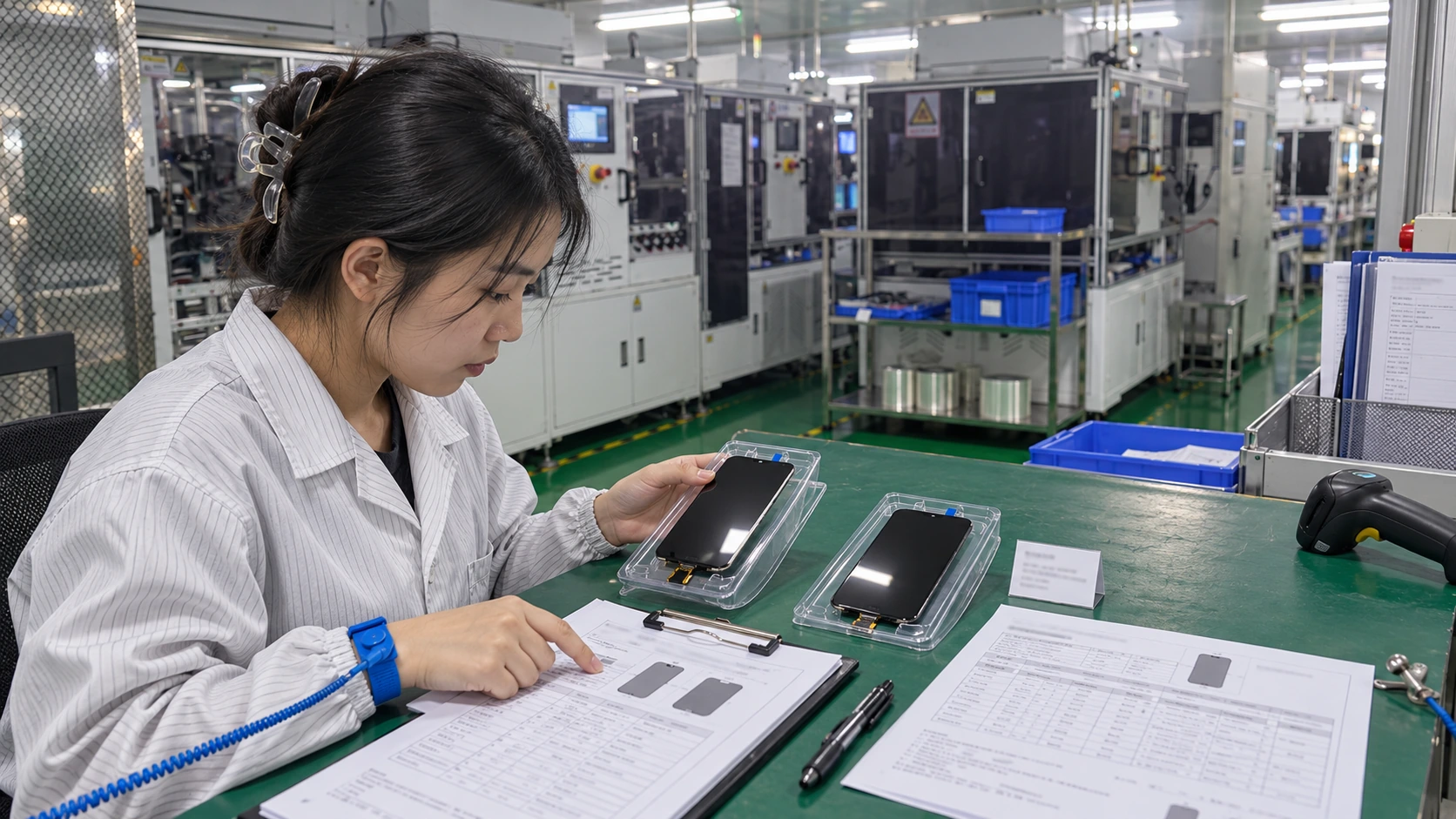
Sample results are only comparable if the test is. Use the same target model, comparable specifications, the same or equivalent equipment, one procedure, one set of judgment criteria, and the same way of recording results. Number every sample, and note installation and handling conditions. Cover display function, touch response, brightness and color behavior, appearance, connection and fit in the actual device.
Apply that routine to both batches by following a method for testing iPhone LCD samples before a bulk order, and do not invent pass thresholds that your own requirement sheet does not define. If the two samples are different specifications, log them separately and say so, instead of presenting the result as a like-for-like test.
Comparable sample results are evidence about the tested units. They do not establish long-term batch consistency or future delivery performance.

Compare Sample-to-Bulk Controls, Traceability and Change Control
A better sample does not automatically mean better bulk-order consistency. The gap between sample quality and bulk-order quality is controlled, or not controlled, by documents and procedures, so ask each manufacturer how it handles:
- the approved sample reference and the link between sample and bulk product
- the written specification and the product version
- batch identification and the link between product and QC records
- notification of critical changes to materials or components
- buyer approval before any substitute specification is shipped
- outgoing inspection and treatment of abnormal batches
The value of traceability is that it supports investigation and responsibility when a batch problem appears. It is not a matter of having the most elaborate coding system, and not every screen needs an individual serial number. Consistency still has to be confirmed on real orders.

Compare Delivery, Lead Time, MOQ and Order Fit
Separate quoted lead time from actual delivery performance, and split the clock into order confirmation, preparation or production, shipment, international transit, and arrival and inspection release. Two factories can quote the same lead time and execute very differently.
If either can show completed orders with committed and actual ship dates, delay explanations and replenishment response, compare them. Where no history exists, mark delivery reliability as pending rather than inferring it.
On quantities, check per-model MOQ, total-order MOQ, quantity tiers, mixed-model limits, sample and trial-order conditions, replenishment terms and packaging or labeling requirements. A lower MOQ does not make a supplier a better fit, and a higher MOQ does not prove more capability. What matters is how MOQ and mixed-model orders line up with your model mix, purchasing frequency and stock strategy.

Compare Quotations and Total Procurement Impact
A quotation is only comparable when it covers the same specification, quantity, packaging, shipping scope, delivery terms, currency, payment terms, sample cost, warranty responsibility, defect handling and validity period. Unit price comparison is not the same as a comparable commercial offer, and a comparable offer is still not the full procurement picture. A cheaper quote does not make a supplier better, and a higher one does not prove better quality.
Separate three kinds of cost:
- Known monetary costs: what quotes, freight terms, duties and records let you calculate.
- Estimated operating costs: defect handling, rework, replacement, after-sales administration and capital tied up, which need your own history and stated assumptions.
- Non-quantified risks: stock-outs, supply interruption or unresolved specification doubt. Keep these visible instead of forcing a figure onto them, and never borrow a generic defect or margin rate.

Compare Warranty, Payment Entity and Communication
Warranty. A warranty promise is not a defect-handling procedure. Compare the covered defects, exclusions, period, evidence required, RMA steps, replacement or credit, return freight responsibility, batch-problem handling and who answers claims. Identical warranty wording does not guarantee identical protection.
Payment and contracting entity. Compare company name, contracting entity, payment beneficiary, invoicing entity, operating entity and commercial contact. Several legal entities can be related for good reasons, but the relationship and responsibilities should be clear before an order. If payment details change unexpectedly, reconfirm through an independently verified channel. A deposit is not in itself a warning sign, and this is not legal advice.
Communication. Reply speed is a weak measure. Judge whether answers on specifications are accurate, whether orders are understood and confirmed in writing, whether technical questions reach the right person, whether information stays consistent and whether abnormal situations get a defined process. Language, time zone and communication style should not lower a score on their own.
Define Critical Requirements Before Scoring
Before scoring anything, set your mandatory qualification requirements. Depending on the order, they may include:
- the product meets your specification
- the factory can supply the required models
- the sample corresponds to the quoted specification
- the contracting and payment entities can be verified
- QC or acceptance conditions are defined
- responsibility for quality is clear
- key commercial terms are confirmed in writing
- no major risk remains unresolved
Not every buyer's critical conditions are the same, so you set them according to your actual risk. A manufacturer that fails a critical requirement cannot receive bulk approval however high its other scores are. Where evidence is missing, mark the item Pending Verification. That is neither a pass nor a failure.
Build an Evidence-Based iPhone LCD Manufacturer Comparison Scorecard
Use three tools in order. The matrix collects what each factory told you and what you could prove, the scoring rules fix what each score requires, and the scorecard turns reviewed evidence into comparable numbers. The example below fills in all three.
Illustrative scenario: every supplier detail, price, test result and record below is hypothetical. None of it is verified factory information or a market quotation.
Comparison basis: 500 units of an iPhone 11-compatible aftermarket LCD replacement display assembly, without frame, with the same required functionality, inspection basis, standard packaging and EXW Shenzhen terms. For later mixed orders, the buyer plans four models at about 75 units each.
Table 1: iPhone LCD Manufacturer Comparison Matrix
| Comparison Item | Manufacturer A | Manufacturer B | Evidence Required | Status / Buyer Action |
|---|---|---|---|---|
| Exact product specification | iPhone 11-compatible aftermarket LCD assembly, no frame; included components documented | Same target configuration; minor documentation questions resolved against the buyer's sheet | Written specification, assembly configuration, component list | Comparable once revisions are matched |
| Compatible models / SKU | Supplier reference A11-LCD-NF, mapped to the buyer's specification | Supplier reference B11-LCD-NF, mapped the same way | Model list, product references, compatibility documentation | Confirm references before ordering |
| Manufacturing scope | Assembly and final functional inspection in-house | Assembly subcontracted; incoming and final inspection in-house | Process responsibility statement, production records | Verify B's subcontractor controls |
| QC method and criteria | Documented functional, visual and outgoing inspection with stated criteria and retained dated records | Documented functional and visual inspection with stated criteria; dated records not yet provided | QC procedure, acceptance criteria, dated records | Request B's dated records |
| Sample performance | 20 of 20 samples pass the agreed display, touch and visual checks | 20 of 20 samples pass the same checks | Comparable test results under identical conditions | Both meet sample criteria; this says nothing about bulk defect rates |
| Sample-to-bulk control | Approved sample retained, with a documented revision-change procedure | Approved sample referenced on the order record; formal revision notification less developed | Approved sample, signed specification, change-control procedure | Ask B for a revision-change procedure |
| Traceability | Product reference and production batch recorded | Product reference and carton-level identification; batch linkage incomplete | Product and batch identification records | B needs fuller batch traceability |
| MOQ and model mix | 100 pcs per model; 300 pcs minimum mixed total | 50 pcs per model; 200 pcs minimum mixed total | Written MOQ and mixed-model quotation | B fits the planned mixed order more closely |
| Lead time | 10 working days from confirmed specification and deposit; 10 of 12 recent dispatches met agreed dates | 8 working days from the same starting point; 11 of 12 recent dispatches met agreed dates | Dated order and dispatch records | Reassess with the supplier's full history |
| Packaging and shipping | Individual protective packaging and outer cartons included; EXW Shenzhen | Equivalent packaging and cartons included; EXW Shenzhen | Packing specification and Incoterm with named place | Comparable on the stated scope |
| Comparable procurement cost | Normalized cost index 100 | Normalized cost index 94 | Quotations normalized to the same scope and terms | Index only; defect-handling and capital costs are estimated separately |
| Warranty / RMA | 12-month written warranty; documented claims process, replacement or credit conditions | 6-month written warranty; written claims process with narrower remedies | Warranty terms, exclusions, claim procedure | Compare remedies, not only the period |
| Payment / contracting entity | USD; 30% deposit, 70% before dispatch | USD; 50% deposit, 50% before dispatch | Company registration, contracting entity, written payment terms | Entity details assumed verified for this exercise; verify real beneficiary details independently |
| Overall status | Stronger documented process control | More flexible MOQ, faster quoted dispatch | Full evidence review and matching quotations | Illustrative only; no real manufacturer is approved |
Table 2: Example Scoring Rules
Set the rules for each category before you look at either supplier, and state the evidence and performance each score needs. The scale: 1 = verified as not meeting the requirement; 2 = partly meets it with a clear gap; 3 = meets the basic requirement; 4 = well supported by evidence; 5 = fully supported by verified evidence directly tied to the requirement. This scale and the rules below belong to the example buyer, not to any industry standard. Where evidence is missing, record Pending, and keep disqualifying failures in the mandatory checklist instead of the score.
| Category | Example Weight | What Earns the Score (Example Rule) |
|---|---|---|
| Product specification fit | 15% | 3 = every required item matches the written specification; 4 = also reconciled with the buyer's sheet revision by revision; 5 = also confirmed on tested samples |
| Manufacturing and process responsibility | 10% | 3 = responsibility for each step stated in writing; 4 = also supported by process records; 5 = also verified, including subcontractor controls. Outsourcing alone never lowers the score |
| QC evidence | 15% | 3 = tests and pass or fail criteria stated; 4 = also dated records for the product or batch; 5 = also verified live, independently or on buyer samples |
| Sample test results | 15% | 3 = samples pass the agreed checks; 4 = pass under identical conditions with numbered samples and recorded results; 5 = also repeated across more than one production lot |
| Batch traceability and change control | 10% | 2 = product reference only, batch linkage incomplete; 3 = product and batch both identifiable; 4 = also linked to QC records with a documented revision-change procedure; 5 = also verified on a shipped batch |
| Delivery reliability | 5% | Share of agreed dates met: 5 = 95% or more; 4 = 85–94%; 3 = 75–84%; 2 = 60–74%; 1 = below 60%. Twelve dispatches is thin evidence |
| MOQ and order flexibility | 10% | Against the planned later order of four models at about 75 units: 5 = per-model and total MOQ both within plan; 3 = one exceeds plan; 1 = both exceed |
| Comparable procurement cost | 10% | Normalized index, buyer's target = 100: 5 = 90 or below; 4 = 91–95; 3 = 96–105; 2 = 106–115; 1 = above 115 |
| Warranty and defect handling | 5% | Judged on claims procedure, remedies, exclusions and evidence rules, not period alone: 3 = written warranty with a claims process; 4 = also defined remedies and exclusions; 5 = also tested through a real claim |
| Communication and execution | 5% | 3 = specification questions answered in writing; 4 = also every answer matches the quotation and order record; 5 = also exceptions resolved through a documented follow-up |
Table 3: Example Scorecard
Weights are teaching weights. You set your own from your actual order, and they must total 100%.
| Evaluation Category | Weight | Manufacturer A | Manufacturer B | Evidence Status |
|---|---|---|---|---|
| Product specification fit | 15% | 4 | 4 | Both specifications reconciled with the buyer's sheet |
| Manufacturing and process responsibility | 10% | 4 | 3 | A: process records; B: subcontractor controls not yet reviewed |
| QC evidence | 15% | 4 | 3 | A: dated records; B: dated records outstanding |
| Sample test results | 15% | 4 | 4 | Same procedure, numbered samples |
| Batch traceability and change control | 10% | 4 | 2 | B: batch linkage incomplete |
| Delivery reliability | 5% | 3 | 4 | 10 of 12 (83%) vs 11 of 12 (92%) on time |
| MOQ and order flexibility | 10% | 3 | 5 | Per-model MOQ 100 vs 50; total 300 vs 200 |
| Comparable procurement cost | 10% | 3 | 4 | Index 100 vs 94 |
| Warranty and defect handling | 5% | 4 | 3 | A: broader remedies; B: narrower remedies |
| Communication and execution | 5% | 4 | 3 | B: one of six answers corrected after follow-up |
| Weighted total | 100% | 3.75 / 5.00 | 3.55 / 5.00 | Illustrative scores, not supplier ratings |
How the Weighted Scores Are Calculated?
Weighted Score = Σ (Category Weight × Category Score)
With weights written as decimals that sum to 1.00 and scores from 1 to 5, the result also falls between 1 and 5. Taking the categories in table order, the contributions are:
- Manufacturer A: 0.60 + 0.40 + 0.60 + 0.60 + 0.40 + 0.15 + 0.30 + 0.30 + 0.20 + 0.20 = 3.75
- Manufacturer B: 0.60 + 0.30 + 0.45 + 0.60 + 0.20 + 0.20 + 0.50 + 0.40 + 0.15 + 0.15 = 3.55
The method only works when every category is defined, so leave an unverified category as Pending instead of scoring it low, and do not read much into a small gap.
What the Example Shows?
A leads by 0.20 mainly on process control, QC records and traceability. B leads on MOQ fit, delivery and cost. Neither result identifies the better supplier for every buyer. A repair chain installing validated products across stores may weight traceability and documentation more heavily, while a smaller wholesaler managing several low-volume models may weight model-level MOQ and flexibility.
The ranking is sensitive to those choices. Moving just 5 percentage points from traceability to MOQ ties the two at 3.70. Moving 10 points puts B ahead, 3.85 to 3.65, but that shift is deliberately large: it removes traceability from the total entirely and doubles the MOQ weight. It shows sensitivity and is not a recommended weighting policy, and any mandatory traceability requirement would still apply.
Mandatory requirements stay outside the weighted total. A supplier that fails a required specification, inspection criterion or contracting check should not be approved because its other scores are high.
Reading the Example Before Any Approval
These totals approve neither supplier. B's subcontractor controls and dated QC records are unverified, so if either is a mandatory requirement for this buyer, B stays at Pending Verification until the records arrive. That is not a failure. A's lead is small enough for a weight change to erase it, so the sensible next step is to request B's records, run the same sample-to-bulk check on both, and place a small trial order with a supplier that clears the mandatory list. If neither clears it, defer.
In a real comparison, enter documented findings only. Mark unsupported categories as Pending, not zero or an assumed score, and calculate a final ranking only when the required evidence is sufficiently complete.
How Qualification and Scores Lead to a Decision?
| Decision Condition | Meaning | Buyer Action |
|---|---|---|
| Critical requirement not met | A mandatory condition fails | Do not approve bulk orders under that requirement |
| Critical requirement unverified | A mandatory condition is Pending | Pause the decision and complete verification |
| Both qualified, one materially stronger | One has better support in dimensions that matter | Prioritize further verification or a trial order |
| Both qualified, scores close | No clear overall difference | Review weights and open questions |
| Both have unresolved risks | No sound basis to choose yet | Keep investigating or widen the candidate list |
| One passes trial-order verification | Real order execution is partly validated | Decide whether to expand based on results |
You are not required to pick one. Neither manufacturer is currently qualified is a legitimate procurement conclusion.
What If Both Manufacturers Score Similarly?
Close scores usually mean the analysis needs another pass, not a coin flip. Check which categories matter most for this order, whether the weights are sound, which critical evidence is still missing and whether the sample results are stable.
Then look at what replenishment really involves, who is responsible for after-sales claims, and whether a backup source has value. If it makes commercial sense, a two-supplier approach is an option. It also adds specification management, sample validation cost, batch-consistency work, purchasing coordination and MOQ limits, so it is not automatically safer or cheaper.
Use a Trial Order to Verify the Comparison
Paper scoring helps you screen. Samples verify part of the product behavior. A trial order tests execution: whether models and specifications arrive as agreed, quantities, packaging, communication, shipment, arrival inspection, batch performance, defect reporting and after-sales responsibility. One small trial does not guarantee future orders, so quality and delivery still need monitoring as volume grows. Treat the trial as a check on your comparison, not an extra step after the decision.

Make the Final Supplier Decision
- Confirm comparable requirements. Both factories are working to the same sheet.
- Check mandatory qualification. Mark each critical requirement met, not met or pending.
- Review verified evidence. Look at product, QC, process responsibility and commercial documents, and note the evidence level.
- Compare practical commercial fit. MOQ, lead time, packaging, payment, warranty and cost.
- Review outstanding risks. Record what remains unresolved.
- Validate through samples or a trial order. Address the biggest uncertainties directly.
- Approve, conditionally approve or defer. Use your own approval process. A small repair shop can run this as a one-page version.
Common Mistakes When Comparing Two iPhone LCD Manufacturers
- Comparing price before aligning specifications, or judging quality by grade labels. The cheaper quote may cover a different product or construction.
- Treating size or in-house processes as proof of quality. Floor area, photographs and process counts do not show who controls your product, and a well-managed outsourced step can beat a poorly managed in-house one.
- Taking "100% tested" as zero defects. Without the test scope, criteria and failed-unit handling, the claim tells you almost nothing.
- Testing samples under different conditions, or ignoring the sample-to-bulk link. Differences may come from the test, and a silent material change can alter a product you already approved.
- Taking quoted lead time and MOQ at face value. Real delivery history may differ, and a cheap quote can still fail your model mix.
- Comparing unit prices under different delivery terms, or leaving warranty and RMA vague. Freight and packaging move the real cost, and a dispute without an agreed procedure is slow and costly.
- Scoring missing information as the lowest mark, or letting a high total hide a major risk. The first creates false failures; the second lets an unacceptable gap through.
- Approving bulk volume without validation, or assuming one of the two must qualify. Unverified claims go straight into inventory, and sometimes neither candidate is ready.
Recommendations by Buyer Type
- Small repair business. Focus on specification fit, sample validation, MOQ, replenishment and a workable claims process. A short checklist is enough.
- Repair chain. Put weight on batch consistency across stores, delivery stability, defect handling and supply continuity.
- Distributor or importer. Prioritize model coverage, SKU control, comparable cost, batch traceability, MOQ and mixed-model terms, lead time and warranty responsibility.
- Private-label buyer. Add specification control, labeling, packaging, change approval and responsibility for product and after-sales issues.
These groups do not share one weighting table, and you should not borrow someone else's.
FAQ
What should I compare between two iPhone LCD manufacturers?
Compare the specification each is quoting, what it actually controls in production, QC evidence, sample results under equal conditions, sample-to-bulk controls, delivery and MOQ terms, comparable cost, warranty handling and contracting entity. Fix the requirement first.
How can I compare LCD quality fairly between two factories?
Use the same model, comparable specification, equipment, procedure, criteria and recording method. Log samples separately if the specifications differ, and remember that results describe only the units tested.
Is a larger iPhone LCD manufacturer always better?
No. Size, photos and equipment counts do not prove who is responsible for your product or how it is controlled. Compare process responsibility and the evidence behind it.
Should I choose the manufacturer with the lowest price?
Not on price alone. Make sure the offers are comparable first, then consider packaging, shipping, defect handling, MOQ fit and unresolved risk. Higher price does not prove higher quality, either.
How important are QC records and batch traceability?
They matter most when a problem appears, because they help trace a batch and assign responsibility. Check that records tie to your product or batch, not only to a general procedure.
Should I test samples from both manufacturers?
Yes, under the same conditions where possible. Samples verify the tested units, not future batches, so follow with a trial order when the decision carries real risk.
What should I do if both manufacturers score similarly?
Review the weights, the pending evidence and the trial results, and decide whether a backup supplier justifies its added management work. If neither is sufficiently verified, keep investigating.
Before You Approve Either Manufacturer
Prepare your target iPhone models, screen specifications, estimated quantities and sample-testing criteria for an iPhone LCD wholesale sourcing inquiry. Request the factory profile, available models, QC information, sample policy, MOQ, lead time and warranty terms.
Then use the confirmed information to complete the same comparison sheet for both candidates.