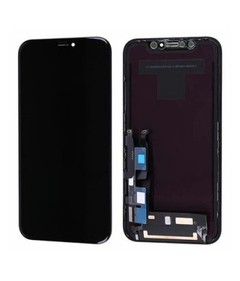
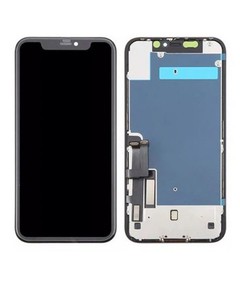
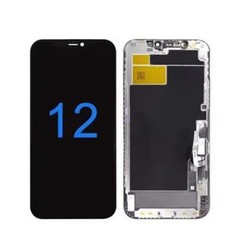
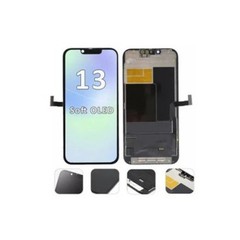
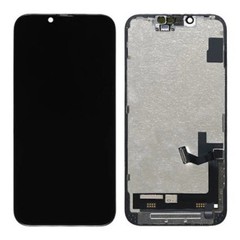
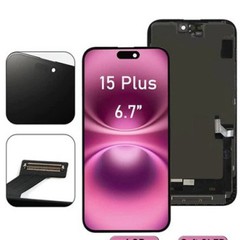
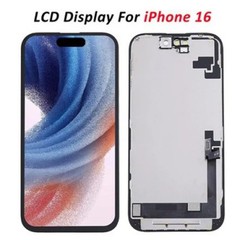

iPhone LCD Screen Quality Control Guide for Wholesale Buyers

For a wholesale buyer, a screen that looks fine in a supplier's sample photo is not necessarily a screen that will perform consistently across a large bulk order. Appearance and unit price are often the first things buyers compare - and they reveal very little about how a batch will actually behave once it reaches repair benches or retail shelves. Screens that pass a quick visual check can still fail on touch response, brightness uniformity, or long-term display stability once they are installed at scale.
This guide is written for wholesale buyers, distributors, importers, and repair businesses who need to evaluate iPhone LCD screens before committing to a bulk order - not for individual consumers replacing a single screen. Quality problems that go undetected before shipment don't stay small: they turn into return shipments, warranty disputes, extra labor for repair technicians, and inventory that a business can't confidently resell.
The rest of this guide walks through a practical quality-control framework: what should be inspected at each production stage, how to test samples before scaling to a bulk order, what a real QC report should contain, and how to compare suppliers on evidence rather than price alone. The core idea carries through every section: iPhone LCD quality should be evaluated through documented specifications, repeatable testing, sample-to-bulk consistency, and clear defect-handling procedures - not through appearance or unit price alone.
Need to confirm available models and specifications before testing? Request the latest iPhone LCD product list.
Why Quality Control Matters in Wholesale iPhone LCD Purchasing?
A single defective screen is an inconvenience. A batch with an undetected quality issue is a business problem. When quality control is weak or unverified, the costs show up in several places at once:
- Return rates climb, and returns on bulk orders are far more expensive to process than a single retail exchange.
- Repair-shop complaints accumulate when technicians install screens that fail shortly after, damaging the shop's own reputation with its customers.
- Installation labor is wasted every time a technician has to remove and replace a screen that failed after fitting.
- Reshipping and replacement costs eat into margin on orders that were already priced tightly.
- Inventory loss occurs when a batch is found to be inconsistent only after it has already been unpacked, sorted, and partially distributed.
- Warranty disputes become harder to resolve without documentation, since neither side can prove whether the fault was manufacturing, transport, or installation.
- Repeat-order confidence erodes - buyers who can't verify batch stability tend to reduce order size or switch suppliers, both of which raise procurement cost over time.
These are not single-unit performance issues. They are batch-level and business-level risks, and they scale with order size. Before approving a supplier, buyers should also review the iPhone LCD manufacturer evaluation process, which covers how to vet a factory's capability before quality control even becomes a question of individual units.

What Does iPhone LCD Quality Control Include?
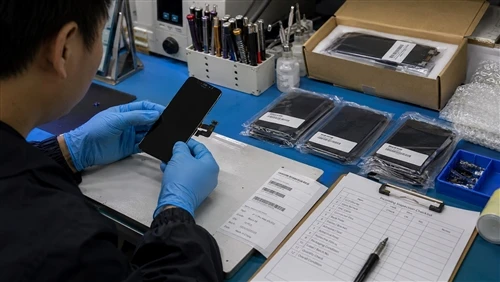
Quality control for wholesale LCD screens is not a single inspection at the end of the line. It is a sequence of checks that starts before production and continues after the shipment has left the factory.
| Quality-Control Stage | What Is Checked | Why It Matters | Evidence Buyers Can Request |
|---|---|---|---|
| Incoming-material inspection | Panels, backlight units, flex cables, frames | Defective materials introduced early carry through the whole batch | Material inspection records |
| In-process inspection | Bonding, alignment, adhesive application | Catches process drift before units reach final assembly | Process checkpoints / rework logs |
| Display testing | Brightness, color, uniformity, dead pixels | Directly affects end-user usability and return rate | Test results by unit or batch sample |
| Touch testing | Sensitivity, accuracy, ghost touch, dead zones | Touch failures are among the most common post-installation complaints | Standardized test log |
| Brightness testing | Output level, consistency across units | Uneven brightness is visible immediately after installation | Sample brightness readings |
| Color and backlight inspection | Color temperature, backlight leakage | Affects perceived quality and customer satisfaction | Visual/instrument comparison notes |
| Appearance inspection | Scratches, dust, surface defects | Cosmetic issues affect resale and customer trust | Inspection photos or logs |
| Assembly and frame inspection | Alignment, connector seating, adhesive residue | Poor assembly causes installation difficulty and premature failure | Assembly checklist |
| Aging or stability testing | Performance after sustained operation | Identifies early-failure units before shipment | Stability test summary |
| Final inspection | Full functional check before packing | Last checkpoint before the unit leaves the factory | Final inspection sign-off |
| Batch traceability | Batch numbers, material lot linkage | Enables buyers to isolate a problem to a specific batch | Batch identification records |
| Shipment inspection | Random sampling before dispatch | Confirms the shipped batch matches the approved sample | Pre-shipment inspection report |
Each stage answers a different question. Incoming inspection asks whether the raw materials were sound. In-process inspection asks whether the build was consistent. Testing asks whether the finished unit performs. Traceability and shipment inspection ask whether the batch that's about to ship still matches what was approved. A buyer who only asks about "quality control" in general terms, without asking which of these stages a supplier actually documents, is not getting a useful answer.

Incoming Material Inspection for iPhone LCD Screens
Incoming inspection covers the components that go into an LCD screen assembly before any bonding or final assembly takes place: LCD panels, backlight components, touch-related components, flex cables and connectors, frames or brackets, protective materials, and packaging components.
Before relying on a supplier's material quality claims, buyers should ask:
- Is there a documented inspection step for incoming materials, or is material simply accepted as received?
- How are non-conforming materials identified and isolated from usable stock?
- Are different material batches tracked separately, or mixed together in production?
- Are there undocumented material substitutions between the approved sample and later production runs?
- Do samples and bulk-production units use the same material specification, or does the supplier reserve better materials for samples?
A supplier that cannot answer these questions with anything more specific than "we use good materials" has not given a buyer anything to verify. This is one of the areas where a supplier quality-control guide is worth reviewing in more detail, since incoming-material control is usually where batch inconsistency originates.

In-Process Inspection During LCD Production
In-process inspection catches problems while they can still be corrected, rather than after a unit is fully assembled. The areas that matter most for LCD production are:
- Bonding or assembly alignment
- Connector condition and seating
- Frame alignment
- Adhesive application (amount, placement, curing)
- Component handling (avoiding contamination or static damage)
- Contamination control in the assembly environment
- Process consistency across shifts or production lines
- Rework identification and handling
| Checkpoint | What Is Checked | When | Handled By | Non-Conforming Units |
|---|---|---|---|---|
| Bonding alignment | Panel-to-frame fit | After bonding step | Line inspector | Isolated for rework or scrap |
| Connector seating | Flex cable connection | Before final assembly | Line inspector | Reworked before proceeding |
| Adhesive application | Coverage and placement | During assembly | Process operator | Flagged if outside tolerance |
| Contamination control | Dust/debris on panel surface | Continuous | Line inspector | Cleaned or rejected |
Buyers should not assume a supplier owns specific equipment or follows a specific in-process procedure unless that has been confirmed directly - sample orders and factory audits, not marketing claims, are what establish this.

How to Test Display Performance
Display testing is where many downstream complaints originate if it's skipped or done inconsistently. A reasonable display test should evaluate:
- Screen brightness
- Color consistency across units
- Display uniformity (no patchy or uneven areas)
- Dead pixels
- Lines or abnormal display areas
- Backlight leakage (light bleeding around the edges)
- Flicker or unstable display
- Image clarity
- Brightness stability under continued use
A screen that fails any of these tests is not necessarily unsellable, but it is not equivalent to a screen that passes, and the difference should be documented rather than assumed. For repair shops, even one brightness-inconsistent unit can generate a customer complaint, regardless of how the rest of the shipment performs. For distributors, a batch with unaddressed display defects becomes harder to resell at the intended margin. A standardized brightness and color-consistency test gives buyers a repeatable way to compare screens rather than relying on a visual glance under factory lighting.

How to Test Touch Response?
Touch performance is harder to evaluate from a photo or a spec sheet than display quality, which is exactly why it needs a defined test process rather than a quick tap-and-check. Buyers should look at:
- Touch sensitivity across the full screen area
- Touch accuracy (does a tap register where it should)
- Edge response (touch reliability near screen borders)
- Multi-touch response
- Ghost touch (registering input that wasn't made)
- Delayed response
- Dead zones (areas that don't respond at all)
- Intermittent touch failure (works sometimes, fails other times)
Test conditions should be standardized as much as possible so results are actually comparable between samples and between suppliers:
- Same test device
- Same installation condition
- Same test duration
- Same test method
- Recorded, dated test result
A standardized iPhone LCD touch-response testing process helps buyers compare samples and production batches more fairly, instead of relying on a single technician's subjective impression of "the touch feels fine."

Appearance and Assembly Inspection
Appearance and assembly inspection covers what's visible or physically checkable on the finished unit: scratches, dust under the glass, surface damage, frame deformation, connector damage, adhesive residue, misalignment, protective-film condition, and packaging-related damage.
An important distinction that buyers often skip is separating the cause of a defect:
- Manufacturing defect - present before the unit left the factory
- Transportation damage - occurred in transit
- Installation damage - occurred during fitting into a device
- Handling damage - occurred during storage, sorting, or repackaging at the buyer's own facility
Treating all four as the same thing makes it impossible to hold the right party accountable, and it makes warranty claims harder to resolve. A buyer who logs defects by suspected cause, not just by defect type, has a much stronger position when raising a claim with a supplier.
How Sample Testing Should Be Conducted Before a Bulk Order?
Sample testing is not a formality to get through before placing the "real" order - it is the point where a buyer generates the evidence they'll use to hold the eventual bulk shipment accountable. A sample evaluation should verify:
- Display performance
- Touch response
- Brightness
- Color consistency
- Assembly fit
- Installation performance (how the unit behaves once actually fitted)
- Packaging condition
- Supplier response speed to questions or issues
- Documentation quality (does the supplier provide real test data, or just an assurance)
Wholesale Sample Testing Checklist
| Test Item | Test Method | Result | Pass/Fail | Notes |
|---|---|---|---|---|
| Display Uniformity | Full-screen white/black test | No visible dark spots, bright spots, lines, or uneven areas | PASS | Display uniformity meets the expected quality standard |
| Brightness | Instrument or comparative reading | Brightness is within the expected specification and comparable to the reference screen | PASS | No significant brightness difference observed under normal testing conditions |
| Color Consistency | Side-by-side comparison across units | Color reproduction is consistent across the tested units | PASS | No significant color deviation observed |
| Touch Response | Standardized touch test | Touch response is smooth and accurate across the entire screen | PASS | No dead zones, ghost touches, or abnormal touch response detected |
| Assembly Fit | Physical installation | Screen fits correctly with the corresponding device and functions normally after installation | PASS | No abnormal gaps, misalignment, or installation issues observed |
| Packaging Condition | Visual inspection on arrival | Packaging is intact and provides adequate protection for the product | PASS | No significant damage or deformation found |
| Documentation | Test report review | Product specifications and testing information are complete and consistent | PASS | Documentation is available for sample evaluation |
Before approving a supplier, buyers should follow a documented iPhone LCD sample-testing process rather than an informal once-over.
Before placing a bulk order, request representative LCD samples and compare display, touch response, installation performance and packaging condition against what the supplier has claimed.
Sample Quality vs Bulk-Order Quality
One of the most common and most costly assumptions in wholesale LCD purchasing is that a good sample guarantees a good bulk shipment. It doesn't, and there are specific, well-understood reasons the two can diverge:
- Material batch changes between the sample run and the bulk run
- Production-process variation, especially across shifts or lines
- Different quality standards applied to samples versus bulk production
- Undocumented substitutions in materials or components
- Insufficient batch-level inspection on the bulk run
- Lack of sample retention (no reference unit kept to compare against)
- Weak batch traceability, making it hard to link a problem back to a specific run
- Bulk production handled by a different facility or subcontractor than the one that produced the sample
To reduce this risk, buyers should confirm, in writing, before scaling an order:
- The approved sample itself (physically retained, not just a photo)
- A written product specification
- The test conditions used to evaluate the sample
- Acceptance criteria for the bulk shipment
- Batch identification for the bulk run
- A shipment inspection step before the goods are accepted
- A defect-handling process if the bulk shipment doesn't match the sample
Buyers should review the supplier's sample-to-bulk consistency controls before increasing order volume, particularly before moving from a trial order to a standing repeat order.
What Should an iPhone LCD Quality-Control Report Include?
A quality-control report that only says "passed inspection" without supporting detail is not evidence - it's a claim. A usable QC report should include:
| Report Field | What Buyers Should Confirm |
|---|---|
| Product model | Matches the exact model ordered |
| Batch number | Traceable to the shipped units |
| Inspection date | Recent, relevant to the shipped batch |
| Quantity inspected | A defined sample size, not "some units" |
| Test items | Matches the tests actually relevant to LCD screens |
| Test conditions | Documented method, not just a result |
| Acceptance criteria | Defined pass/fail thresholds |
| Sample size | Stated explicitly |
| Pass/fail results | Broken down by test item, not just an overall pass |
| Defects found | Listed, not omitted |
| Corrective action | What was done about any defects found |
| Inspector or reviewer | Identified, not anonymous |
| Shipment reference | Links the report to the actual shipment |
A report missing several of these fields isn't necessarily evidence of a bad supplier, but it is evidence of an unverifiable one - and unverifiable is a risk category buyers should price into their decision. See What Should Be Included in an LCD Test Report? for a closer breakdown of how to request and read these reports.
How to Inspect an iPhone LCD Shipment on Arrival?
However thorough the pre-shipment process was, the shipment still needs to be checked on arrival before it enters inventory:
- Check outer packaging for damage
- Record any visible damage before opening further
- Confirm model labels match the purchase order
- Check quantity against the packing list
- Match batch information to what was documented pre-shipment
- Inspect a defined sample from the shipment
- Test display and touch response on the sample
- Record any defects found, with photos where possible
- Separate suspect units from confirmed-good stock
- Submit a documented claim if issues are found, rather than an informal message
A practical iPhone LCD incoming inspection checklist can help repair businesses record defects systematically before units enter inventory, rather than discovering problems unit-by-unit as they're installed weeks later.
How to Compare Quality Between Two iPhone LCD Suppliers?
When comparing suppliers, price is the easiest number to put side by side - and the least useful one on its own. A structured comparison looks at what each supplier can actually demonstrate.
| Evaluation Factor | Supplier A | Supplier B | Evidence to Check |
|---|---|---|---|
| Display performance | pass | fail | White/black screen test, dead-pixel check, display-line check |
| Touch response | pass | pass | Standardized touch test, edge response, multi-touch test |
| Brightness consistency | pass | pass | Side-by-side sample comparison under the same test conditions |
| Appearance quality | pass | pass | Surface, frame, connector, alignment, dust and scratch inspection |
| Batch traceability | pass | fail | Batch labels, carton labels, shipment records or production records |
| Sample-to-bulk consistency | pass | pass | Approved sample, written specification and trial-order inspection |
| Defect handling | pass | fail | Warranty terms, claim steps, required evidence and resolution method |
| Documentation | pass | pass | Product specification, test report, inspection record and quotation |
| Packaging | pass | fail | Carton protection, labeling, internal packing and arrival inspection |
| Total procurement risk | pass | pass | Combined assessment of quality, traceability, service and commercial terms |
Do not select a supplier based on unit price alone. A lower quoted price with weaker documentation, no batch traceability, and no defined defect process often costs more once returns, rework, and reputational damage are factored in.
Common Quality-Control Mistakes Made by Wholesale Buyers
- Testing only one sample and treating it as representative of the whole batch
- Accepting vague quality terms like "Grade A" or "high quality" without a written definition
- Comparing products with different specifications as if price alone made them comparable
- Ignoring batch numbers, which makes it impossible to isolate a problem later
- Failing to define acceptance criteria before the order ships, then arguing about it after
- Not checking packaging, which is often where transit damage first shows up
- Not recording defects, which weakens any later claim
- Treating installation damage as a manufacturing failure, or vice versa, without evidence
- Placing a large order before a trial order, skipping the step that would have caught a problem cheaply
- Relying on verbal warranty promises instead of a written claim procedure
How to Set a Practical Acceptance Standard?
Before production and shipment, buyers should agree with the supplier, in writing, on:
- Acceptable display condition
- Touch-response requirements
- Brightness expectations
- Appearance tolerance
- Packaging condition
- Inspection method to be used
- Sample size for inspection
- Defect classification (minor/major/critical)
- Claim period after receipt
- Replacement or credit procedure if units fail
Buyers should agree on measurable acceptance criteria with the supplier before production and shipment - not after a dispute has already started. Vague standards set before an order almost always turn into disputed standards after it.
How a Reliable LCD Factory Should Handle Defects?
A supplier's defect-handling process is one of the clearest signals of how seriously quality control is actually taken, separate from anything claimed in a sales conversation. A reliable process should be able to explain:
- How defects are reported by the buyer
- What evidence is required to support a claim
- How claims are reviewed internally
- How responsibility is assessed (manufacturing vs. transit vs. installation)
- Whether replacement or credit is available, and under what conditions
- How recurring defects are investigated at the batch or process level
- How corrective actions are recorded
- How future batches are monitored for the same issue
Buyers should ask for this process in writing before an order, not discover it by trial and error after a claim.
iPhone LCD Quality-Control Checklist for Wholesale Buyers
| Checkpoint | Verified? | Notes |
|---|---|---|
| Product model confirmed | yes | Confirm the exact iPhone models, version, specification, and quantity required. |
| Written specification available | yes | Request a written specification covering display, touch, appearance, packaging, and acceptance requirements. |
| Incoming inspection explained | yes | Ask the supplier how incoming materials are checked and how non-conforming materials are handled. |
| Display test defined | yes | Confirm the display test method, test conditions, and pass/fail criteria. |
| Touch test defined | yes | Confirm the touch-response test method, including edge and multi-touch testing where applicable. |
| Brightness test defined | yes | Ask how brightness and display uniformity are checked and recorded. |
| Appearance standard defined | yes | Agree on acceptable conditions for scratches, dust, alignment, frames, connectors, and protective film. |
| Sample approved | yes | Retain an approved physical sample and record the test result before a larger order. |
| Batch identification available | yes | Confirm that cartons, labels, or records can identify the production or shipment batch. |
| Shipment inspection completed | yes | Record quantity, packaging condition, model labels, and sample inspection results upon arrival. |
| Defect procedure confirmed | yes | Obtain the written process for reporting defects, required evidence, review steps, and claim handling. |
| Warranty terms confirmed | yes | Confirm warranty coverage, exclusions, claim period, and replacement or credit process in writing. |
| Trial order completed | yes | Use a controlled trial order to check quality consistency, packaging, delivery, and communication. |
| Repeat-order standard confirmed | yes | Confirm that repeat orders follow the approved sample, written specification, and agreed acceptance criteria. |
FAQ
What should wholesale buyers check when testing iPhone LCD samples?
Buyers should test display performance, touch response, brightness, color consistency, and assembly fit, and should also review packaging condition and the quality of any documentation the supplier provides alongside the sample. A sample without test data attached is harder to hold a bulk order accountable to.
How can buyers compare LCD quality between suppliers?
Compare suppliers on documented evidence - test results, batch traceability, defect-handling procedures, and sample-to-bulk consistency - rather than on unit price or appearance alone. A structured scorecard makes the comparison more objective.
Why can sample quality differ from bulk-order quality?
Material batch changes, process variation, undocumented substitutions, and weak batch traceability can all cause a bulk shipment to differ from the approved sample. Written specifications and acceptance criteria reduce this risk but don't eliminate the need to inspect the actual shipment.
What should an iPhone LCD quality-control report include?
A usable report should state the product model, batch number, inspection date, sample size, specific test items and conditions, pass/fail results by item, any defects found, corrective action taken, and who performed the inspection. A report without these details is difficult to verify or act on.
How should buyers handle defective screens in a bulk shipment?
Record the defect with photos, note the batch number, separate suspect units from good stock, and submit a documented claim to the supplier rather than an informal message. This creates a record that supports a replacement or credit request.
Should buyers place a trial order before a larger purchase?
Yes, in most cases. A trial order tests not just the product but the supplier's consistency, communication, and shipment handling at a smaller, lower-risk scale before a buyer commits to a full bulk order.
What information should be included in an LCD RFQ?
An RFQ should specify the exact models needed, quantity per model, destination country, required quality standard or acceptance criteria, and any packaging or labeling requirements, so the quotation received is actually comparable to other suppliers' quotes.
Conclusion
Quality control for wholesale iPhone LCD screens isn't a single final check - it's a chain of verifiable steps that starts with incoming materials and doesn't end until a shipment has been inspected on arrival. A good sample is a useful signal, but it isn't proof that a bulk shipment will match it; that only gets confirmed through written specifications, defined acceptance criteria, and batch-level traceability carried through to the actual order.
A trial order and a documented incoming-inspection process are the most practical ways to reduce risk before scaling volume with a new supplier. Quality, delivery timeline, minimum order quantity, packaging, and warranty terms should all be confirmed and mutually understood before a buyer increases order size - treating any one of them as settled based on assumption is where most disputes start.
If you are sourcing iPhone LCD screens for wholesale, distribution or repair-business use, send us your required models, quantity per model, destination country and quality requirements. We can provide available product information, sample options and a wholesale quotation for evaluation.
We supply iPhone LCD screens for wholesale, distribution and repair-business purchasing. We do not provide local phone repair services or single-screen installation.