

Red Flags When Choosing an iPhone LCD Supplier
The biggest red flags when choosing an iPhone LCD supplier are specifications that cannot be pinned down, testing claims without criteria, samples that differ from the quotation, payment details that change without confirmation, and warranties with no claims process. Severity differs: a missing detail usually needs a question, while an unexplained payment change or an unapproved substitution can justify stopping the order the same day. Settle every open point with product-specific records and written terms before a bulk order is confirmed. The 15 warning signs below show what each one may mean, which evidence resolves it, and when to pause.
What Counts as a Real iPhone LCD Supplier Red Flag?
A red flag is a condition that leaves material uncertainty about the product, the supplier's identity, who is responsible for manufacturing and quality, the commercial terms, delivery, or after-sales accountability. Four situations look alike but call for different responses:
- Incomplete information: the supplier has not yet given enough detail. Ask a question.
- Unverified claim: a statement arrived without evidence. Ask for proof.
- Inconsistency: two statements, records, or product references do not match. Reconcile them.
- Material red flag: a consequential problem survives reasonable clarification, or contradicts verified evidence. Pause or stop.
One missing answer does not make an unreliable iPhone LCD supplier, but a contradiction that survives written clarification should not be written off as a communication quirk.
This screening is one stage of choosing and verifying an iPhone LCD screen manufacturer, and it pays off most before sample orders and payment milestones create commitments.
Product Specification Red Flags
Red Flag 1: A Quotation That Never Names the Exact Product
"High quality," "best grade," "original quality," and "premium copy" describe an impression, not a product, and none of them is standardized across suppliers. One supplier's "premium" may be another's entry grade. Such wording may simply be sales shorthand; either way, it gives the buyer nothing to inspect against and nothing to cite in a defect claim.
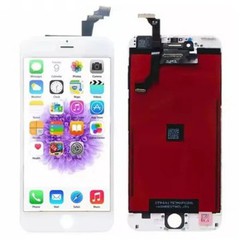
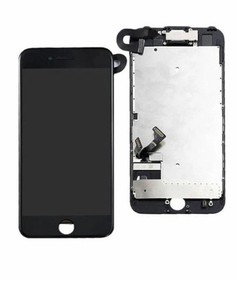
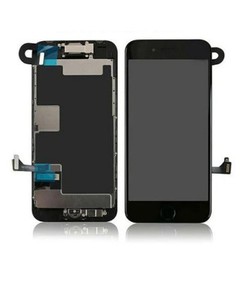
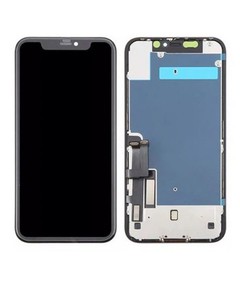
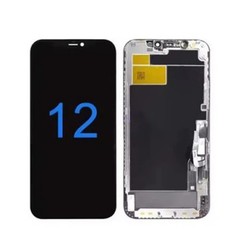
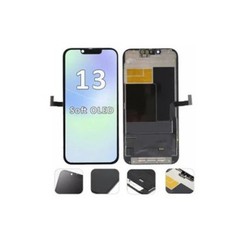
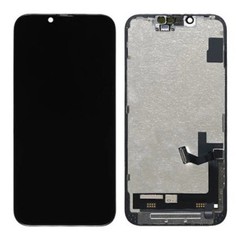
A quotation for an iPhone 11 replacement LCD screen assembly should state the compatible model, the supplier SKU, the screen technology, and what the assembly includes. Display technology deserves a check for every model: several iPhones shipped with OLED, so an LCD quotation for those models is a different technology from the original, and that should be a deliberate choice.
Clarify: ask for a one-page written specification for each quoted model before comparing prices.
Red Flag 2: Quotation, Sample, and Order Confirmation Disagree
The quotation lists one reference, the sample label shows another, and the order confirmation introduces a third or a "similar" substitute. Sometimes a stock change or product revision is legitimate. It still needs the buyer's approval before goods are prepared, because an unapproved change becomes installation inconsistency, harder incoming inspection, and warranty disputes.
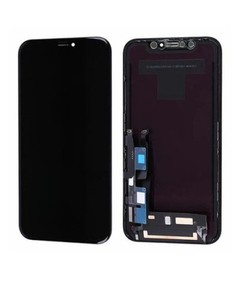
If an order confirmation for an iPhone XR replacement screen arrives with a reference that differs from the quotation, the useful question is not whether the change could be acceptable but whether anyone approved it in writing.
Pause: hold the affected order step until the supplier maps the old and new references in writing and the buyer signs off on any substitution.

Manufacturing and Identity Red Flags
Red Flag 3: Unclear Manufacturing Scope
A supplier calls itself a factory but cannot say what it assembles, tests, inspects, sources, or outsources, who controls the specification, or who handles defects. Nobody needs to make LCD cells, driver ICs, or glass to be a legitimate manufacturer, and outsourcing is not a quality verdict. The risk is a responsibility gap: when a batch fails, no one can say which party owns the cause.
A plain written account of in-house steps, outsourced steps, and the person who approves the specification usually settles it. If the account stays unclear, ask for a live walkthrough of the relevant process or a targeted remote audit; if responsibility for quality and defects is still unresolved after that, hold the order.
Verify: get the process explanation in writing, then compare it with what the supplier says about QC and defects.
Red Flag 4: Company Names and Documents Do Not Align
The company name differs between documents, the invoice entity is not the party in negotiation, or the facility cannot be reconciled with the stated address. Separate entities can have legitimate relationships, such as an export company alongside a workshop, but the buyer should know which entity signs, which ships, and which answers for quality.
Supplier documents that name the contracting entity are the baseline evidence. The aim is a clear chain of responsibility, not a legal judgment about the supplier.
Verify: ask the supplier to state which entity quotes, invoices, ships, and handles claims.

Quality-Control Red Flags
Red Flag 5: "100% Tested" With No Stated Criteria
An unsupported QC claim is not the same as a verified quality problem. The claim may be true, but it tells the buyer little until the supplier can say what is tested, at which stage, against which criteria, what happens to failed units, and what records result.
A usable QC answer names the checks: touch response over the full panel, visible display faults, brightness and color uniformity under stated conditions, how well the assembly fits the frame, and every function the quotation promises. Agree on those checks and the pass/fail criteria before any testing starts, so a sample and a received carton can be judged the same way. No threshold should be assumed.
Verify: request the test procedure and a sample inspection record linked to the quoted model; a live QC demonstration helps where practical.
Red Flag 6: Quality Rests on a Grade Label Alone
AAA, OEM, Original, Premium, High Copy, and Incell are different kinds of words. Incell describes a panel construction. AAA and Premium are supplier-specific grade names. OEM and Original are origin claims that need documentary support. A label is not a specification, and none of them is a universal guarantee.
Clarify: ask the supplier to translate each label into testable requirements: screen type, supported functions, and the checks applied before shipment.

Red Flag 7: Cartons and Samples Cannot Be Traced
Warning signs include a sample that cannot be linked to a product reference, labels that disagree with each other, and defect claims that cannot be tied to a shipment. Without traceability, defect investigation stalls, replacement claims turn into arguments, and a repeated fault cannot be corrected at batch level.
Serial-level tracking is not required for every order. The level should fit the product and the agreement, but the supplier should be able to explain how a carton label connects to a product reference and a production batch.
Verify: before ordering, ask the supplier to show how one carton label links to the product reference and batch record.

Sample-to-Bulk Red Flags
Red Flag 8: The Approved Sample Has No Written Link to the Bulk Specification
A good sample is not proof of future bulk consistency. Judging sample quality and bulk-order quality on the same footing requires an identified sample, a written specification, and agreed checks on the shipment itself.
Useful evidence includes the sample label, a test result, a specification sheet, an approved-sample record, and the purchase specification.
Pause: do not commit to a bulk order until the approved sample is explicitly tied to the bulk specification, through a matching reference or a documented mapping, and any substitution has written approval.

Red Flag 9: No Rule for Changes Between Batches
The problem here is the absence of a change-notification habit: material or assembly changes that appear unannounced, a revised reference with no explanation, or batches that differ in specification. Not every revision causes defects, but unmanaged ones cause fit inconsistency, performance variation, awkward incoming inspection, and warranty disputes.
Clarify: ask who approves a change, how the buyer is told, and how the version in each shipment is identified.
Quotation Red Flags
Red Flag 10: A Very Low Price With an Unclear Basis
A low iPhone LCD quotation is not automatically a supplier red flag. It becomes a sourcing concern when the buyer cannot reconcile the price with the specification, quantity, packaging, warranty, and delivery conditions. Most legitimate gaps trace back to what determines iPhone LCD screen wholesale prices: specification, order quantity, packaging, shipping basis, stock position, and commercial terms.
The concern is an ambiguous grade, omitted packaging, a specification that does not fit the model, restrictive conditions, or missing warranty details hiding behind the headline number.
Clarify: ask the supplier to restate the quotation line by line against the specification you need.
Red Flag 11: MOQ, Lead Time, and Packaging Are Left Open
Typical gaps: an MOQ that is not defined per model or per order, unclear mixed-model rules, a lead time with no starting condition, one late model that could hold the whole shipment, and no stated packaging configuration. Any of these gaps can disturb stock planning, receiving, freight booking, and cash flow.
Clarify: put the MOQ, the lead-time starting point, and the packaging configuration into one written question before confirming the order.
Payment and Confirmation Red Flags
Red Flag 12: Payment Terms Change Without Clear Confirmation
Warning signs include new payment instructions, an unexpected beneficiary, revised deposit conditions, unconfirmed invoice details, and pressure to pay before open issues are answered. A deposit is not inherently suspicious, and payment arrangements legitimately differ by supplier and order.
Before paying a deposit, the buyer should know the contracting entity, keep the written order specification, understand each payment milestone, and confirm any change in payment details through a channel verified earlier, not through the message announcing the change. A verified mismatch or an unresolved identity discrepancy justifies pausing.
Pause: hold the payment until the beneficiary and entity are confirmed independently.

Warranty and Defect-Handling Red Flags
Red Flag 13: A Warranty Promise With No Claims Process
"Good warranty," "full warranty," and "we replace defects" do not define a remedy. Written supplier warranty terms matter more than reassuring language, because the cost of a faulty batch depends on who does what after the claim. Ask for terms covering:
- covered defects and exclusions;
- claim period and required evidence;
- product or batch identification;
- return authorization and freight responsibility, where agreed;
- the replacement or credit method;
- the contact who processes claims.
Verify: get the terms in writing before the first order, not after the first defect.
Red Flag 14: Nobody Owns Recurring Batch Problems
Ask who receives a claim, what evidence is needed, what happens when several units share a fault, who approves corrective or commercial action, and how repeats are reviewed. Not every fault is a manufacturing defect. Installation, handling, shipment, and manufacturing causes need to be separated with evidence, not assumed in either direction.
Verify: ask who logs repeated faults, who reviews the evidence, and who signs off the response.

Communication Red Flag
Red Flag 15: Order Facts Contradict Each Other
Different employees may give conflicting answers on availability, lead time, specifications, packaging, shipment readiness, warranty coverage, or minimum quantities. One delayed reply is not evidence of unreliability, and language barriers, time zones, and communication styles are not warning signs by themselves. The concern is a contradiction about an order-relevant fact that persists after the buyer has asked for written clarification.
Escalate: ask once in writing; if the contradiction remains, take it to a senior contact and reconsider the order.
When Is a Missing Answer a Red Flag?
Three situations cover most cases, and they differ in what stands behind the gap:
- Normal clarification: the supplier needs time to obtain a specification, a document sits in another department, a commercial detail is still being negotiated, or a reasonable confidentiality limit applies.
- Unresolved risk: grade definitions stay vague, the sample-to-bulk link is uncertain, an outsourced process cannot be explained, or warranty exclusions are unwritten.
- Material contradiction or verified problem: a verified payment-identity mismatch, specifications that cannot be reconciled, QC claims that contradict each other, an unauthorized substitution, or a substantiated misrepresentation of a relevant capability.
No supplier should be called fraudulent without substantiated evidence. A documented decision to stop is a procurement decision, not an accusation.
What to Do Next?
| Risk Status | Buyer Interpretation | Appropriate Next Step |
|---|---|---|
| Information incomplete | Insufficient details | Request written clarification |
| Claim unsupported | Evidence not yet supplied | Request product-linked proof |
| Technical uncertainty | Performance not established | Test representative samples |
| Process uncertainty | Supplier execution not established | Conduct remote verification or trial order |
| Significant unresolved contradiction | Material purchasing exposure | Pause commitment and escalate |
| Verified unacceptable issue | Supplier does not meet buyer requirements | Discontinue or seek an alternative |
A Decision Framework for iPhone LCD Wholesale Sourcing
This is a practical procurement framework, not an industry standard or a certified risk score. It works in four moves:
- Signal: what was observed, stated in one sentence.
- Evidence: what would confirm or resolve it.
- Consequence: which outcome is affected: product match, quality, cost, delivery, cash flow, or after-sales.
- Decision: clarify, verify, pause, or discontinue.
Severity depends on both potential impact and the strength of the evidence. A vague grade name on a trial quantity is a smaller exposure than a changed beneficiary on a large deposit, so the signals should not carry equal weight.
Supplier Red Flag Matrix
| Warning Signal | What It May Indicate | Evidence to Request | Commercial Exposure | Recommended Action |
|---|---|---|---|---|
| Unclear screen grade | Specification ambiguity | Written specification | Product mismatch | Clarify |
| QC claims without criteria | Insufficient verification | Test procedure and record | Quality uncertainty | Verify |
| Sample/bulk reference mismatch | Change-control problem | Sample ID and bulk specification | Inconsistent supply | Pause / clarify |
| Unclear manufacturing scope | Responsibility gap | Process explanation | Supplier accountability | Verify |
| MOQ or lead time undefined | Commercial ambiguity | Written quotation | Order-planning risk | Clarify |
| Warranty process undefined | Claims uncertainty | Written defect-handling procedure | After-sales cost | Verify |
| Unexpected payment-detail change | Transaction identity risk | Independent confirmation | Payment exposure | Pause |
| Repeated material contradictions | Unresolved supplier risk | Cross-checked documents and records | Multiple purchasing risks | Escalate / reconsider |
Worked Example: Three Issues in One Quotation (Hypothetical)
This scenario is illustrative, not a real supplier or quotation. A distributor receives a competitive-looking quotation for several iPhone LCD models. Three things stand out: the grade description is vague, the sample carries a reference that differs from the quotation, and the warranty statement is broad but lacks a claim procedure.
- The buyer does not treat this as one large problem. Each issue gets its own request:
- Grade: a written specification per model covering screen technology, assembly configuration, and acceptance criteria.
- Reference mismatch: a written mapping from the sample reference to the quoted reference, with confirmation of which applies to the order.
- Warranty: covered defects, exclusions, required evidence, and how claims are processed.
- Cross-check: the specification should match the quotation, the sample should match the specification, and the warranty should refer to the same product.
- Decision: if the answers reconcile and the sample meets the agreed acceptance criteria, a controlled trial order becomes a reasonable next step; if one contradiction remains, the buyer pauses and records exactly which point is open.
Before Paying a Deposit or Confirming a Bulk Order
Keep a written log of what has been resolved and what is still open, and confirm these points first:
- the contracting entity and the verified payment beneficiary;
- the product specification and the approved-sample reference;
- quantities, MOQ, and the basis of the quotation;
- payment milestones, lead time, and packaging;
- QC criteria and written warranty terms.
Not every buyer needs the same documentation; the depth should match the order size and the history with the supplier.
Use Samples and Trial Orders to Resolve What Remains
Each stage answers a different question. Documents show identity, specifications, and stated processes. A remote audit shows how the operation and its responsibilities are set up. Sample testing validates product performance. A trial order shows execution: correct products, packaging, paperwork, delivery coordination, incoming quality, and defect handling.
Representative units should be checked before an order grows, which means being able to test iPhone LCD samples before bulk ordering against the written specification, not on appearance alone. A good sample still does not prove future batch consistency, which is why the trial order exists.
FAQ
What are the biggest red flags when choosing an iPhone LCD supplier?
An unclear screen specification, QC claims without criteria, a sample that does not match the quotation, unexplained payment changes, and a warranty with no written claims process. Treat each as a question to resolve, not as proof of bad faith.
Is a very low LCD wholesale price always a warning sign?
No. A low price is a reason to ask what the quotation covers. Specification, quantity, packaging, shipping basis, and terms can all explain it. It becomes a concern when the buyer cannot reconcile the price with them.
How can I verify a supplier's screen quality claims?
Ask for the test procedure, the acceptance criteria, and a record linked to the model you intend to order. A claim is credible when the supplier can show what is tested, at which stage, and how failed units are handled.
Should I reject a supplier that cannot provide a certificate?
Not automatically. First identify which document your product, destination market, and purchase terms actually call for, then ask for evidence that it covers the quoted product. If a required document cannot be verified, hold the order until that requirement is settled.
What should I do if a supplier's sample differs from the quoted specification?
Pause that order step and ask for a written mapping between the sample reference and the quoted reference. Continue only when the supplier confirms which specification applies and the buyer approves it in writing.
When should I stop negotiations with an LCD supplier?
When a material contradiction remains after written clarification, or a problem is verified, such as an unreconciled payment identity or an unauthorized substitution. One slow reply or one missing detail is not enough.
Should I request samples or place a trial order before bulk purchasing?
Usually both, in that order. Samples test the product against the specification. A trial order tests how the supplier executes. The right scale depends on the size of the planned order.
Before Your Next Bulk Order
A red flag is a reason to investigate, not a verdict. Buyers who avoid costly mistakes write down the open point, ask for product-linked evidence, and let the strength of that evidence decide whether to clarify, verify, pause, or stop.
Before the next bulk order, put your target models, quantities, destination, and sample requirements into an iPhone LCD wholesale quotation request. Ask for the screen specification, QC criteria, lead time, and warranty terms in writing, then check each answer against the red flags above.