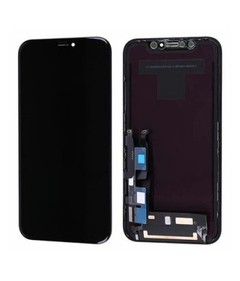
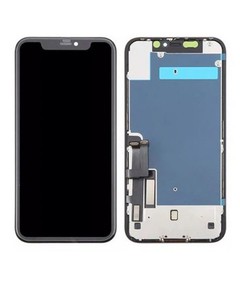
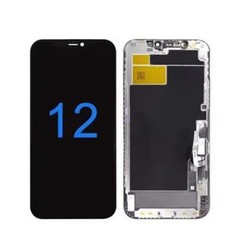

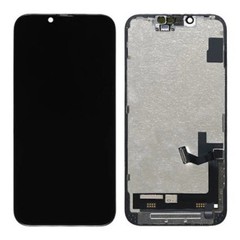



How Much Does iPhone Screen Replacement Cost?

There is no single number that answers "how much does an iPhone screen replacement cost," because the honest answer changes with the iPhone model, the screen technology, the source and quality grade of the part, labor, warranty terms, and the market a repair business operates in. What a customer pays at the counter is also a different number from what a repair shop pays to acquire and install the screen - and confusing the two is one of the fastest ways for a repair business to under-price a job.
This guide is written for repair shops, refurbishers, and wholesale buyers, not for a consumer deciding where to get a cracked screen fixed. It walks through what actually drives replacement cost, then gives you a repeatable framework and worksheet for calculating your own true cost per repair - so your pricing is based on your numbers, not on a number you saw in a search result.
Quick Answer: How Much Does iPhone Screen Replacement Cost?
Apple does not publish a static price list - its repair-estimate tool requires selecting the exact device and issue, and the final fee is confirmed only after inspection. A documented September 2025 snapshot from Apple's U.S. repair-estimate tool, reported when the iPhone 17 lineup launched, listed the following prices:
Historical Apple repair-price examples for selected iPhone 17 models in the United States
| Model | Service | Price | Market | Source | Checked date |
|---|---|---|---|---|---|
| iPhone 17, iPhone 17 Pro, iPhone Air | Out-of-warranty, cracked front screen only | $329 | United States, USD, excludes tax | Apple's iPhone Repair and Service estimate tool, as reported by 9to5Mac (secondary reporting) | September 12, 2025 |
| iPhone 17 Pro Max | Out-of-warranty, cracked front screen only | $379 | United States, USD, excludes tax | Apple's iPhone Repair and Service estimate tool, as reported by 9to5Mac (secondary reporting) | September 12, 2025 |
| Any Covered iPhone | AppleCare+ screen-only accidental damage claim | $29 plus applicable tax | United States | Apple's AppleCare+ Terms and Conditions (primary source, current at time of check) | August 11, 2026 |
The $329–$379 row is a September 2025 historical snapshot, not a current quote - Apple's repair-estimate tool is interactive and model-specific, and generates a fee only after a device and issue are selected, so it can't be reproduced as a static figure here. That row must be re-checked directly on Apple's current repair-estimate tool, with a new checked date recorded, before this article is republished or refreshed. The AppleCare+ row, by contrast, comes from Apple's static published terms document and was reconfirmed there directly on the date shown.
Independent repair-shop and DIY pricing are not included here because no consistently verifiable, dated source for either was available at the time of writing. Adding unverified numbers would work against the same standard this article asks repair businesses to hold their own suppliers to.
One point matters more than any of these numbers: the price a consumer pays for a repair is not the same as what it costs a repair business to acquire, inspect, and install the screen. Apple's out-of-warranty price is a useful consumer benchmark, but it does not reveal what a repair business actually spends to source, inspect, and install a screen - that number depends entirely on the business's own supply chain and cost structure, which is what the rest of this guide is built to help you calculate.
Screen Price, Repair Cost and Customer Price Are Different
These terms get used interchangeably in casual conversation, but they represent different numbers, and mixing them up is a common source of underpriced repairs.
| Cost term | What it includes | Why it matters |
|---|---|---|
| Wholesale screen price | The unit price a repair business pays a supplier for the screen assembly itself | This is only the starting point of cost, not the full cost of doing the repair |
| Landed screen cost | Wholesale price plus freight, import charges, and incoming inspection before the unit is usable inventory | This is the real acquisition cost per unit, and it's usually higher than the quoted unit price |
| Total repair cost | Landed screen cost plus labor, consumables, allocated overhead, and expected rework or warranty cost | This is what the repair actually costs the business to perform |
| Customer-facing repair price | What the business charges the end customer | This must cover total repair cost and still leave a margin - otherwise the shop is losing money on every job without knowing it |
A business that only tracks the wholesale screen price and the customer-facing price, with nothing in between, has no visibility into whether a given repair is actually profitable.

What Factors Affect iPhone Screen Replacement Cost?
iPhone model and display generation
Different iPhone generations use different display assemblies, connectors, and structural components. Newer models - particularly Pro-tier devices - tend to involve more complex assemblies, tighter tolerances, and less mature aftermarket supply chains than older, high-volume models. That combination generally pushes both part cost and repair time higher, though the exact gap depends on the specific model pair being compared and current supply conditions.
Apple's own documented pricing above illustrates the pattern: the Pro Max carried a $50 premium over the rest of the iPhone 17 lineup for the same type of front-screen repair at the time it was recorded.
LCD, Incell LCD, Hard OLED and Soft OLED
iPhones have used several different display technologies across model generations, and the technology used affects sourcing cost, performance characteristics, and how the repair is positioned to the customer. This article does not attempt a full technical comparison of these technologies - that comparison deserves its own dedicated resource - but from a cost standpoint, the technology used in a given model is one of the first things that determines what screen options are even available and roughly what they cost.
Refurbished original and aftermarket screens
Beyond technology, screens differ by source: some are refurbished original panels, others are aftermarket-manufactured. Both categories span a range of quality, and - importantly - grading terms like "A," "premium," or "incell" are not standardized across suppliers. One supplier's "high grade" may not match another's. Buyers need to compare actual documented specifications, inspection standards, and warranty terms rather than relying on a grade label alone.
Screen with frame or without frame
Some screen assemblies are supplied with the surrounding frame or mid-frame components pre-installed; others are supplied without. This affects the unit price, how long installation takes, and how much handling risk is involved in the repair - all of which feed into total repair cost.
Labor and technician skill
Labor cost is not just time-on-the-bench. It also reflects the training required to work on a given model, the tooling and calibration equipment needed, and the risk of a costly mistake (a damaged flex cable or cracked chassis mid-repair, for example). A technician working on a structurally complex model represents more embedded cost than the clock time alone suggests.
Additional device damage
A device that arrives with a cracked screen may also have a bent chassis, water exposure, or a damaged display or touch connector. Not every cracked-screen job includes additional damage, but when it's present, it adds real cost - inspection time, extra parts, and sometimes a longer repair. A responsible cost estimate treats this as a variable to check for on each device, not an assumption applied to every job.
Warranty and service level
A repair sold with a longer warranty, faster turnaround, or higher service standard carries different cost obligations than a no-frills budget repair - because the business is implicitly pricing in some expected level of rework and support after the sale.
Geographic market and operating cost
Rent, wages, taxes, and local competitive positioning all affect what a shop needs to charge to remain profitable in a given market. This article does not offer tax or legal guidance; operating-cost decisions should be reviewed with a local accountant or advisor familiar with the specific market.

How Repair Shops Can Calculate the True Cost
Most underpriced repairs come from stopping the cost calculation at the wholesale screen price. A more complete calculation runs through three layers:
Landed Screen Cost = Unit Price + Freight Allocation + Import Charges + Incoming Inspection + Handling
This is what the screen actually costs to get into usable inventory - not the number on the supplier's quote alone.
Total Repair Cost = Landed Screen Cost + Direct Labor + Consumables + Allocated Operating Cost + Expected Rework or Warranty Cost + Transaction Fees
This is what the repair costs the business to deliver, including a realistic allowance for the repairs that come back.
Required Selling Price = Total Repair Cost + Target Profit
This is the price that actually supports the business, rather than a price copied from a competitor's advertised rate.
A few notes on using this framework:
- Every business allocates freight, overhead, and rework differently - there is no universal formula for the allocation percentages.
- Tax and accounting treatment of these costs varies by market and business structure.
- The framework only produces useful numbers when it's filled in with your own historical data, not industry averages.
- If you're unsure how to allocate a cost category, a local accountant or bookkeeper familiar with your business is a better resource than a generic online guide.
Repair Shop Cost Worksheet
The worked example below uses an iPhone 13 Premium Soft OLED repair sold by an independent U.S. repair shop. Soft OLED is used because its flexible panel construction is closer to the iPhone 13's original OLED technology than an In-Cell LCD replacement. Publicly verifiable prices are used where available; shop-specific items are labeled as operating assumptions rather than presented as universal industry figures. Sales tax is excluded because it varies by location and is normally added to the customer invoice rather than treated as repair revenue.
| Cost item | What to include | U.S. worked example (USD) |
|---|---|---|
| Screen unit price | iPhone 13 Premium Soft OLED assembly with pre-installed back plate | $45.99 |
| Freight allocation | Domestic parts order exceeds the supplier's $50 free-shipping threshold | $0.00 |
| Import charges | Purchased from a U.S.-shipping supplier; assumes no direct import by the repair shop | $0.00 |
| Incoming inspection | Six minutes at a $25.89 hourly labor benchmark | $2.59 |
| Repair labor | Forty-five minutes at a $25.89 hourly labor benchmark | $19.42 |
| Consumables | Replacement display adhesive plus cleaning-material allowance | $2.65 |
| Operating cost | Illustrative per-job allocation for rent, utilities, software, administration, and tools | $15.00 |
| Rework reserve | Illustrative 5% reserve applied to the $85.65 pre-reserve subtotal | $4.28 |
| Transaction fees | Square Free in-person card fee of 2.6% + $0.15 on a $150.00 sale | $4.05 |
| Total repair cost | Cost before target profit | $93.98 |
| Target profit | $150.00 selling price minus $93.98 total repair cost | $56.02 |
| Illustrative customer price | Published Soft OLED repair-price benchmark, before applicable sales tax | $150.00 |

In this example, the repair produces an illustrative pre-tax profit of $56.02 and a margin of approximately 37.3% on a $150.00 sale. The screen price, supplier shipping threshold, payment fee, wage benchmark, and customer-price benchmark are externally verifiable. The zero freight allocation assumes the screen is purchased with enough additional parts to exceed the supplier's $50 free-shipping threshold; a single $45.99 screen order may incur shipping. The 45-minute repair time, six-minute inspection, $2.65 consumables allowance, $15 overhead allocation, and 5% rework reserve are explicit modeling assumptions; a repair shop should replace them with its own time records, consumable invoices, overhead allocation, and verified return history before using the worksheet for pricing.
Filling this in honestly - including the rework reserve line, which many shops skip - is usually what reveals whether a current price list is actually profitable.
How Screen Quality Changes the Real Repair Cost?
The unit price on a supplier's quote is not the only place screen quality shows up in your cost structure. Quality also shows up through:
- Incoming inspection failures that reduce usable yield from a batch
- Display or touch response inconsistencies discovered after installation
- Installation failures that consume technician time without producing a billable repair
- Repeat labor on jobs that need to be redone
- Warranty replacements and the parts and labor they consume
- Customer complaints and the time spent resolving them
- RMA administration time with the supplier
- Technician productivity, since inconsistent parts slow down even experienced technicians
- Business reputation, which has a cost even when it isn't itemized
It would be convenient to say that a lower price always means lower quality, or that a higher price always means better reliability - but neither claim holds up consistently across suppliers. The more reliable approach is to evaluate total cost against documented specifications, sample test results, and batch consistency records, rather than price alone.

Choosing a Screen Option for Different Repair Services
Different repair service positions have different priorities when it comes to screen sourcing, and no single screen option is the right fit for every service tier.
| Repair service position | Buyer priorities | Screen factors to verify | Risks to monitor |
|---|---|---|---|
| Budget service | Lowest total repair cost, fast turnaround | Landed cost, minimum functional specification | Higher rework rate can erase the price advantage |
| Standard service | Balance of cost and reliability | Documented specification, batch consistency | Inconsistent supply can disrupt turnaround commitments |
| Premium service | Display performance closest to original, longer warranty | Compatibility, touch response, color and brightness consistency | Higher landed cost must be reflected in pricing, not absorbed |
| Refurbishment program | Consistency across large volumes | Batch-to-batch consistency, supply continuity | A single inconsistent batch can affect many units at once |
| Repair-chain program | Standardization across multiple locations | Supply continuity, consistent documentation across shipments | Variation between shipments creates inconsistent customer experience across locations |
The right choice depends on how a business has positioned its service, not on which option is cheapest or most expensive in isolation.
Why the Cheapest Screen May Not Produce the Highest Profit?
Two related numbers are useful for evaluating repair profitability:
Gross Margin % = (Selling Price − Cost of Goods Sold) ÷ Selling Price × 100
Contribution Margin = Selling Price − Variable Costs
A repair that looks profitable when the calculation only includes the screen's wholesale price often looks different once labor, incoming inspection, consumables, transaction fees, rework, and warranty cost are included. Leaving any of these out doesn't make them disappear - it just means the business is absorbing them without seeing it, which tends to show up later as a margin that's thinner than expected. This is general cost-accounting logic, not formal financial or tax advice; a bookkeeper or accountant can help apply it to your specific business.
How to Compare Wholesale Screen Quotations?
Two quotations are only comparable if they're describing the same thing. A practical comparison process:
- Confirm the exact iPhone model.
- Confirm the screen technology.
- Confirm the screen source and quality grade.
- Confirm whether the screen includes the frame.
- Get the specification in writing.
- Confirm the testing and acceptance standard used.
- Calculate the landed cost, not just the unit price.
- Check minimum order quantity and mixed-batch conditions.
- Compare warranty and RMA terms.
- Ask how batch-to-batch consistency is monitored.
- Test samples before committing to a bulk order.
- Base the final comparison on actual test results, not the quote sheet alone.
A quote that looks cheaper on the unit price line can be more expensive once landed cost, quality grade, and warranty terms are matched to a comparable quote from another supplier.

Common Costing and Pricing Mistakes
| Mistake | Likely consequence | Better approach |
|---|---|---|
| Only calculating the screen's unit price | Repairs look more profitable than they are | Use landed cost, not unit price |
| Ignoring freight and import charges | Margin is quietly eroded on every unit | Allocate freight and duties per unit |
| Skipping incoming inspection cost | Defective units reach customers, driving rework | Budget inspection as a line item |
| Leaving out labor and consumables | Total repair cost is understated | Include both in every calculation |
| Comparing quotes across different quality grades | "Cheaper" supplier may cost more once matched fairly | Compare only equivalent specifications |
| Applying one flat profit target to every model | Complex models may be underpriced, simple ones overpriced | Set targets per model or model tier |
| Not tracking real rework cost | Rework reserve stays a guess instead of a fact | Log every rework and its cost |
| Copying a competitor's advertised price | Ignores your own cost structure entirely | Price from your own worksheet |
| Finalizing a quote before inspecting the device | Additional damage gets absorbed as a loss | Inspect before quoting |
| Overstocking soon-to-be-discontinued models | Capital tied up in slow-moving inventory | Match stock to verified demand |
| Skipping confirmation of supplier RMA terms | Defective-unit costs land entirely on the shop | Confirm RMA terms before ordering |
Pricing decisions should reflect each business's own cost structure and service standards - not an attempt to match or undercut a competitor's advertised price without knowing what that competitor's true costs are.
Practical Pricing Workflow for Repair Businesses
- Identify the exact iPhone model.
- Inspect the device for additional damage.
- Define the required repair-service level.
- Select the appropriate screen specification.
- Calculate the landed screen cost.
- Add labor, consumables, and operating costs.
- Include a verified rework and warranty reserve.
- Add the business's target profit.
- Review applicable local tax and disclosure requirements.
- Issue a clear written quotation.
- Record the actual repair outcome.
- Update future pricing using the real data collected.
Questions to Ask a Wholesale Screen Supplier
- What exact screen technology does this quotation cover?
- How is the quality grade defined, and what does it exclude?
- Is the screen supplied with or without a frame?
- What specifications are documented in writing?
- How is model compatibility verified?
- What quality-control process is used before shipment?
- How is batch-to-batch consistency monitored?
- Can buyers test samples before placing a bulk order?
- What exactly does the warranty cover, and for how long?
- How does the RMA process work, step by step?
- Are freight and import charges included in the quoted price?
- Can the supplier quote a mixed-model order?
How are specification changes communicated to existing customers?
FAQ
Why do iPhone screen replacement prices vary so much?
Because the final price reflects several stacked variables - model, display technology, screen source and grade, labor, warranty, and market - not a single fixed cost. Apple's own documented pricing shows this even within a single lineup, with a $50 spread between the iPhone 17 Pro Max and the rest of the iPhone 17 series for the same type of repair.
Is an OLED screen replacement always more expensive than LCD?
Not universally. OLED assemblies are generally associated with newer, more complex models, which tends to push cost up, but the relationship between display technology and price is not a fixed rule across every model and supplier.
Is the cheapest screen the most profitable option for a repair shop?
Not necessarily. A low unit price can be offset by higher rework, warranty claims, or inspection failures. Profitability depends on total repair cost, not the wholesale unit price alone.
How should repair shops account for warranty replacements?
By tracking actual historical warranty and rework costs and building a rework reserve into the total repair cost calculation, rather than treating warranty claims as an unplanned expense after the fact.
Does buying iPhone screens in bulk always reduce costs?
Bulk purchasing can lower the unit price, but the real cost impact depends on freight terms, storage cost, capital tied up in inventory, and how quickly the stock is actually used. It should be evaluated against landed cost and turnover, not unit price alone.
How can repair businesses compare wholesale screen prices?
By matching quotations on model, screen technology, source, grade, frame configuration, and warranty terms before comparing price - and by testing samples rather than relying on the quote sheet alone.
Conclusion
Apple's own out-of-warranty price is a useful consumer benchmark - a September 2025 historical snapshot showed $329–$379 for a front-screen-only repair across the iPhone 17 lineup - but it does not reveal what a repair business actually spends to source, inspect, and install a screen. What matters more than any single price point is understanding the difference between wholesale screen price, landed screen cost, total repair cost, and customer-facing price - and building pricing from real, business-specific data rather than a competitor's or Apple's advertised rate.
Ready to price your repairs with real product data? Send your iPhone model list, required screen grade, and expected quantity through our wholesale screen inquiry form. Request available specifications, sample options, and current quotation terms before finalizing your repair price.