


How to Compare Quotations from Different LCD Factories?
When two or more LCD factories quote the same request, the headline numbers can still describe different products, quantities or commercial scopes. One supplier may be pricing a bare panel per piece, another a full assembly per set, and a third a landed price that already includes packaging and freight. Buyers who line these numbers up as-is end up comparing price tags, not offers.
This method is for repair-business buyers, regional distributors, importers and private-label purchasing teams who already have two or more quotations in hand and need to decide what to do with them. It does not rank suppliers or predict who is "better." It walks through the product, order and cost details that make one quotation comparable to another, so the comparison reflects what each factory is actually agreeing to deliver.
A useful comparison should leave you with twelve confirmed or unresolved fields, a consistent supplier worksheet, a short message you can send to close information gaps, and a clear decision on whether to request clarification, samples, or a trial order.

How to Compare Quotations from Different LCD Factories: The Short Answer
Two quotations can only be compared once they describe the same model, configuration, quantity structure and delivery scope. Before comparing price, confirm that both suppliers are quoting the same SKU-level product, the same order size and mix, the same packaging inclusions, and the same point at which their responsibility for the shipment ends. Only after those terms are aligned does a price difference tell you anything useful. This is the same discipline that runs through the broader iPhone LCD wholesale sourcing process: pricing is one input inside a larger set of sourcing decisions, not a standalone number to rank suppliers by.
Who Should Use This iPhone LCD Quotation Comparison Guide?
This comparison method is for buyers who already have two or more supplier quotations and need to decide what to do next, and it assumes some familiarity with wholesale iPhone LCD purchasing - MOQ, sample orders, quality grades. Supplier discovery, factory auditing, and full import planning sit outside its scope.
Product and Quality Terms to Align Before Comparing Price
1. Are the quotations for the same model, display technology and assembly configuration?
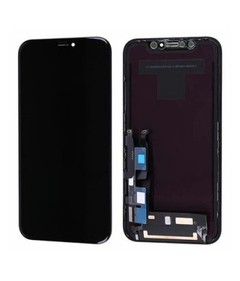
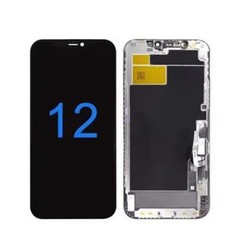
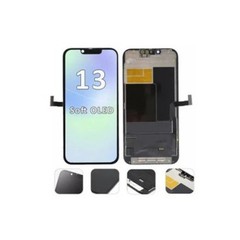
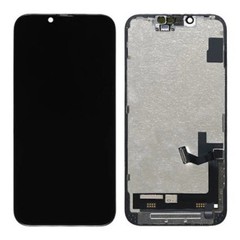
Start by confirming the exact SKU, model, display technology and assembly configuration each quotation covers, not just the phone model name. A quotation labeled "iPhone" without a specific model, product reference and assembly configuration - and a stated revision where a revision applies - is not yet comparable to anything. Ask each supplier to state whether the price covers a display module on its own, a partial assembly, or a more complete assembly with the applicable frame and related components, and whether the price is per piece or per set. Two quotations for the "same phone" can describe two different products if their assembly scope differs. When a request covers a specific model such as the iPhone 7 LCD screen, confirm the assembly scope against that model's own specification sheet before treating any two quotes as the same line item. If a supplier hasn't specified the configuration, don't assume it matches a previous quote - ask, and mark the field as unconfirmed until they answer.

2. What does each supplier's quality grade actually mean?
Labels like "original," "OEM," "AAA" or "premium" are not standardized across suppliers, so the same label from two factories can describe different products. Ask each supplier to translate their grade into specific, checkable attributes: which components are used, what testing is performed before shipment, and what visual or functional criteria a unit must pass to be included in that grade. A grade name on its own is not a specification. If a supplier can't or won't define their grade in these terms, treat that quotation as harder to compare, not automatically lower quality - it simply means you don't yet know what you're comparing it to.
3. Are performance claims based on comparable test conditions?
When suppliers make claims about brightness, touch response, color consistency or appearance, ask what test method, test conditions and acceptance criteria back up each claim. A brightness figure with no stated test condition and a brightness figure tested under a documented method are not the same kind of evidence, even if the numbers look similar. If a supplier references AQL sampling, ask which AQL level and sampling plan they use and for which characteristics - an AQL figure describes a sampling method, not a guaranteed defect rate for the shipment you receive. Without this detail, treat the performance claim as a supplier statement to verify later, not as a confirmed spec you can price against.

Order and Delivery Terms Worth Verifying
4. How will the approved sample be matched to bulk production?
A quotation is only as useful as the connection between what you approve in a sample and what actually ships in bulk. Ask each supplier how they identify the approved sample (a reference number, a signed specification, a retained physical sample) and how they notify you if a material, component or configuration changes between the sample and a later production batch. This is the same gap covered in more depth in sample-to-bulk quality consistency - a small sample only demonstrates that one unit performed a certain way under certain conditions; it does not by itself demonstrate what a full production run will look like.

5. Are quantities, price breaks and mixed-model rules aligned?
Compare the full quantity basket, not a single model's headline price. Ask each supplier for their per-model MOQ, their overall order MOQ, how price breaks apply across quantity tiers, and how mixed-model orders are priced - some suppliers quote a blended rate across models, others price each SKU independently with its own minimum. A quotation built around ordering 500 units of a single model, such as wholesale LCD screens for the iPhone 11, is not directly comparable to a quotation built around a mixed basket of five different models at smaller quantities each. Rebuild both quotations around the same basket before comparing totals.

6. What are the sample and trial-order costs?
Ask each supplier for their sample unit price, sample shipping cost, whether any sample fee is credited against a future order, and what price applies to a trial order versus a confirmed bulk order. Don't assume samples are free, that a sample fee is refundable, or that a trial order automatically qualifies for bulk pricing - these terms vary and should be confirmed in writing. Separate what you'll spend to verify the supplier from what you'll spend on an ongoing basis; conflating the two makes early quotations look cheaper or more expensive than they will be at scale.
7. What packaging is included in the quoted price?
Compare what each quotation actually includes for individual protection, inner packing, outer cartons, labeling and any packaging customization you've discussed. Confirm how packaging choices affect the shipment's volume and weight, since that in turn affects freight cost. Don't assume custom packaging or branded printing is included at no extra cost unless a supplier has confirmed it in writing - this is one area where an apparently lower quotation may exclude something another supplier has already included.

8. When does the lead time start, and what does it cover?
Ask each supplier to separate current stock-handling time, production time, inspection, packing, and transit time, and to state which event starts the clock - payment received, specification confirmed, packaging approved, or something else. Two suppliers quoting "15 days" can mean different things if one is counting from deposit and the other from final art approval. Also confirm whether the date quoted is a ship date or an estimated arrival date - these should never be compared as if they were the same milestone.
Responsibility and Cost Terms Worth Verifying
9. Which shipping costs and responsibilities are included?
Compare transport mode, origin and destination points, and exactly which costs and responsibilities each quotation covers. If a supplier references an Incoterm, confirm the specific term, the named place or port, and the version being used, and check that the term is appropriate for the transport mode involved. An EXW quotation and a DDP quotation are not different price points on the same offer - they are different scopes of responsibility, and ranking them by headline price alone will mislead you. Destination taxes and duties should only be discussed where you have a specific, reliable source for the country involved; otherwise treat them as an open item to confirm separately.
10. What currency, payment terms and quotation validity apply?
Compare the currency each quotation is priced in, the exchange-rate basis and date if conversion is involved, the payment schedule (deposit, balance, milestones), any payment processing fees, and how long the quotation remains valid. A price difference may partly reflect payment terms or payment-related costs rather than product specification alone. Don't assume a quotation holds indefinitely, and don't assume currency conversion costs are zero.
11. What happens when screens fail inspection or are returned?
Compare when each supplier's warranty period starts, what it covers and excludes, the deadline for reporting an arrival issue, what evidence they require, and how a claim is resolved - repair, replacement, refund or credit, and who covers return freight and how long replacement takes. A stated duration like "12-month warranty" describes a time window, not an executable process; the terms around it determine what you can actually recover if something goes wrong. Don't assume every failure is an installation issue, and don't assume every return is a manufacturing defect - both determinations require evidence, not assumption.
12. What is the comparable cost, and which uncertainties remain?
Once the previous eleven points are addressed, sort each line item from each quotation into one of three states: Comparable, where the terms and evidence needed to judge it are in hand; Requires clarification, where a missing detail could still change the outcome; and Not equivalent, where the products or terms differ enough that they need to be evaluated separately rather than ranked against each other. This isn't a certification - it's a working method for keeping the comparison honest. A missing field should be recorded as unconfirmed, not treated as zero cost, and a quality claim with no supporting evidence should stay unconfirmed rather than being converted into a score.
Turning the Comparison Into Numbers
Quotation Comparison Worksheet
Copy this table for each active comparison. Mark any field you don't yet have as "To confirm" rather than leaving it blank or guessing.
| Comparison item | Supplier A | Supplier B | Evidence / clarification needed |
|---|---|---|---|
| Model, revision, assembly configuration | iPhone 11 replacement LCD, supplier ref. A11-LCD-01, complete display assembly without frame | iPhone 11 replacement LCD, supplier ref. B11-LCD-02, complete display assembly without frame | Confirm both references use the same display technology, connector layout, included components, and revision where applicable |
| Price basis (per piece / per set) | USD 12.80 per piece | USD 12.20 per piece | Confirm both prices refer to one complete display assembly and exclude any separate accessories or service charges |
| Quality grade definition | Supplier-defined Premium grade; written spec includes display, touch, cosmetic, and flex-cable criteria | Supplier-defined AAA grade; written spec includes display and touch criteria, cosmetic criteria less clearly defined | Request written acceptance criteria from Supplier B so grade definitions can be compared on the same basis |
| Test method and acceptance criteria | Functional display and touch test plus cosmetic inspection; inspection checklist available | Functional display and touch test stated; acceptance thresholds not fully documented | Request Supplier B's QC checklist and documented acceptance criteria |
| Sample-to-bulk matching process | Approved sample reference retained and batch number linked to production record | Sample reference stated on order sheet, but batch-linking process not confirmed | Ask Supplier B how approved samples are linked to later bulk batches and how revisions are controlled |
| Per-model MOQ / order MOQ | 50 pcs per model; 200 pcs total order minimum | 100 pcs per model; no separate total-order minimum stated | Confirm whether Supplier B's MOQ applies per SKU and whether mixed models can be combined toward any total minimum |
| Mixed-model pricing rule | Mixed models allowed; each SKU priced separately by its own quantity tier | Mixed models allowed, but pricing changes if individual model quantity falls below 100 pcs | Request written mixed-order price structure from both suppliers for the same model basket |
| Sample and trial-order price | Sample: USD 16.00/pc; sample shipping charged separately; trial order priced by actual quantity tier | Sample: USD 15.00/pc; sample shipping separate; sample fee may be credited on first bulk order | Confirm Supplier B's sample-credit condition and minimum qualifying bulk order |
| Packaging inclusions | Anti-static bag, foam protection, individual box, outer carton included | Anti-static bag and foam protection included; individual box charged separately | Add Supplier B's box cost if individual packaging is required so both quotations use the same packaging basis |
| Lead time components and start point | 5–7 working days from payment and final specification confirmation; excludes transit | 7–10 working days from payment; packaging artwork approval may extend timing if customized | Confirm whether both stated lead times include inspection and packing, and define the exact start point |
| Shipping terms / Incoterm and named place | EXW Shenzhen | FOB Shenzhen | These are not directly comparable scopes; normalize both to the same named place or obtain the same Incoterm from each supplier |
| Currency, payment schedule, quote validity | USD; 30% deposit, 70% before shipment; quotation valid 15 days | USD; 50% deposit, 50% before shipment; quotation valid 10 days | Confirm bank/payment fees and whether revised quantities or packaging requirements require a new quotation |
| Warranty coverage, exclusions, claim process | 12-month stated warranty; functional defects covered subject to inspection evidence; installation damage excluded; replacement/credit after claim review | 6-month stated warranty; functional defects covered; claim evidence and remedy process less clearly documented | Request Supplier B's written claim procedure, required evidence, remedy method, and responsibility for return/replacement logistics |
Keep a separate, smaller table for the cost calculation below rather than widening this one - a single oversized table stops being readable on a phone screen.
Quotation Clarification Message
Use a short message like this to get comparable answers from every supplier at once, instead of going back and forth separately with each one:
We're comparing quotations for [model(s) and quantities]. To keep the comparison accurate, could you confirm: the exact assembly configuration and price basis (per piece/per set); your quality grade definition and test method for this configuration; per-model and total MOQ, and how mixed-model orders are priced; sample and trial-order pricing; what's included in packaging; lead time broken into production, inspection and transit, and what date that starts from; your shipping terms including Incoterm and named place if applicable; payment schedule and quotation validity; and your warranty coverage and claim process. Happy to share the destination country and order structure if that helps you quote accurately.
A Worked Cost Example
Illustrative example only - not current market pricing or verified supplier performance.
Assume both suppliers are quoting the same 500-unit order of the same model and configuration, delivered to the same destination, in USD.
| Cost element | Supplier A | Supplier B |
|---|---|---|
| Quoted product cost (500 units) | $6,500 | $6,000 |
| Packaging (if not already included) | Included | +$150 |
| Freight and insurance (if not already included) | +$400 | Included |
| Assumed inspection/rework cost (illustrative range, no confirmed defect data) | +$100–200 | +$150–300 |
| Approximate landed + assumed cost range | $7,000–7,100 | $6,300–6,450 |
Supplier B's headline price is lower, but once packaging and freight are added on the same basis, the gap narrows. The inspection/rework line stays an assumed range on purpose - replace it with real figures once trial-order data exists, rather than treating this table as a finished calculation. What each supplier's headline price is built from in the first place is a separate question, covered in what determines iPhone LCD screen wholesale prices; this table only asks which unconfirmed inputs - packaging, freight, actual defect experience - would need to change before the ranking between two quotations flips.
If you want to compare on a per-usable-screen basis once real figures replace the assumed ranges above, the formula is:
- Cost per usable screen = Defined total cost ÷ Defined usable-screen quantity
- State clearly what counts as "usable" (units that passed your incoming inspection, for example), over what time window, and whether any replacement units already received are included - without that definition, a per-usable-screen figure isn't comparable between suppliers.
Deciding What Happens Next
Work through your comparison worksheet using this logic rather than a single overall score:
- Key configuration details missing → get the specification confirmed before ranking anything by price.
- Test conditions don't match between suppliers → ask both to test under the same method before comparing the results.
- Freight or destination costs aren't confirmed → keep a cost range open rather than picking a single landed-cost figure.
- Sample passed but batch-tracking process is unclear → move to a controlled trial order before a full bulk commitment.
- A required feature or acceptance condition isn't met → that quotation is out of contention regardless of price.
- Terms are aligned and evidence is sufficient → weigh the confirmed cost against your actual order needs and decide.
If you use a scoring approach internally, treat any weighting as an adjustable starting point rather than a fixed formula, and keep a small number of conditions - like a missing warranty term or an unmet spec - that block a supplier regardless of how high their score is elsewhere.
Buyers in different roles tend to weigh this differently. Repair businesses and repair chains usually prioritize fit, installable quality and how fast a replacement ships if something arrives defective. Distributors weigh batch-to-batch consistency and whether after-sales terms hold up across repeat orders. Importers focus on shipping terms, documentation and where responsibility for customs and destination charges sits. Private-label buyers care most about whether customization requirements and specification revisions are actually tracked and communicated. These are starting points for adjusting your own comparison, not a fixed ranking every buyer should follow.
Frequently Asked Questions
Can I compare quotes without testing samples?
You can align product, order and delivery terms without a sample in hand, but quality-related claims - grade definitions, test results, appearance criteria - stay in the "requires clarification" category until a sample or trial order gives you direct evidence.
Should the cheapest quotation always be rejected?
No. A lower quotation isn't automatically a warning sign, and a higher one isn't automatically safer. The worksheet above is designed to show you what a price difference is actually paying for before you decide either way.
How should I compare a quote with shipping included against one without it?
Rebuild both onto the same basis by adding your best estimate of freight, insurance and any destination charges to the quote that excludes them, using a stated range rather than a single number if the shipping terms aren't fully confirmed yet.
Can sample pricing predict repeat-order pricing?
Not reliably. Sample and trial-order pricing often follows different rules than confirmed bulk pricing, which is why question 6 above asks suppliers to state both separately rather than assuming one implies the other.
What should I do if a supplier won't define its quality grade?
Keep that quotation in the comparison but mark the grade line as unconfirmed rather than assuming it matches another supplier's stated grade - ask again with the specific attributes you need defined, using the clarification message above as a starting point.
Once your worksheet is filled in and the open items are down to a short list, the next practical step is usually the same one that closes any real comparison: send the same models, quantities, destination and quality requirements through an iPhone LCD wholesale quotation request so a supplier is responding to the same purchasing basis you've just built - that's what turns a general comparison into an itemized quotation you can actually act on.