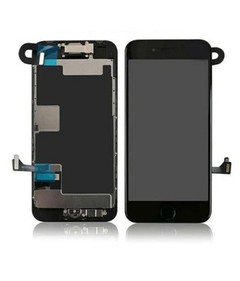
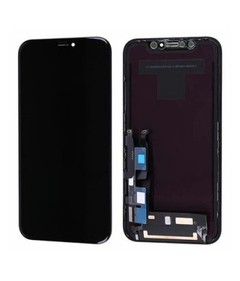
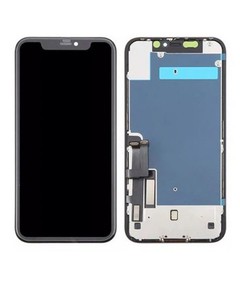
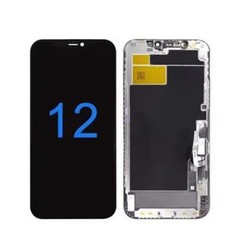
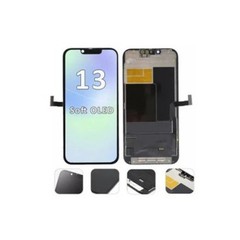
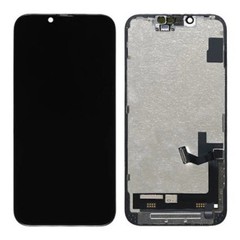
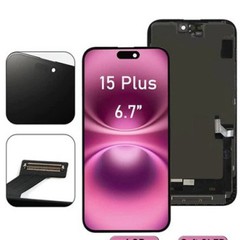
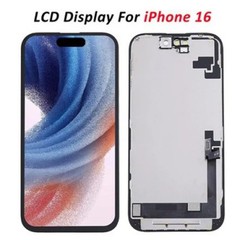

OLED vs LCD iPhone Screens: What's the Difference?
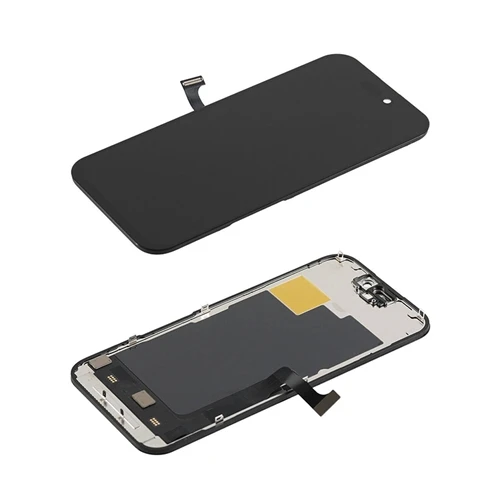
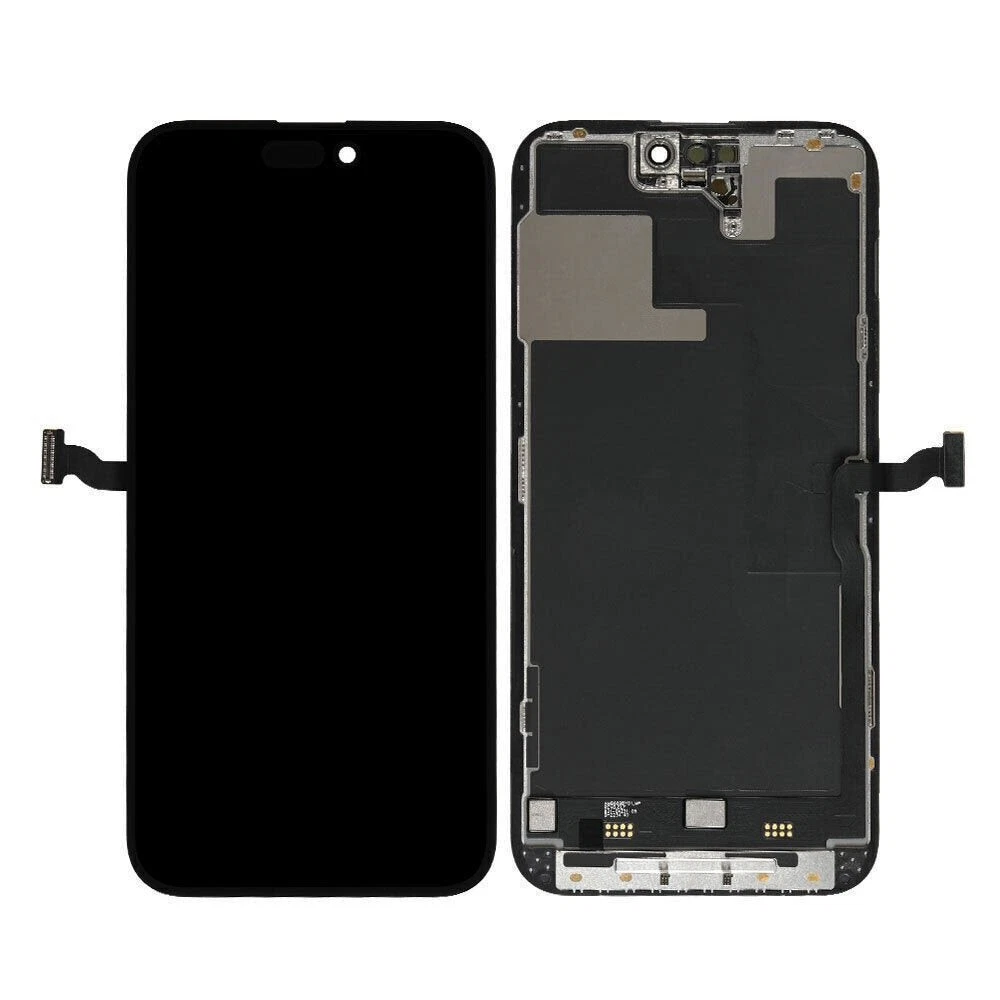
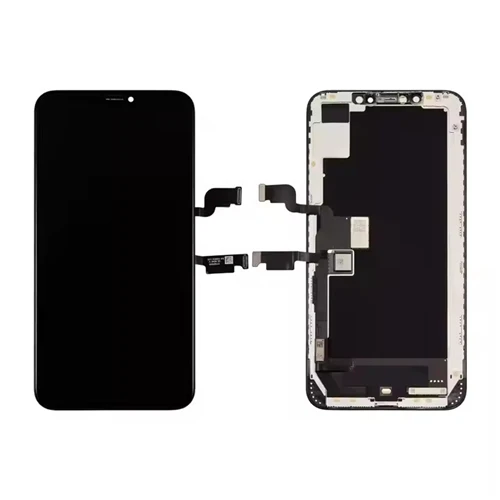
LCD iPhone screens use a separate backlight; OLED screens use self-emissive pixels that produce their own light. Panel technology alone doesn't determine quality - the specific product, model compatibility, batch consistency, and total repair cost matter more than the category label.
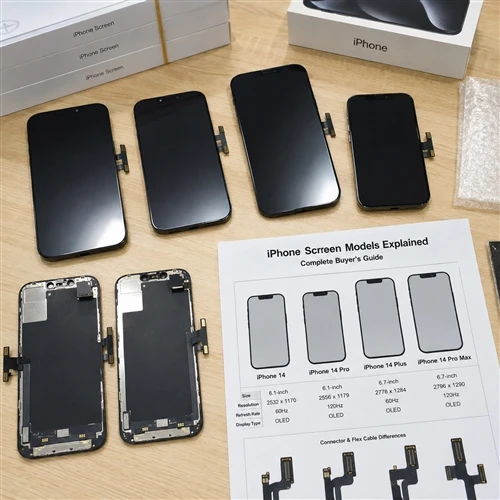
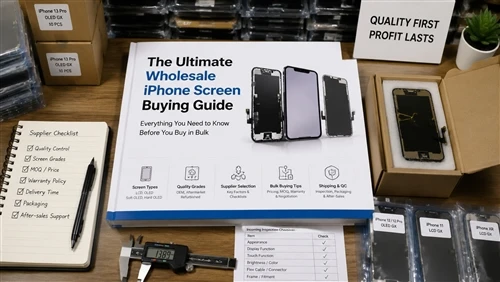
This article compares OLED and LCD replacement screens for repair shops, wholesalers, distributors, and refurbishment businesses sourcing at scale - covering the technical differences, where each fits, and what to verify before committing to a bulk order. This article is part of our broader iPhone screen types and buying guide.

Quick Answer: What Is the Main Difference Between OLED and LCD iPhone Screens?
LCD screens shine a backlight through a liquid crystal layer. OLED screens use self-emissive pixels that can be switched off independently, producing deeper blacks and higher contrast in a thinner assembly.
LCD usually occupies a lower price position in the replacement market. The right choice still depends on model compatibility, repair tier, and verified sample performance - not the technology name alone.
How Does an LCD iPhone Screen Work?
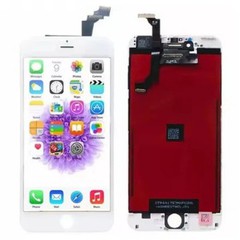
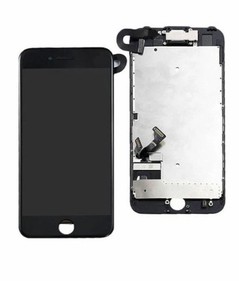
An LCD replacement screen is built from several layers working together:
- Backlight - a light source behind the display provides constant illumination.
- Liquid crystal layer - liquid crystals twist to block or allow light through, pixel by pixel.
- Color filters - split the backlight into red, green, and blue subpixels to form an image.
- Touch layer - detects finger input, either bonded on top of the display stack or integrated into it, depending on design.
- Display driver - controls how each pixel responds to signal from the phone's logic board.
Because the backlight stays on, black areas are produced by blocking light rather than switching pixels off - see How Does an iPhone Screen Work for the full mechanical breakdown. Some LCD replacement screens use an In-Cell design, where the touch layer is built into the LCD stack rather than layered on top; that design is covered separately in In-Cell LCD Replacement Screens.

How Does an OLED iPhone Screen Work?
An OLED replacement screen works differently at the pixel level:
- Self-emissive pixels - each pixel produces its own light, removing the need for a separate backlight layer.
- Individual pixel control - pixels dim or switch off independently, which is how OLED reproduces black.
- Panel structure - without a backlight layer, the overall screen assembly is typically thinner.
- Panel construction - Soft OLED panels use a flexible substrate; Hard OLED panels use a more rigid construction. This affects cost, durability characteristics, and repair handling.
The Hard OLED vs. Soft OLED distinction affects pricing and quality positioning in the aftermarket, but it's a separate topic - see Hard OLED vs Soft OLED for the full comparison.

OLED vs LCD iPhone Screens: Side-by-Side Comparison
These are typical characteristics and purchasing considerations, not guaranteed specifications for every replacement screen. Actual performance varies by manufacturer, grade, and batch.
| Dimension | LCD | OLED |
|---|---|---|
| Light source | Backlight shining through a liquid crystal layer | Self-emissive pixels, no backlight |
| Black level | Typically less deep, since residual backlight may remain visible | Typically deeper, since unused pixels can switch off |
| Contrast | Generally lower, limited by backlight bleed | Generally higher, driven by per-pixel light control |
| Brightness behavior | Comes from a dedicated backlight unit | Depends on panel design, driver IC, and displayed content |
| Color performance | Varies by panel and color-filter quality | Often wider range, but consistency depends on panel grade and calibration |
| Viewing angles | Varies by LCD panel technology used | Generally consistent across a wide range of angles |
| Response time | Adequate for typical smartphone use | Typically fast pixel response |
| Display uniformity | Depends on backlight evenness and panel quality | Depends on pixel and driver consistency; poor units can show Mura (visible cloudy patterns) |
| Panel thickness | Generally thicker, due to the backlight layer | Generally thinner, with no backlight layer |
| Construction | Rigid | Soft OLED: flexible substrate; Hard OLED: more rigid |
| Power-consumption behavior | Backlight draws power regardless of image content | Influenced by content, brightness, and panel/driver design - not lower in every case |
| Burn-in / image-retention risk | Not applicable in the same way | Possible with static content over time; severity depends on panel quality and usage pattern |
| Typical cost position | Often lower | Often higher, though this varies by grade and supplier |
| Common replacement-market use | Models that originally shipped with LCD, and some lower-cost options for select OLED models | Models that originally shipped with OLED, and repairs targeting closer-to-original display performance |
| Key points to test | Uniformity, brightness, color consistency, touch response | Black-level consistency, Mura, brightness, touch response, batch consistency |

Does OLED Always Mean Better Replacement Screen Quality?
No. OLED and LCD are display technology categories, not quality grades. Actual performance is shaped by the panel supplier, touch layer, display driver IC, cover glass, lamination process, calibration, and quality control - not just which technology the screen uses.
A low-grade OLED screen can underperform on brightness, color accuracy, touch response, lamination, or batch consistency. A well-built LCD screen can still be a solid fit for the market it's designed for. Two screens labeled "OLED" from different suppliers can behave very differently once installed. For sourcing decisions, evaluate the specific product and supplier rather than the category label - see iPhone Screen Quality Grades for how grade terminology maps to real performance.
When Does an LCD Replacement Screen Make Sense?
LCD replacement screens can be a reasonable fit for:
- Models that originally shipped with LCD displays
- Price-sensitive repair markets where customers prioritize a working screen over premium display characteristics
- Budget repair tiers offered alongside higher-priced options
- Customers who have been clearly informed that the repair uses an aftermarket LCD screen and understand the associated display tradeoffs
- Repair shops offering multiple price tiers to different customer segments
Fit still comes down to specifications, customer expectations, and sample results - a lower unit price doesn't automatically mean higher profit if it comes with more returns or rework, as covered in the cost section below.
When Does an OLED Replacement Screen Make Sense?
OLED replacement screens tend to fit:
- Models that originally shipped with OLED displays
- Repair jobs where display experience is a stated priority
- Mid-to-premium repair service tiers
- Refurbishment and resale businesses where display quality affects resale value
- Markets sensitive to black level, contrast, and overall display fidelity
Choosing OLED does not guarantee factory-like performance. Verify brightness, color, uniformity, touch response, and fit on the specific product before ordering.
Can an LCD Screen Replace an OLED Screen on an iPhone?
Some LCD replacement options exist for certain iPhone models that originally shipped with OLED. This doesn't mean LCD and OLED are interchangeable across the board, or that an LCD alternative exists for every OLED model.
Technical fit comes first. Whether an LCD option works for a specific OLED model depends on the screen assembly design, connector and cable configuration, power requirements, and physical fit within the housing - details that vary by model and by supplier.
Sample verification comes next. Before ordering in bulk, install and fully test a sample unit against the actual model, not just against a spec sheet.
Customer fit matters too. For repair tiers where customers expect a display experience close to the original, evaluate an LCD alternative carefully rather than treating it as an equivalent substitute - and confirm with your supplier exactly which models a given LCD SKU is validated for before quoting it to a customer.
How Screen Choice Affects Repair-Shop Profit and Return Costs?
Unit price is only one part of what a screen actually costs a business. A fuller purchasing cost includes:
- Unit price
- International shipping and import costs
- Defective units
- Technician rework time
- Warranty replacement and return shipping
- Customer complaints and refunds
- Lost repeat business
- Unsellable inventory
True Screen Cost = Purchase Cost + Defect Cost + Rework Cost + Warranty Cost + Logistics Cost + Customer-Service Cost
If a cheaper screen leads to more rework, warranty claims, or complaints, total cost can end up higher than a pricier alternative. This isn't a property of OLED or LCD as categories - product and batch quality determine it, which is why sample testing and supplier vetting matter more than the technology label. see how to evaluate iPhone screen quality before buying for how grade terminology maps to real performance.
What Should B2B Buyers Test Before Ordering in Bulk?
Test representative samples - not hand-picked units - against a checklist like this:
- Correct model and connector fit
- Screen installation and frame fit
- Display brightness, black level, and white-screen uniformity
- Color consistency and dead pixels
- Mura or other visible display defects
- Touch response, multi-touch performance, and edge-touch accuracy
- Display stability under use
- Proximity-sensor area alignment
- Screen thickness and flex-cable condition
- Adhesive and assembly quality
- Batch identification and packaging protection
Test under the same conditions, for the same model, so results are comparable. Use production-representative samples rather than only units the supplier selected, and agree on batch consistency criteria and incoming-inspection requirements with the supplier before scaling an order. See quality control process for iPhone screens for detailed evaluation methods.

How Different B2B Buyers Can Choose?
- Repair Shops - Focus on your repair positioning (budget, standard, or premium), customer budget, installation efficiency, and after-sales risk.
- Wholesalers and Distributors - Focus on product mix across models, batch stability across reorders, inventory turnover, and how efficiently your own customers' returns get processed.
- Refurbishment Companies - Focus on large-batch consistency, testing throughput, and the finished-product grade you need - total cost across the full purchasing and QC cycle matters more than per-unit price.
- Private-Label Brands - Focus on spec stability across reorders, packaging and documentation standards, and the reputational risk of inconsistent batches reaching end customers.
There's no rule that any one buyer type should default to OLED or LCD - the right call depends on the models you service, your target customer, and what your own testing shows.
Common Mistakes When Buying OLED and LCD iPhone Screens
- Comparing only the unit price - ignores rework, warranty, and return costs that can outweigh a lower sticker price.
- Assuming every OLED screen has the same quality - leads to inconsistent results across suppliers using the same label.
- Treating all LCD screens as identical - can result in unexpected performance gaps between batches.
- Ignoring the model's original display technology - increases the risk of ordering an incompatible replacement.
- Approving a sample without checking bulk consistency - a single good sample doesn't guarantee the full order matches.
- Failing to define product grades clearly - creates confusion internally and with customers.
- Skipping touch, fit, and uniformity tests - surfaces defects only after installation, when they're costlier to fix.
- Choosing products without considering the target repair market - mismatches product grade with customer expectations.
- Using "original," "OEM," or "premium" without measurable standards - creates liability and inconsistent expectations.
- Ignoring warranty and RMA procedures - leaves a business exposed when defects surface after assumed return windows.
OLED or LCD: A Practical B2B Decision Framework
- Confirm the exact iPhone model you're sourcing for.
- Check that model's original display technology.
- Define the target repair grade you're offering.
- Understand the end customer's expectations for that grade.
- Compare complete specifications rather than product names.
- Test representative samples under consistent conditions.
- Calculate total landed and after-sales cost, not just unit price.
- Confirm batch consistency and warranty terms with the supplier.
- Start with a controlled trial order before scaling.
- Review return rates and technician feedback before reordering at volume.
Frequently Asked Questions
Is OLED always better than LCD for iPhone screen replacement?
Not automatically. OLED typically offers deeper blacks, higher contrast, and a thinner structure, but actual quality depends on the specific product, supplier, and batch - not the technology category alone.
Can an LCD screen be installed on an iPhone that originally used OLED?
Some LCD alternatives exist for certain OLED-model iPhones, but this isn't universal. Fit and function depend on the specific model and supplier specifications, so bulk orders should follow full sample testing.
Which screen type is better for repair shops?
It depends on your repair tier, target customer, and the original technology of the models you service - supplier quality matters more than the category itself.
Are aftermarket OLED screens the same as original iPhone OLED screens?
Not necessarily. Original pulled screens, refurbished original screens, and aftermarket OLED screens are different product categories with different performance and cost profiles.
Does OLED use less battery than LCD?
It depends on displayed content, brightness, and panel/driver design - dark content can reduce power draw on some OLED panels, but this isn't a blanket rule across all products.
How should wholesalers test OLED and LCD screens before bulk ordering?
Test production-representative samples for brightness, black level, uniformity, color consistency, dead pixels, Mura, touch response, and fit - under the same conditions across units - and confirm sample-to-bulk consistency with the supplier before scaling.
Conclusion
OLED and LCD replacement screens differ in structure, typical display performance, and market positioning, but technology alone doesn't determine quality. The right choice depends on the exact model, your target repair grade, customer expectations, and how a representative sample performs in your own testing.
Send us your iPhone model list, target repair tier, and expected order quantity to receive matched OLED and LCD screen specifications, sample options, and wholesale pricing. → Request Samples and Wholesale Pricing