
What Determines iPhone LCD Screen Wholesale Prices?
iPhone LCD screen wholesale prices depend on which screen is actually being quoted - the exact specification, the quantity and model mix behind the order, the inspection work a supplier has agreed to do, and what the packaging, delivery, and warranty terms cover. The same iPhone model name can sit behind two different quotes once any of those varies, so the practical step before comparing numbers is confirming what each one actually includes.

Why the Same iPhone Model Can Have Different Wholesale Prices?
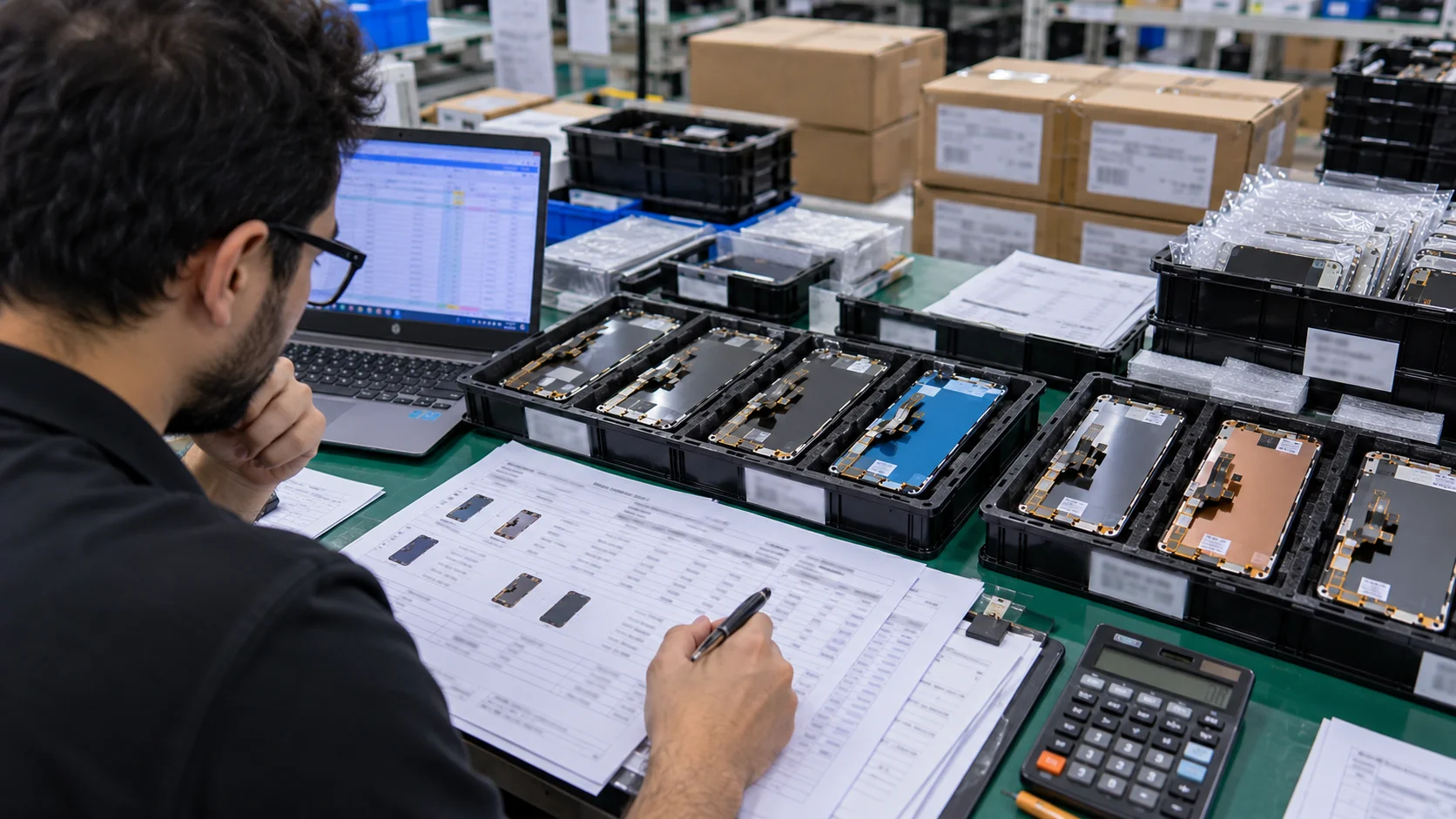
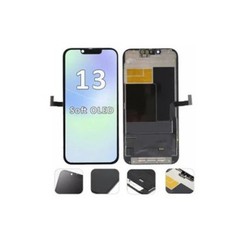
Two suppliers replying to the same request - "iPhone 13 quote please" - are not necessarily pricing the same product. One may be quoting a bare panel; the other a complete assembly with frame, brackets, and small parts fitted. One may be building to a different product revision of the same model than the other. If both quotations simply list "iPhone 13 LCD" with no further detail, differences like these may not be visible in the number alone.
Supplier terminology compounds the gap. A grade label, an inspection routine, and a packaging default can all vary between two factories quoting the same phone, and none of those differences show up in a single-line price. A quotation is really three things bundled together - a product, a quantity structure, and a set of commercial conditions - and the number on top is only worth comparing once those three have been confirmed, not assumed to match between two offers.
Screen Specifications and Product Configuration
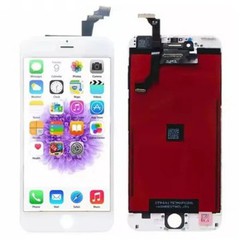
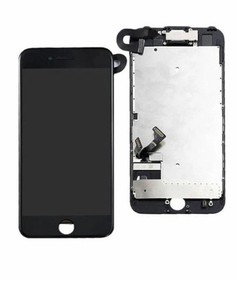
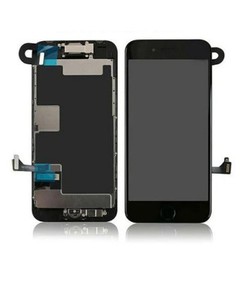
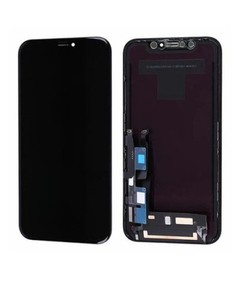
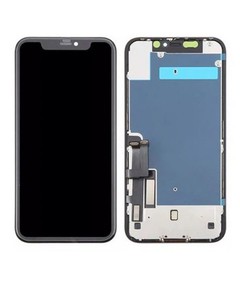
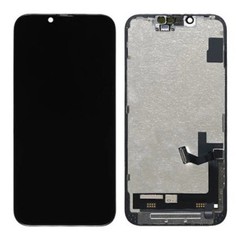
Specification differences carry a direct cost consequence, because they change what is physically being built. An assembly that includes the frame, camera bracket, and earpiece mesh takes more components and more labor to complete than a bare panel - a term used here for the display module on its own, without those surrounding assembly parts - and a change tied to a supplier's own product revision can mean adjusting a fixture or sourcing a different flex cable. None of this is visible in a request that only names the phone model.
For an iPhone 13 mini LCD replacement, confirm the supplier's product reference, display specification, and assembly contents before treating a second supplier's offer as covering the same scope - the same checks apply whichever model is being quoted. Two suppliers do not need to use the same internal part number for their offers to be comparable: what matters is whether each reference meets the same agreed specification and assembly contents, not whether the codes match.

Quality Requirements and Inspection Scope
Not every term attached to a screen carries the same weight. Premium, AAA, and similar labels are a supplier's own naming convention rather than a shared industry scale, and two factories can apply the same word to different underlying criteria. Aftermarket is a different kind of term - it describes where a part sits in the supply chain relative to the original manufacturer, not a quality tier on its own.
Any claim that references OEM in some way is worth raising with the supplier directly, since the term gets used inconsistently across the industry. The specific sourcing and specification basis behind the claim should come from the supplier in their own words, not be assumed from the label alone.
A request for a specific test to be run, or for a batch report before shipment, is reasonable to raise with a supplier. Ask directly whether it's already covered by the existing quotation or billed as an addition, and have that itemized before comparing offers.
A higher price is not proof of a more thorough process, and a lower price is not proof of a shortcut. What should be compared is the specific performance, cosmetic, and acceptance criteria the two suppliers have actually agreed to test against.

Order Quantity and Quantity Breaks
Quantity can affect a quotation because some of a supplier's costs - setting up a production run, placing a purchase order for input materials, packing a shipment - carry a portion of fixed effort that may be spread across however many units are in that run. Where that applies, the same fixed cost can contribute less to the per-unit price at a higher quantity.
This is not a guaranteed discount curve, and it doesn't apply the same way to every model or every quantity step - it depends on where a specific model sits in a supplier's own production schedule. The more reliable way to test it is to request the identical specification quoted at two or three different quantity levels, so any quantity effect can be seen on its own rather than mixed in with a change to the product or the order's other conditions.
Model-Level MOQ and Mixed-Model Orders
A single large order for one model and a mixed order spread across several models are not resting on the same production basis, even when the combined unit count looks similar on paper. A model a supplier keeps in regular production can usually absorb a wider range of order sizes; a model ordered less often may only be run in batches, which is part of why suppliers commonly set a minimum order quantity per model rather than only for the order as a whole.
Before treating a total quantity as one pricing tier, confirm model-level MOQ for a mixed iPhone LCD order directly with the supplier - a fast-moving model and a slow-moving model in the same purchase order can carry different production and stocking conditions even though they're being quoted together.

Stock Status, Production Basis, and What Happens When a Quotation Expires
A screen a supplier already holds in finished stock sits under different conditions than one that has to be produced against the order. Stocked units carry the cost of having been built and warehoused ahead of demand; a made-to-order unit may reduce how much finished stock the supplier keeps on hand in advance, though it can still involve holding raw materials and scheduling a production run.
Neither basis is automatically cheaper - which one applies depends on how often that specific model moves through the supplier's own production and sales volume. A model such as an iPhone 14 Pro replacement LCD screen illustrates why this is worth raising directly: confirm whether a given quantity is available from existing stock or needs to be scheduled into production, since the two can carry different lead times and different pricing conditions even for the identical specification.
A quotation reaching its stated validity period needs to be reconfirmed; expiry on its own does not mean the product or the order requirements have changed. If the specification, quantities, and commercial terms are all still the same but the reconfirmed price differs, ask the supplier directly what changed on their side - input costs, production schedule, or another condition - rather than assuming the order itself is what shifted.

Packaging, Labeling, and Private-Label Requirements
Packaging cost can attach in more than one place. Some costs apply per unit, such as an individual box or protective sleeve; others apply per shipment, such as outer carton configuration; and a private-label request - custom printing, inserts, or barcoding - may involve a separate setup or artwork charge on top of either, though this varies by supplier and isn't automatic for every customization.
Ask the supplier directly whether the quoted price already includes the requested packaging, whether it excludes anything customized, and whether a private-label request needs its own separate setup quotation. Getting a clear answer to this before comparing two supplier quotes keeps a packaging difference from being mistaken for a product-price difference.
Delivery Terms and Quotation Scope
Two unit prices can rest on different delivery scopes without either being wrong. One supplier may quote product only, with packaging and freight itemized separately; another may fold part of the logistics cost into the number up front. Comparing the two figures without knowing which basis each one uses produces a conclusion about which supplier is cheaper that isn't actually supported by the numbers.
Ask directly which transport services and charges are included in the quoted price, and confirm the delivery point the quotation is based on - the factory gate, the port, or the buyer's destination - rather than inferring it from a trade-term abbreviation alone.

Warranty and After-Sales Scope
A quotation and its warranty terms should be read together. Confirm which defect situations are covered, what's excluded, what documentation a claim requires, and what remedy is offered - replacement, credit, or another arrangement. A longer stated warranty period doesn't by itself indicate a better supplier, and two quotations shouldn't be assumed to carry equivalent coverage just because neither one spells it out; if warranty terms are missing from a quote, raise it directly before treating the price as final.
Unit Price Versus Total Procurement Cost
The quoted unit price is the number attached to that specific quotation, under that quotation's stated conditions. It is not automatically the full cost of the order - costs such as freight, duties, inspection, or handling can sit inside the quoted number for one supplier and outside it for another.
When calculating the total procurement cost of an iPhone LCD order, separate the charges a quotation already includes from the ones that would be added on top. The aim is to count each charge once and flag anything that still needs confirmation - whether that charge is freight, inspection, or a duty that depends on the specific shipment and destination rather than being fixed for every order.
Before You Compare Two Quotations
A lower unit price does not necessarily cover the same product or order requirements. Before choosing between two offers, compare the screen configuration, quantities per model, inspection scope, packaging, delivery terms, and warranty conditions.
The hypothetical example below shows how two quotations for the same order can leave different questions unresolved. The quantities and terms are illustrative, not actual supplier offers.
Example request: 300 aftermarket iPhone 11 LCD replacement screen assemblies, packed individually and delivered to the buyer's freight forwarder in Shenzhen.
| Item to Compare | Supplier A - Example Offer | Supplier B - Example Offer | What the Buyer Should Confirm |
|---|---|---|---|
| Product reference & specification | Lists a supplier product code and an attached specification sheet with assembly contents. | Lists "iPhone 11 LCD, AAA" without a specification sheet or assembly details. | Does Supplier B's screen meet the same display requirements and include the same assembly parts? "AAA" alone does not establish equivalence. |
| Quantity by model | Quotes 300 units of the requested iPhone 11 screen. | Quotes 300 units of the requested iPhone 11 screen. | The quantities match. Check that each unit price applies to this quantity and the specified product. |
| Model-level MOQ | States an MOQ of 100 units for the quoted product. | Does not state an MOQ. | Does Supplier B accept the requested quantity at the quoted price, and is there a separate minimum for repeat orders? |
| Inspection scope | Includes a written checklist covering display, touch, and cosmetic inspection; acceptance limits require buyer approval. | States "tested before shipment" without a checklist or acceptance criteria. | What tests and acceptance limits does Supplier B use? Will both suppliers work to the same agreed criteria? |
| Packaging | Includes individual protective packaging and outer cartons; custom branding is excluded. | States "standard packaging included" without describing the materials. | Does Supplier B's packaging provide the required protection? Are labels or other requested items charged separately? |
| Delivery basis | Includes delivery to the buyer's named freight forwarder in Shenzhen. | Quotes collection from the supplier's premises; onward transport is excluded. | What additional cost is required to bring Supplier B's order to the same delivery point? |
| Warranty scope | Provides written defect-claim procedures and remedy options; responsibility for return freight is not specified. | States "12-month warranty" without exclusions, claim requirements, or remedy details. | Which defects qualify, what evidence is required, and who pays any return or replacement freight? |
| Quotation validity | States that the offer is valid for 14 calendar days from its issue date. | Gives an issue date but no expiry date. | Is Supplier B's offer still valid when the order is placed, and how long will its terms remain available? |
When comparing iPhone LCD supplier quotations side by side, keep every unresolved item visible. Supplier B's missing details do not prove that its product or service is worse; they mean the offers are not yet sufficiently defined for a fair comparison.
Ask for the missing specifications and terms, then account for any additional charges needed to meet the same requirements. In this example, Supplier B's transport exclusion is a clear difference in quotation scope. Its inspection and warranty descriptions require clarification before either offer can be judged better value.

What Information Produces an Accurate Wholesale Quote?
A request such as "send me your best price for iPhone LCDs" doesn't give a supplier enough to return a number worth comparing to anything else. A request that does normally includes:
- the required models and quantity for each;
- the target specification or intended use of the screens;
- any packaging or private-label branding requirements;
- the destination country;
- the delivery timing the order needs to meet;
any other requirement - a certification, a document, a sample step - that would change what's being quoted.
Frequently Asked Questions
Why do two suppliers quote different prices for the same iPhone model?
The model name identifies the intended phone, but the quoted part reference and configuration still need to be checked before assuming two offers cover the same product. The difference usually comes from that specification and assembly scope, the quantity and model mix, or the packaging, delivery, and warranty conditions attached to each offer.
Does a larger order always get a lower iPhone LCD wholesale price?
Not as a fixed rule. Some of a supplier's costs are spread more thinly at higher volumes, but the effect depends on the specific model and supplier, so it's worth testing with a same-specification quote at two or three quantity levels rather than assuming a discount curve applies evenly.
Are iPhone LCD quality grades standardized between suppliers?
No. Terms like premium or AAA are supplier-specific naming, and even terms like OEM can be used loosely. Comparing the actual performance, cosmetic, and acceptance criteria behind the label gives a more reliable picture than comparing the label itself.
Should buyers choose the lowest unit price?
Only once it's confirmed that the lowest quote describes the same product, quantity structure, and quotation scope as the others. At that point unit price is a fair comparison - but it's still one input into total procurement cost, not the whole of it.
Conclusion
A wholesale price reflects a specific product, order structure, and set of commercial terms, and a change to any of those may change what's quoted. Price evaluation is one part of the iPhone LCD wholesale sourcing process that also includes specification confirmation, sample evaluation, and agreeing on order conditions.
Buyers ready to move from understanding pricing to an actual number can include their required models, quantities, destination country, and target specifications in an iPhone LCD wholesale quotation request, so the product options and quotation scope relevant to that specific order can be worked out from there.