
What Should Be Included in an LCD Test Report?
When a wholesale buyer receives a PDF labeled "LCD Test Report" from a supplier, the real question is rarely "does this document exist?" It is "does this document actually tell me anything I can act on?" A one-line "All units passed" statement technically qualifies as a test report too - but it gives a purchasing or quality-control team almost nothing to compare against their own requirements.
In short: a complete LCD test report should identify the product or batch, state the test scope, note the method or acceptance criteria, record the actual results, document any defects, and carry enough traceability to be checked again later.
For wholesalers, distributors, repair chains, and importers who buy iPhone LCD screens in volume, the difference between those two documents matters more than it might seem. The sections below walk through what each element should contain, how to spot a report that gives you evidence you can actually use, and - just as importantly - what no test report can prove on its own.

What Is an LCD Test Report?
An LCD test report is a record produced during a supplier's quality-control process that documents what was tested on a given unit, sample, or batch, and what the outcome was. At minimum, it should answer three questions: what product was tested, what was checked, and what happened when it was checked.
Buyers sometimes confuse it with a few adjacent documents, so it helps to separate them:
- A product specification sheet describes what a screen is designed to do. It doesn't confirm that a specific unit actually meets those specifications.
- A visual inspection checklist typically covers cosmetic and assembly-related checks - scratches, gaps, alignment, packaging condition - and may or may not include functional test data.
- A warranty document describes what happens after a failure is reported, not what was verified before the product shipped.
A test report sits between these. Its value depends less on which category it technically falls into, and more on whether it identifies the product, states what was tested, and records the result in a way a buyer can check later.
Why LCD Test Reports Matter to Wholesale Buyers?
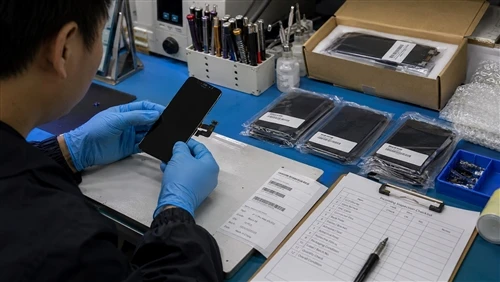
For a single-unit consumer purchase, a test report is largely irrelevant - the buyer can simply inspect the product. For a bulk order of hundreds or thousands of units, inspecting every unit before shipment usually isn't practical for the buyer, which is exactly why documentation from the supplier's side matters.
A test report that's properly connected to the ordered product supports several distinct purchasing tasks:
- Sample approval. A buyer can compare the sample's results against what was agreed, rather than relying on a verbal "it works fine."
- Batch acceptance. When a shipment arrives, a report tied to that specific production run gives the buyer a reference point for incoming inspection.
- Supplier evaluation. How a supplier documents testing - not just whether they claim to test - is one signal of how seriously quality control is treated internally.
- Warranty and dispute conversations. If a batch shows an unusual defect rate after delivery, the original test report gives both sides something concrete to refer back to.
None of this depends on how many pages the report runs to. A five-page report that never states the test scope is less useful than a one-page report that does. The real measure is whether a buyer can use it to confirm quality, trace it back to the batch, and defend the purchasing decision later if a problem comes up - not how detailed it looks at first glance.
What Should Be Included in an LCD Test Report?
There is no single universal format every LCD supplier follows, and buyers should be cautious of any claim that one specific layout is an industry-wide standard. Format matters less than substance - a report earns its usefulness by covering enough of the following categories, not by looking a certain way.
Product Identification
At minimum, a usable report should identify which product it covers: the model or product line, any internal part or item reference the supplier uses, and, where relevant, the specification or version of the screen - for example, if a supplier offers more than one quality tier for the same model. Without this, a buyer has no way to confirm the report matches what they actually ordered.
Test Date and Traceability Information
A report becomes far more verifiable when it can be tied to a specific point in production rather than reused as a generic document. Depending on the supplier's own record-keeping, this can include the test date, a batch or lot reference, a sample reference number, the department responsible for the test, and a report number. Not every supplier structures this identically, but the underlying goal - tracing the report back to the actual units in question - should be met in some form.
Test Items and Test Scope
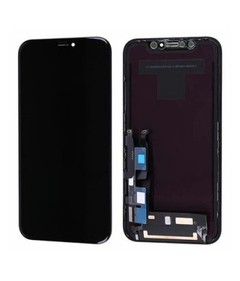
A buyer should be able to tell, from the report itself, what was actually checked - not assume it based on the product category. Depending on the supplier's own QC process, this may cover display function, color performance, touch response, backlight behavior, and general appearance or assembly checks. For a specific line such as the iPhone XR replacement LCD screen, functional testing scope can differ from an older or newer model depending on the panel type and driver components involved - which is exactly why the report needs to state the scope rather than leave it implied.
Test Method or Test Conditions
A result is easier to interpret - and to compare against another supplier's result - when the buyer understands how it was produced: whether a check was functional, visual, dimensional, or electrical, and under what general conditions it was performed. A number or a "pass" without context is difficult to compare against a different supplier's report, or against the buyer's own incoming inspection later.
Acceptance Criteria or Specification
There's a meaningful difference between a measured result, the supplier's own specification, an agreed acceptance limit, and what the buyer personally considers acceptable. A buyer-ready report at least distinguishes "this is what we measured" from "this is what we consider passing," even without spelling out every numerical threshold. Where thresholds aren't disclosed, that's a gap to clarify with the supplier directly, not one to assume matches the buyer's own standard.
Actual Test Results
Recorded results - rather than a single blanket "PASS" - give the buyer more to work with, particularly for a bulk order where unit-to-unit consistency matters. This can include measured values where applicable, pass/fail status per item, and any observed abnormalities. A single-line "all units passed" for an entire batch is common, but it inherently carries less information than an itemized result.

Defect and Exception Records
How a supplier documents what didn't pass is often more informative than how they document what did. A useful report can note failed units, specific defects observed, samples that were rejected, and any corrective step that followed. A well-kept record should also make it possible to distinguish a unit that failed during functional testing from one that was damaged during handling or installation - that distinction matters later if a defect claim comes back after the screens have already been installed, since the two have different causes and different accountability. This is also the section most relevant to later warranty conversations, since it establishes what was already known before shipment.
Overall Result and Approval Status
Many reports summarize with a status such as pass, fail, conditional approval, or re-test - but only where that classification is genuinely part of the supplier's own process, not because every report is expected to use identical terminology. What matters for the buyer is understanding what the supplier's specific status labels actually mean, since "conditional approval" from one supplier may carry a different meaning than from another.
What a Complete Report Looks Like in Practice?
The categories above are easier to apply against a concrete layout. The example below illustrates how the fields fit together - it is a template for what to look for, not a real report or an actual supplier's data:
| Field | Illustrative Example |
|---|---|
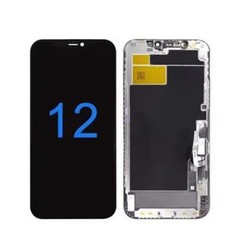
| Product | iPhone 12 replacement LCD |
| Batch/Sample Reference | Production batch or sample number assigned by the supplier |
| Test Scope | Display function, touch response, backlight, appearance |
| Test Method | Functional testing plus visual inspection |
| Acceptance Criteria | Buyer-agreed specification referenced in the purchase order |
| Result | Pass/fail status with any exceptions listed by unit |
| Traceability | Report number linked to the batch or sample it covers |

What a Test Report Tells the Buyer - At a Glance
| Report Item | What It Tells the Buyer | Why It Matters in Bulk Purchasing |
|---|---|---|
| Product identification | Confirms the report matches the ordered product | Prevents a mismatched or generic report being used to represent a different item |
| Test date & traceability | Links the report to a specific sample or production run | Makes the document usable during incoming inspection or a later dispute |
| Test scope | Shows what was actually checked | Prevents the buyer from assuming coverage that wasn't tested |
| Test method/conditions | Explains how a result was obtained | Allows results to be compared across suppliers or against the buyer's own checks |
| Acceptance criteria | Separates "measured" from "acceptable" | Surfaces whether the supplier's definition of "pass" matches the buyer's |
| Actual results | Shows detail beyond a blanket pass/fail | Gives early warning of borderline units before a full batch ships |
| Defect/exception records | Documents what failed and how it was handled | Forms the basis for warranty and batch-quality discussions later |
| Overall status | Summarizes the outcome | Only meaningful once the buyer understands the supplier's own terminology |
"Tested" Does Not Automatically Mean "Acceptable"
A purchasing or QC team should hold onto this distinction: a product being tested and a product meeting the buyer's own requirements are not the same claim.
A screen can genuinely be tested - and pass the supplier's internal criteria - while a buyer still needs to confirm several things before treating that as sufficient:
| Test Report Says | Buyer Still Needs to Confirm |
|---|---|
| Tested | What was actually tested, and what was left out? |
| Passed | Passed against which criteria - the supplier's or the buyer's? |
| Batch tested | Which batch, and does it match the shipment being received? |
| Sample approved | Does the bulk production run match the approved sample? |
| No defects found | What defect types and scope were actually within the test? |
Treating any test document as automatic proof of acceptable quality - without checking these points - is one of the more common gaps in B2B procurement of LCD screens. In practice, this often looks like a supplier sending a batch report showing every sampled unit passed functional testing. That's a reasonable starting point, but the buyer's next question should be whether the batch number on that report matches the batch number on the actual shipment, and whether the criteria the supplier tested against line up with the buyer's own incoming inspection standard. A report that passes both checks is worth far more than one that simply says "passed."
What an LCD Test Report Cannot Prove?
Even a well-structured report has limits. On its own, a test report generally cannot prove long-term field reliability after months of use, that every future batch will match the tested sample, installation quality once a screen reaches a repair technician, how the product will hold up after shipping and handling, that every possible defect type has been ruled out, or the condition of a separate, unrelated production batch. A single report is a snapshot of the units it actually covers, not a forward-looking guarantee.
Sample Test Reports vs. Bulk Batch Testing
A test report from an approved sample and a test report from a bulk production run answer two different questions. A sample report confirms that the specific units evaluated before the order met the agreed requirements. It does not, on its own, confirm that a production run of several thousand units, made later, will be identical - which is precisely the gap that how LCD batch testing works before shipment is meant to close.
For bulk orders, buyers should separately ask how the supplier checks sample-to-bulk LCD quality consistency once production actually starts. A sample report and a batch report are complementary, not interchangeable - a buyer relying on only the first has effectively skipped a step.

How Buyers Should Review an LCD Test Report?
A practical review doesn't need to be complicated, but it benefits from following the same order each time:
- Confirm the report identifies the correct product and model.
- Confirm the report can be traced to the relevant sample or batch.
- Check what was actually included in the test scope.
- Check the test method or conditions where that context is provided.
- Compare the recorded results against the buyer's own agreed specifications.
- Review any failed or exceptional items and how they were handled.
- Confirm what the overall approval status actually means for this supplier.
- Keep the report on file alongside other purchasing and quality records.
- Compare it against reports from later batches to track consistency over time.
The same discipline applies to how to test iPhone LCD samples before bulk ordering, so the review habits used at the sample stage carry through to every batch report that follows it.

Red Flags in an LCD Test Report
Not every gap in a report signals bad faith, but certain patterns are worth raising with a supplier before placing or accepting an order:
- no clear identification of the product or model;
- no way to trace the report to a specific sample or batch;
- only a generic "PASS" with no supporting detail;
- an unclear or unstated test scope;
- no indication of what acceptance criteria were used;
- terminology that shifts between reports from the same supplier;
- unexplained exceptions or gaps in otherwise detailed data;
- information in the report that doesn't match the product actually ordered.
A gap like this doesn't automatically mean the supplier is hiding a quality problem - it's simply a point worth clarifying before the buyer relies on the report. A supplier who can't answer clearly, however, is telling the buyer something useful in its own right.
What to Ask the Supplier Before Relying on a Report?
These questions are for the conversation with your supplier - before or during sample approval:
- Which product and batch does this specific report cover?
- What exactly was tested, and what was not?
- What acceptance criteria were used to determine pass or fail?
- Are the results measured values, or only pass/fail judgments?
- Can this report be linked directly to the sample or batch being purchased?
- How are units that fail testing handled internally?
- How is consistency monitored between the tested sample and the bulk batch?
B2B Purchasing Checklist - Internal Sign-Off
Use this as an internal audit reference before approving a sample or accepting a shipment, separate from the questions you'd raise with the supplier directly:
| Check | Confirmed? |
|---|---|
| Product/model correctly identified | ☐ |
| Batch or sample reference is traceable | ☐ |
| Test scope is defined and matches buyer requirements | ☐ |
| Test method/conditions stated where relevant | ☐ |
| Acceptance criteria confirmed against buyer's own standard | ☐ |
| Actual results recorded, not only a summary status | ☐ |
| Defects/exceptions reviewed and understood | ☐ |
| Overall status and its meaning confirmed with supplier | ☐ |
| Report filed with purchasing/quality records | ☐ |
If any row can't be checked, that's the specific point to raise with the supplier as part of the iPhone LCD quality control guide for wholesale buyers before the order moves further toward bulk production.
FAQ
What information should an LCD test report contain?
At minimum, it should identify the product, connect to a specific sample or batch, state what was tested, note the conditions or method where relevant, and record the actual results - not just a pass/fail summary.
Is an LCD test report enough to prove screen quality?
On its own, no. It's evidence of what was checked at one point in the process, not a guarantee of long-term performance, installation outcomes, or future batch consistency.
Should an LCD test report include batch information?
Wherever possible, yes. Without a batch or sample reference, the report can't reliably be tied to the units a buyer is actually receiving.
What is the difference between an LCD test report and an inspection checklist?
A checklist typically records visual or assembly-related checks during inspection. A test report is broader and can include functional results, test conditions, and defect records, though the two sometimes overlap depending on the supplier's process.
Should buyers request test reports before placing a bulk order?
Generally yes, at the sample stage, and again at the batch stage before shipment. A report reviewed only after the goods arrive limits how useful it can be.
How can buyers compare LCD test reports from different suppliers?
Rather than comparing which report looks longer or more polished, compare whether each one actually covers product identification, test scope, method, criteria, results, and traceability - the categories that make a report usable rather than decorative.
Where This Fits in the Purchasing Process?
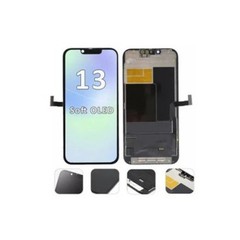
Reading a test report in isolation only goes so far. Its real value shows up when you confirm what was tested, compare the results against your own requirements, and hold the sample-stage report and the batch-stage report to the same standard rather than treating the first as a stand-in for the second. For a line like the iPhone 13Mini replacement LCD screen, that means the sample approval and the bulk shipment each need their own documented checkpoint.
The most direct way to put this into practice is to request the documentation alongside the product. When you request representative iPhone LCD samples, ask the supplier to include the corresponding test report and their sample-testing checklist in the same package. Reviewing all three together - the physical sample, the report, and the checklist - before committing to a bulk order gives you a much clearer picture than any one of them on its own.