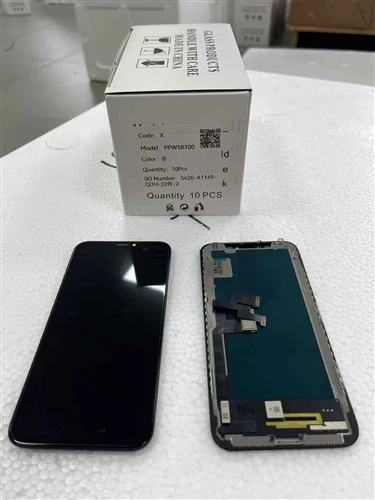


If you run a repair shop, distribute parts wholesale, or sell refurbished devices on Amazon, you already know that the screen is the single most sensitive component in your entire supply chain. It's the first thing a customer looks at, the first thing they complain about, and the part most likely to trigger a return, a bad review, or a chargeback if something goes wrong.
So when it's time to pick a manufacturer, it's tempting to default to whoever quotes the lowest price per unit. That instinct is understandable - margins in the repair and resale business are tight, and every dollar saved on parts drops straight to the bottom line. But price is the least reliable signal of long-term supplier quality, and buyers who optimize for it first are usually the ones who end up paying the most in the end, just later and in less visible ways: return shipments, warranty disputes, angry customers, and wasted time chasing a supplier who's stopped answering messages.
The manufacturers worth building a relationship with aren't necessarily the cheapest. They're the ones that can prove - not just claim - consistent quality at scale, back that up with verifiable certifications and transparent quality control, and stay reachable and accountable after the sale. That's the standard this guide is built around. Instead of just listing supplier names or repeating the basic OEM-versus-aftermarket comparison you've probably already read a dozen times, we'll walk through a complete evaluation framework: what actually separates a dependable manufacturer from a risky one, which red flags should make you walk away, and how to apply all of this depending on whether you're running a repair shop, a wholesale distribution business, or an Amazon storefront.
Why Choosing the Right iPhone Screen Manufacturer Matters More Than Ever?
The iPhone screen replacement and wholesale parts market has grown more competitive - and more crowded - every year. That's good news for buyers in one sense: more suppliers means more competitive pricing and more product options. But it also means more variance in quality, more suppliers cutting corners to compete on price, and more listings on B2B platforms that look nearly identical on paper but perform very differently once screens actually reach your bench.
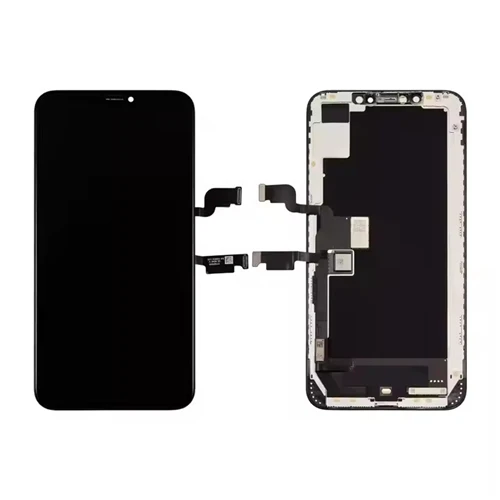
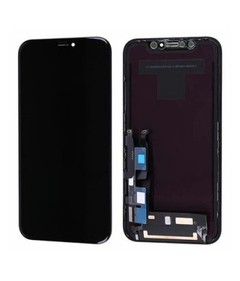
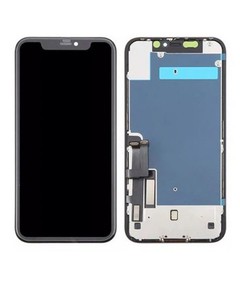
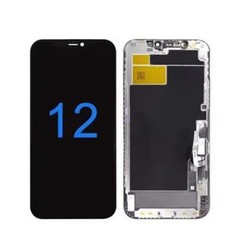
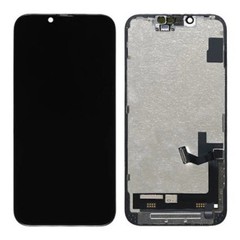
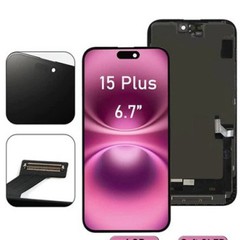
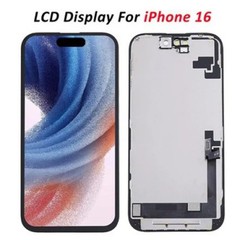
A screen is not an interchangeable commodity part the way a screw or a cable might be. It's a complex assembly combining a display panel, a digitizer, flex cables, driver ICs, and in many cases biometric and color-calibration components - all of which need to work correctly together and continue working after weeks of real-world use.
A screen that looks perfect in a sample batch can behave very differently once it's part of a large production run, especially if the manufacturer hasn't standardized their process or is using a different, cheaper source for backlights or driver chips than the one they showed you initially.
The financial impact of getting this wrong compounds quickly. A repair shop with a meaningfully elevated return rate on screens isn't just losing the cost of the defective part - they're losing labor hours re-opening devices, losing the trust of a customer who now associates their business with a "cheap fix," and often absorbing the cost of expedited replacement shipping to keep that customer. For a wholesale distributor, a bad batch can mean disputes with dozens of downstream repair shop clients simultaneously, threatening relationships that took years to build. For an Amazon seller, screen quality issues show up directly in product reviews and return rates - two metrics that heavily influence account health and organic ranking.
This is why supplier selection deserves the same rigor you'd apply to any other core business decision. It's worth thinking about screen sourcing the same way you'd think about hiring a key employee: past performance under real conditions matters far more than a polished pitch, and the cost of a bad decision compounds the longer it takes you to notice it.
There's also a structural reason the stakes have gone up in recent years. As iPhone displays have become more complex - integrating True Tone ambient color sensors, tighter Face ID sensor housings, and increasingly thin flexible OLED substrates - the manufacturing tolerances required to replicate factory performance have gotten tighter, not looser.
A supplier who could produce an acceptable LCD replacement several years ago with relatively forgiving tolerances may not have made the necessary investment in equipment, testing infrastructure, or process control to reliably produce a modern OLED assembly at the same quality level. That gap between "was a decent supplier" and "is a decent supplier today" is exactly why ongoing verification, not just an initial vetting call, matters.
The rest of this guide breaks the decision down into concrete, checkable criteria - starting with what you're actually buying, then moving into the evaluation framework itself, the warning signs to watch for, and how to apply all of it depending on your specific business model.

To put the sourcing stakes in context, here's where the broader display and repair markets stand:
| Metric | Figure | Source |
|---|---|---|
| Global smartphone display market size (2026) | ~$52.8–61.6 billion, various estimates | MarkWide Research / 360iResearch |
| OLED share of smartphone panel market | Overtook LCD in 2024, ~55–60% of market value | FlatpanelsHD / IndexBox |
| LCD share of smartphone panel market | ~38–40%, still dominant in entry/mid-tier | Mordor Intelligence |
| Global smartphone repair market size (2025) | ~$21–25 billion | Verified Market Research |
| Screen repairs as share of all smartphone repairs | ~30–42% (largest single repair category) | Verified Market Research / MarkSpark Solutions |
| Aftermarket cellphone display components market (2029 forecast) | ~$66.6 billion | IndustryARC |
These figures come from published third-party market research; different firms use different methodologies, so treat the ranges as directional rather than exact. Always check the original report before citing a specific number to a client.
This is also why the OEM-vs-aftermarket decision covered next isn't a fringe question - screen replacement is consistently the single largest repair category by volume, and aftermarket display components already represent a multi-billion-dollar segment on their own.
OEM vs Aftermarket vs Refurbished - Understanding What You're Actually Buying
Before evaluating manufacturers, it helps to be precise about what category of screen you're actually sourcing, since the evaluation criteria shift depending on the answer.
OEM Screens
OEM (Original Equipment Manufacturer) screens are those manufactured to Apple's original specifications, typically sourced from Apple's own supply chain or from refurbished genuine units pulled from donor devices. These screens offer the closest possible match to factory performance: full brightness range, accurate color reproduction, and complete compatibility with True Tone and Face ID. Access to genuine OEM panels is limited and typically flows through authorized channels or specialized secondary markets, which is part of why they command a premium price. If your business model depends on premium repair pricing or working with clients who expect factory-original performance, OEM sourcing is usually non-negotiable - but it also means your manufacturer evaluation needs to weight traceability and authenticity verification even more heavily, since counterfeit "OEM" claims are common in this segment.
Aftermarket Screens
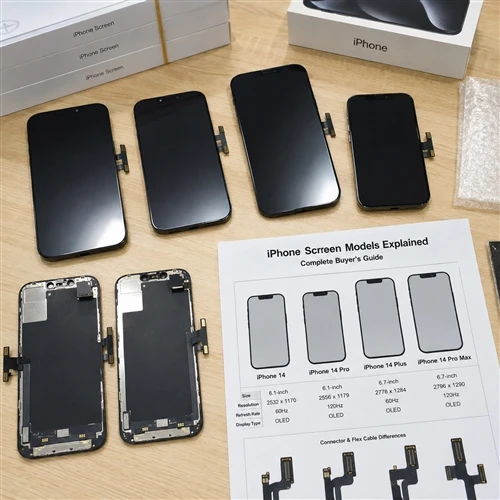
Aftermarket screens are produced by third-party manufacturers, most concentrated in manufacturing hubs like Guangdong, China. This category has matured significantly and now spans a wide quality range:
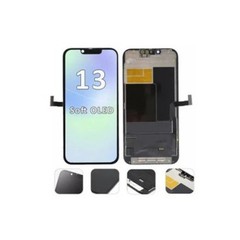
- Soft OLED panels use a flexible substrate and generally deliver the closest color and brightness performance to genuine OLED displays, at a mid-to-premium aftermarket price point.
- Hard OLED panels use a more rigid substrate. They typically offer excellent color accuracy and brightness - in some cases nearly indistinguishable from original displays in side-by-side comparison - at a lower cost than Soft OLED, but the added rigidity can make them somewhat more prone to cracking on impact.
- Incell LCD panels integrate the touch layer directly into the LCD structure, offering a more budget-friendly option that's well suited to older or entry-level iPhone models where OLED replacement isn't cost-effective for the customer.

Within aftermarket sourcing, quality tiers vary enormously between suppliers even for the same panel type - which is exactly why the evaluation framework in the next section matters more than the category label itself.
Refurbished Screens
Refurbished screens are salvaged genuine panels that have been cleaned, tested, and in some cases had components like the glass or backlight replaced. They can offer a middle ground between OEM cost and aftermarket pricing, but quality is highly dependent on the refurbishing process and the condition of the donor units - this is a category where manufacturer transparency about sourcing and testing procedures is especially important.
| Category | True Tone / Face ID | Typical Cost | Best Fit For |
|---|---|---|---|
| OEM | Full compatibility | Highest | Premium repair pricing, brand-sensitive clients |
| Soft OLED (aftermarket) | Usually supported | Mid-to-high | Balance of quality and cost |
| Hard OLED (aftermarket) | Usually supported | Mid | Cost-conscious repairs, strong color accuracy |
| Incell LCD (aftermarket) | Limited/partial | Lowest | Older or entry-level models |
| Refurbished (genuine) | Full compatibility | Mid | Buyers prioritizing authenticity over lowest cost |
Why the Category Label Isn't Enough?
Here's the part that trips up a lot of first-time buyers: two suppliers can both advertise "Soft OLED" or "Grade A OEM" and produce meaningfully different products. Category labels describe a general manufacturing approach, not a guaranteed quality outcome. A Soft OLED panel built with a premium driver IC and a properly calibrated backlight will outperform a Soft OLED panel from a supplier who sourced a cheaper driver IC to hit a lower price point - even though both would be marketed identically. This is precisely why the evaluation framework below focuses on process and verification rather than category alone. Category tells you what you're broadly buying; the manufacturer's process tells you whether you'll actually get it, consistently, order after order.
It's also worth understanding how these categories map to your customer conversations. Repair shops that serve price-sensitive customers often stock a mix - Incell LCD or Hard OLED for budget repairs, Soft OLED for customers willing to pay more for a closer-to-original feel. Being able to explain this range accurately to your own customers, rather than just labeling everything "premium replacement screen," builds the kind of trust that keeps customers coming back instead of shopping around after their first repair.
Next, the six criteria below turn "consistent delivery" from an abstract goal into something you can actually check supplier by supplier.
The Core Evaluation Framework - 6 Criteria That Actually Predict Reliability
Rather than judging a manufacturer on a single factor like price or a polished-looking website, use these six criteria together. A supplier that scores well across all six is far more likely to be a long-term, low-friction partner than one that only excels in one or two areas.
1. Certifications & Quality Management Systems

Certifications aren't just paperwork - they're evidence that a manufacturer has documented, repeatable processes rather than relying on the skill of whichever technician happens to be on the line that day.
At minimum, look for ISO 9001 (quality management systems), which indicates the manufacturer has formal process controls, documentation, and continuous improvement practices in place. Suppliers serving high-volume or automotive-adjacent electronics markets sometimes also hold IATF 16949, a more rigorous automotive-quality standard that some top-tier display suppliers pursue to demonstrate an even higher level of process discipline. RoHS and REACH compliance should be treated as non-negotiable baseline requirements, confirming that materials meet environmental and safety restrictions for the markets you sell into.
Don't just accept a certification claim - ask for the actual certificate, check the issuing body, and where possible verify the certificate number against the certifying organization's public database. It's common enough for suppliers to list certifications on their website that either lapsed years ago or were never actually issued to them, or that were issued to a related but different legal entity than the one you'd actually be contracting with.
Beyond the certificate itself, ask how the certification translates into daily practice. A manufacturer with a genuinely functioning ISO 9001 system should be able to describe, without hesitation, how nonconforming units are identified and handled, how corrective actions get documented when a defect pattern emerges, and how often internal audits happen. Vague answers here - even from a supplier holding a valid certificate - suggest the certification may be more of a marketing checkbox than a lived process. This distinction matters more than it might seem: a certificate proves a system was in place at the time of audit, not that it's being actively followed months or years later.
| Certification | What It Verifies | Why It Matters for Screen Sourcing |
|---|---|---|
| ISO 9001 | Documented quality management system, process control | Baseline signal of repeatable, auditable production |
| IATF 16949 | Automotive-grade quality discipline (stricter than ISO 9001) | Held by some top-tier display suppliers; signals tighter tolerances |
| RoHS | Restriction of hazardous substances in materials | Required for legal sale in EU and most Western markets |
| REACH | EU chemical safety compliance | Non-negotiable for EU-bound shipments |
| CE Marking | Conformity with EU health/safety/environmental standards | Often required alongside RoHS for EU import |
2. Sample-to-Mass-Production Consistency

This is the single most overlooked factor in supplier evaluation, and it's also the biggest gap in most of the sourcing content currently available online. A manufacturer can send you a flawless sample batch - hand-picked, carefully tested, built with premium components - and then quietly switch to a cheaper driver IC or backlight source once the real production order comes in, because samples rarely get the same scrutiny as bulk shipments.
Protect yourself by asking specific questions before committing to a bulk order: Does the manufacturer test 100% of units before shipment, or only a statistical sample? What specific defects do they check for - dead pixels, touch response failures, Mura effect (uneven brightness patches), color temperature drift, flex cable and connector integrity? Do they provide batch-level inspection reports, and are those reports specific to your order or generic templates reused across customers?
Where possible, request a small trial production run - not a hand-picked sample, but an order pulled from an actual production line - before scaling up. A manufacturer confident in their process will have no issue with this; one who resists is telling you something important.
It also helps to stagger your first few orders rather than committing to your full expected volume immediately, even after a successful trial run. Order consistency issues often don't show up in a 20-unit trial but do show up once a manufacturer scales to fulfill a 300-unit order under time pressure - sometimes because they subcontract overflow production to a secondary line with less rigorous quality control. Asking directly whether your order will be produced entirely in-house or partially subcontracted is a fair, reasonable question, and a transparent manufacturer will answer it without deflecting.
One more practical step: keep a small reference sample from every accepted batch. If a quality issue surfaces a few months later, having a physical reference point from the original approved batch makes it far easier to demonstrate - to the manufacturer, and if necessary to a platform like Alibaba's trade assurance dispute process - that later shipments deviated from what was originally agreed.
3. Technical Specs & Feature Compatibility

For iPhone screens specifically, feature compatibility is where cheaper suppliers most often cut corners, because these are the components and calibrations that are hardest to verify at a glance.
Confirm explicitly whether True Tone functionality is preserved - some lower-tier aftermarket screens either lack the calibration data needed for True Tone or require workarounds that don't fully replicate the original color-shifting behavior. Confirm Face ID compatibility and ask how the manufacturer handles the pairing between the screen assembly and the device's biometric sensor housing. Ask about color accuracy specifications (measured against standard color gamuts, not just marketing language like "vivid" or "true colors"), peak brightness in nits, and touch sensitivity testing across the full surface of the panel, not just the center.
It's also worth directly asking about their approach to the Mura effect - uneven brightness or discoloration patches that are common in lower-quality OLED production - since this is one of the most frequent sources of customer complaints after screen replacement, even more so than outright dead-on-arrival units, because it often only becomes visible after a few days of use against dark backgrounds.
| Test | What It Catches | Ask the Supplier |
|---|---|---|
| Dead pixel inspection | Non-responsive or stuck pixels | 100% tested or statistical sampling? |
| Touch response mapping | Dead zones, ghost touches, multi-touch failure | Tested across full surface or center only? |
| Mura / brightness uniformity | Uneven brightness, discoloration patches | Controlled-lighting inspection booth used? |
| Color accuracy (spectrophotometer) | Color temperature drift vs. original spec | Reference standard used for comparison? |
| True Tone calibration check | Ambient color-shifting function works correctly | Calibration data source confirmed? |
| Flex cable / connector integrity | Intermittent connection failures over time | Stress/bend testing performed? |
When possible, ask for the specific testing equipment used for each check rather than accepting a general statement like "we test every screen." Spectrophotometers for color accuracy, dedicated touch-response testing jigs, and controlled-lighting inspection booths for Mura detection are standard equipment at manufacturers who take this seriously - and their absence, or a supplier's inability to describe their testing setup with any specificity, is a meaningful signal in itself. If you're sourcing for multiple iPhone generations, also confirm the manufacturer's coverage is current: a supplier who was excellent for the iPhone 12 generation may not yet have solved the tighter component tolerances required for the latest models, particularly around Face ID sensor housing alignment.
4. MOQ & Order Flexibility
Minimum Order Quantity requirements vary enormously across the market - anywhere from single-unit trial orders up to several hundred units for the most competitive per-unit pricing. Neither extreme is automatically better; the right MOQ structure depends on your order volume and risk tolerance.
If you're a smaller repair shop fixing 20–30 devices a week, a supplier demanding a 500-unit MOQ will either tie up capital in inventory you can't move quickly or push you toward compromising on quality just to hit a lower-MOQ competitor's threshold. Conversely, if you're a high-volume distributor, a supplier who can only offer small-batch flexibility may not be able to scale with you.
Look specifically for suppliers who offer tiered MOQs (better pricing at higher volumes, but a reasonable entry point for testing the relationship), and who allow mixed-model orders - combining, for example, iPhone 14 and iPhone 15 screens in a single shipment - since this lets you diversify inventory without overcommitting to a single model's demand forecast. Our wholesale screen program is structured around exactly this kind of tiered, mixed-model flexibility.
Before you even start requesting quotes, it helps to do a quick internal calculation based on your own repair volume: work out roughly how many units of your most common models you'd realistically move in a normal order cycle, and use that as your target MOQ range rather than defaulting to whatever a supplier lists first. A sky-high MOQ might look attractive on a per-unit basis, but if it takes months to work through that inventory, you're effectively financing the manufacturer's production run at the cost of your own working capital. MOQs are also frequently negotiable, particularly for buyers willing to commit to a recurring order cadence rather than a single one-off purchase - it's worth asking directly rather than assuming the listed MOQ is fixed.
5. Logistics, Lead Time & Incoterms

A great screen that arrives three weeks late doesn't help a repair shop that promised a customer same-week turnaround. Ask manufacturers directly for their typical sample lead time versus full production lead time in writing - these vary by order size, customization, and season, so a specific written commitment from the supplier is worth far more than a general range you'd find in a blog post.
Clarify Incoterms upfront - FOB, EXW, and DDP shift very different levels of responsibility and cost onto you as the buyer, and confusion here is one of the most common sources of unexpected costs in cross-border sourcing.
| Incoterm | Who Handles Main Freight | Who Handles Customs/Duties | Buyer's Risk Level |
|---|---|---|---|
| EXW (Ex Works) | Buyer arranges everything from factory door | Buyer | Highest - full logistics burden on buyer |
| FOB (Free on Board) | Seller to port, buyer from port onward | Buyer (import side) | Moderate - common middle ground |
| DDP (Delivered Duty Paid) | Seller handles freight and destination duties | Seller | Lowest - simplest for buyer, usually priced in |
Ask which freight partners they work with for both air and sea shipments, whether they handle export documentation (commercial invoice, packing list, certificate of origin), and how they handle customs issues if a shipment gets held up. A manufacturer who has clearly done this hundreds of times will answer these questions specifically and quickly; one who gives vague answers is a sign that logistics may become your problem to solve mid-shipment.
It's also worth asking how they handle partial shipment delays - for example, if one component (say, a specific driver IC) is temporarily out of stock, do they hold the entire order until everything is available, or ship what's ready and follow up with the remainder? Neither answer is inherently wrong, but knowing which one to expect ahead of time prevents a scramble later when you're counting on a full shipment arriving by a specific date to fulfill your own customer commitments. For repair shops and distributors operating on tight turnaround promises, this single detail can matter as much as the manufacturer's overall lead time.
6. After-Sales Support & Communication
The relationship doesn't end when the shipment clears customs. Ask what the manufacturer's warranty policy actually covers - is it a full replacement for defective units, a partial credit, or nothing beyond the point of shipment? What's the actual process for filing a claim, and how long does resolution typically take?
Communication responsiveness is itself a quality signal. A manufacturer who's slow or evasive during the sales process - before they have your money - is unlikely to become more responsive afterward. Ask whether you'll be assigned a dedicated account representative for ongoing orders, which tends to reduce friction significantly compared to explaining your requirements to a new contact every time you order.
It's worth testing this before you have a real problem to solve. During the evaluation phase, send a moderately detailed technical question - something specific enough that it requires actual knowledge to answer well, like asking how they calibrate True Tone data for a specific model. The speed, specificity, and technical accuracy of that response tells you far more about what post-sale support will actually look like than any warranty policy document, because it reflects how the organization actually operates day to day rather than what's written in a sales brochure.
Red Flags - Warning Signs of an Unreliable Manufacturer

Even without an in-person factory visit, several warning signs tend to correlate strongly with future problems:
- Certifications with no verifiable documentation. If a supplier can't produce an actual certificate, or the certificate number doesn't check out against the issuing body, treat every other claim they make with equal skepticism.
- Unwillingness to provide production-line samples, insisting instead on shipping only hand-selected units for evaluation.
- Vague or shifting answers about component sourcing - a manufacturer who can't clearly explain where their driver ICs, backlights, or glass come from is a manufacturer who may be substituting sources between orders.
- Prices dramatically below the rest of the market for the same stated specification. In a competitive manufacturing hub, an outlier-low price for an equivalent product almost always means a cut corner somewhere, whether that's materials, testing, or labor standards.
- No clear return or warranty process, or a process that requires you to prove fault in ways that are impractical to document.
- Reluctance to put lead times, MOQs, or Incoterms in writing, preferring verbal assurances that are hard to hold them to later.
- Generic, copy-pasted quality reports that don't reference your specific order or batch numbers.
- No verifiable trade history - no reorder rate, no verifiable client references, and no track record on B2B platforms with audit trails (like verified supplier badges backed by third-party factory checks).
None of these signs are automatically disqualifying in isolation - a new manufacturer might genuinely have a thin trade history simply because they're new, for example, without being unreliable. But two or more appearing together should prompt real caution before committing to a large order, and any combination involving unverifiable certifications plus reluctance to provide production-line samples should be treated as close to disqualifying on its own.
It's also worth paying attention to how a supplier responds when you raise these concerns directly. A trustworthy manufacturer generally welcomes rigorous questions, because it's an opportunity to demonstrate their process. A supplier who becomes defensive, evasive, or tries to rush you toward a decision when you ask for verification is often signaling more about their own confidence in their product than they realize.
A pattern worth watching for specifically: a supplier who performs well on an initial trial order and then quietly changes a component source once volume ramps up. This is one of the more common ways quality erodes without an obvious single "bad batch" moment - a batch inspection report might still look clean on paper (touch response, dead pixels) while a subtler issue like color calibration drift or backlight uniformity only becomes noticeable once devices are in customers' hands for a few weeks. Locking in your approved component specifications in writing at the start of the relationship, and asking for confirmation before any substitution, is a simple safeguard against this specific failure mode.
A Practical Supplier Vetting Checklist
Use this as a working scorecard when comparing multiple manufacturers side by side. For each supplier, confirm:

- Valid ISO 9001 certification, verified against the issuing body
- RoHS/REACH compliance documentation provided
- Willing to supply a production-line sample, not just a curated one
- Clear explanation of defect testing process (dead pixels, touch response, Mura effect, color calibration)
- True Tone and Face ID compatibility explicitly confirmed for your target models
- Transparent MOQ structure, with tiered pricing and mixed-model order support
- Written confirmation of sample and bulk production lead times
- Clearly defined Incoterms (FOB/EXW/DDP) and shipping partners
- Documented warranty and return policy, including claim turnaround time
- Verifiable reorder rate, on-time delivery percentage, or client references
- Responsive, specific communication throughout the evaluation process (not just during the initial sales pitch)
A manufacturer who checks most or all of these boxes is far more likely to become a dependable long-term partner than one chosen on price alone.
A practical way to use this checklist is to score each prospective supplier out of 11 (one point per item) and treat anything below roughly 7–8 as requiring further verification before you commit meaningful order volume - not necessarily a disqualification, but a signal to start with a smaller trial order and scale up only once the missing items are addressed satisfactorily. Keep a simple spreadsheet with one row per supplier and one column per checklist item; over a few sourcing cycles, this becomes a genuinely useful internal record of which suppliers have consistently performed well and which ones have quietly stopped answering questions after the first order.
Choosing the Right Manufacturer for Your Business Type

The right manufacturer relationship looks a little different depending on where you sit in the supply chain.
- Repair shops typically prioritize a manageable MOQ that matches actual weekly repair volume, fast sample turnaround so new technicians can validate quality before committing, and a warranty process simple enough to use on a per-device basis without excessive paperwork. Consistency between batches matters enormously here, since a repair shop's reputation is built one customer interaction at a time.
- Wholesale distributors generally need a manufacturer capable of scaling with tiered MOQs, strong batch traceability (so a quality issue can be traced back to a specific production run rather than triggering a blanket recall of everything in inventory), and a dedicated account manager who understands the distributor's downstream client base. Reliability and repeatability across large volumes matter more here than any single unit's peak performance.
- Amazon sellers face a distinct set of pressures, since return rates and product reviews directly affect account health and search visibility. For this group, packaging quality, consistent cosmetic presentation, and manufacturer support for handling warranty claims quickly (to avoid slow, review-damaging disputes) tend to matter as much as the underlying screen specifications. A manufacturer who can supply detailed inspection reports per batch also gives Amazon sellers documentation to reference if a customer dispute or platform review escalates.
| Priority | Repair Shops | Wholesale Distributors | Amazon Sellers |
|---|---|---|---|
| MOQ needs | Low-to-moderate, matched to weekly volume | High, tiered pricing at scale | Moderate, cosmetic consistency matters most |
| Top concern | Fast sample validation, simple warranty | Batch traceability, account management | Packaging, review-impacting defects |
| Biggest risk | Inconsistent quality damaging local reputation | Disputes cascading across many downstream clients | Return-rate spikes hurting account health/ranking |
There's also a common mistake worth calling out across all three business types: treating manufacturer selection as a one-time decision rather than an ongoing relationship to manage. Even a supplier who scores well on every criterion in this guide today can drift over time - new ownership, a change in raw material suppliers, or simply growth outpacing their quality control capacity can all quietly erode consistency. Building in a periodic re-check, such as a fresh batch inspection every few months or an occasional cross-check against a competing supplier's sample, costs relatively little and protects you from the kind of gradual quality drift that's much harder to catch than an obvious, one-time bad batch.
Where Manufacturers Are Based - A Quick Reference for Judging Price?
Most aftermarket iPhone screen production is concentrated in a handful of manufacturing hubs. This isn't a standalone evaluation criterion - think of it as background context that helps you sanity-check whether a quote's price and turnaround time are plausible, before you apply the six-criteria framework above.
| Region | Strength | Typical Tradeoff |
|---|---|---|
| Guangdong, China (Shenzhen/Guangzhou) | Competitive pricing, flexible MOQs, fast samples | Highest quality variance - vetting matters most here |
| South Korea | Cutting-edge OLED technology, tight tolerances | Premium pricing, less MOQ flexibility, slower response |
| OEM / refurbished-genuine networks | Authentic components, full feature compatibility | Smaller, more specialized supply - harder to scale fast |
None of this means you should filter suppliers by region alone - there are excellent and unreliable manufacturers within every hub. A Guangdong-based supplier quoting a low price and fast turnaround isn't automatically suspicious given the local ecosystem, while the same pricing from a boutique Korean OLED specialist would be a stronger red flag given how that market typically operates. Use this table to calibrate expectations, then run the actual candidate through the checklist above.
Frequently Asked Questions
What certifications should a reliable iPhone screen manufacturer have?
At minimum, ISO 9001 for quality management and RoHS/REACH compliance for materials safety. Suppliers working at the highest tier of the market sometimes also hold IATF 16949, an automotive-grade quality standard. Always verify certificate numbers directly with the issuing body rather than taking a website claim at face value.
What's a reasonable MOQ for iPhone screens?
It varies widely by manufacturer and screen type. As a general starting point, many suppliers set entry-level MOQs in the low double digits for standard models, with tiered pricing that improves at higher volumes - but always confirm the actual number directly with the supplier rather than assuming a market-wide standard, since it shifts by model, panel type, and season.
How can I verify a supplier before placing a large order?
Request documented certifications and verify them independently, ask for a sample pulled from an actual production line rather than a hand-selected unit, request batch-specific inspection reports, and look for verifiable performance metrics like on-time delivery percentage and reorder rate if the supplier is listed on a B2B platform with audit trails.
Is Soft OLED or Hard OLED the better choice?
Soft OLED generally offers closer-to-original color and brightness performance along with more flexibility (making it somewhat more impact-resistant), typically at a higher price point. Hard OLED often delivers excellent color accuracy at a lower cost, but the more rigid panel can be more prone to cracking on impact. The right choice depends on your customers' price sensitivity and the specific iPhone models you're servicing.
What payment terms and Incoterms should I expect when sourcing internationally?
Common payment methods include bank transfer (T/T) and, for smaller orders, PayPal, with additional terms sometimes available for large or repeat orders. For shipping responsibility, clarify whether pricing is quoted as FOB, EXW, or DDP - these determine who handles freight, insurance, and customs at each stage, and confusion here is a common source of unexpected costs.
How do I know if a "verified supplier" badge on a B2B platform actually means anything?
Verification badges vary in rigor depending on the platform, so it's worth understanding what specifically was checked - business license validation, an on-site factory audit, or simply payment history on the platform. Treat the badge as a starting point for trust, not a substitute for your own vetting, and ask the supplier directly what the verification process involved.
Should I work with a trading company or go direct to the manufacturer?
Trading companies can simplify communication and sometimes offer lower MOQs by aggregating orders across multiple buyers, but they add a layer between you and the actual production process, which can slow down troubleshooting if a quality issue arises. Going direct to the manufacturer generally gives you more visibility and control, but requires more of your own time for vetting and communication. Larger, more established buyers often find direct sourcing worth the extra effort; smaller or newer buyers sometimes benefit from a reputable trading company's aggregated relationships while they build up order volume.
Conclusion
Choosing the best iPhone screen manufacturer isn't about finding the lowest quote on a supplier directory - it's about finding a partner who can prove, batch after batch, that their samples and their mass production are the same product. Certifications, sample-to-production consistency, technical compatibility, order flexibility, logistics transparency, and after-sales support together tell you far more about long-term reliability than price alone ever will.
Use the evaluation framework and checklist in this guide the next time you're comparing suppliers, and treat every new manufacturer relationship as something to verify incrementally - starting with a real production sample, not just a curated one - before committing to a large order.
If you'd like help evaluating your current supplier setup or want to discuss certifications, sample testing, and volume pricing for your specific business, contact our sales team - we're happy to walk through what a reliable, scalable partnership can look like for your repair shop, distribution business, or online store.