
How to Choose and Verify an iPhone LCD Screen Manufacturer?
Introduction
Most wholesale buyers do not lose money because a supplier lies outright. They lose money because a good first sample was never checked against what actually shipped in the bulk order - and by the time the pattern shows up in return rates, a meaningful share of that inventory is already sitting in the warehouse, unsellable at full price. If you are a distributor, importer, repair chain, or purchasing manager sourcing iPhone LCD screens for resale or installation, this guide is built around that exact problem: how to tell, before you commit to volume, whether an iPhone LCD screen manufacturer can actually reproduce what the sample promised. You will leave with a verification sequence - not a single test, not a single question - that covers the factory itself, its quality-control process, its sample-to-bulk consistency, and the commercial terms that determine your real risk.
How to Choose an iPhone LCD Screen Manufacturer: The Short Answer
Choosing an iPhone LCD screen manufacturer should never be a single-variable decision based on unit price. A defensible evaluation weighs manufacturing capability, product specification accuracy, documented quality-control steps, sample performance, sample-to-bulk consistency, defect and warranty handling, MOQ flexibility, lead time reliability, and total procurement cost together. A supplier that wins on price alone but fails on any of the others usually costs more once returns, replacements, and delays are counted - which is why the rest of this guide treats "cheapest quotation" as one input among several, not the deciding one.
The question that actually decides the relationship is rarely "can this supplier make one good screen." It is whether the same supplier can reproduce that exact quality across every unit in a bulk order, months after the sample was approved. Every section below builds toward answering that one question with evidence rather than assumption.
Who Should Use This iPhone LCD Manufacturer Evaluation Guide?
This article is written for B2B buyers: wholesalers, distributors, importers, repair shops ordering in volume, repair chains standardizing their supply chain, and purchasing managers responsible for sourcing replacement screens. It is not a DIY repair tutorial, and it does not assume you are replacing a single screen. If your question is "how much does it cost to fix one iPhone," this is the wrong article. If your question is "how do I know this factory can hold the same quality across a full bulk order," keep reading.
Why Manufacturer Selection Matters in B2B LCD Purchasing?
A single defective screen in a retail repair is an inconvenience. A batch-level quality problem discovered after a bulk order lands is a business problem - it shows up as return-rate spikes, warranty claims, damaged customer relationships, and inventory you cannot resell at full price. The stakes of supplier selection scale with order volume, which is exactly why B2B buyers need a more rigorous evaluation process than a consumer comparing two listings. The manufacturer you choose is not just a source of screens; it is a variable in your own business's defect rate for the next several months.

Manufacturer vs. Trading Company vs. Reseller: What Actually Differs?
Not every supplier calling itself a "factory" runs production. Some are trading companies that source from multiple factories and relabel; others are resellers with no manufacturing or QC involvement at all; some are genuine hybrids that manufacture certain models and source others. None of these business models is automatically disqualifying - a well-managed trading company with strong QC oversight can be a reasonable supplier, and a factory with weak process control is not automatically better. What matters is whether the supplier can substantiate its claims, a distinction covered in more detail in the practical difference between an iPhone LCD manufacturer and a trading company.
| Type | What to Verify | Why It Matters |
|---|---|---|
| Actual manufacturer/factory | Production location, process visibility, ability to explain assembly and testing steps | Confirms direct control over quality and consistency |
| Trading company | Sourcing relationships, QC oversight over its factory partners, traceability | Determines whether quality is actively managed or just resold |
| Distributor/reseller | Product origin, batch traceability, after-sales responsibility | Clarifies who is accountable when a defect appears |
| Hybrid supplier | Which models are self-manufactured vs. sourced | Prevents assuming uniform quality across the full catalog |
A supplier's website copy is not proof of anything. If a page says "factory," you can only confirm that by asking specific, verifiable questions - the kind covered next.
What to Verify Before Contacting a Factory?
Before a first message or RFQ goes out, it helps to know what you are trying to confirm. At minimum: the exact product line and models the supplier actually produces or sources, the grade or specification tier being offered, whether the supplier can describe its own inspection process without vague language, and whether basic company information (legal entity, production location, communication channel) is available on request. A short, consistent list of questions to ask an iPhone LCD manufacturer before the first conversation filters out suppliers who cannot answer specifics before you invest more time.
How to Evaluate an iPhone LCD Manufacturer's Production Capability?
Production capability is demonstrated, not claimed. A supplier that can walk you through its assembly sequence, explain where inspection checkpoints sit in that sequence, and describe how it handles component-level issues before final assembly is showing you something a marketing page cannot. Do not accept round numbers about capacity, headcount, or years in business as verification - those figures, even if accurate, do not tell you whether the process is controlled. It also helps to understand whether you are evaluating a specialized LCD manufacturer versus a one-stop parts supplier, since the two business models carry different tradeoffs in product range versus depth of process control.

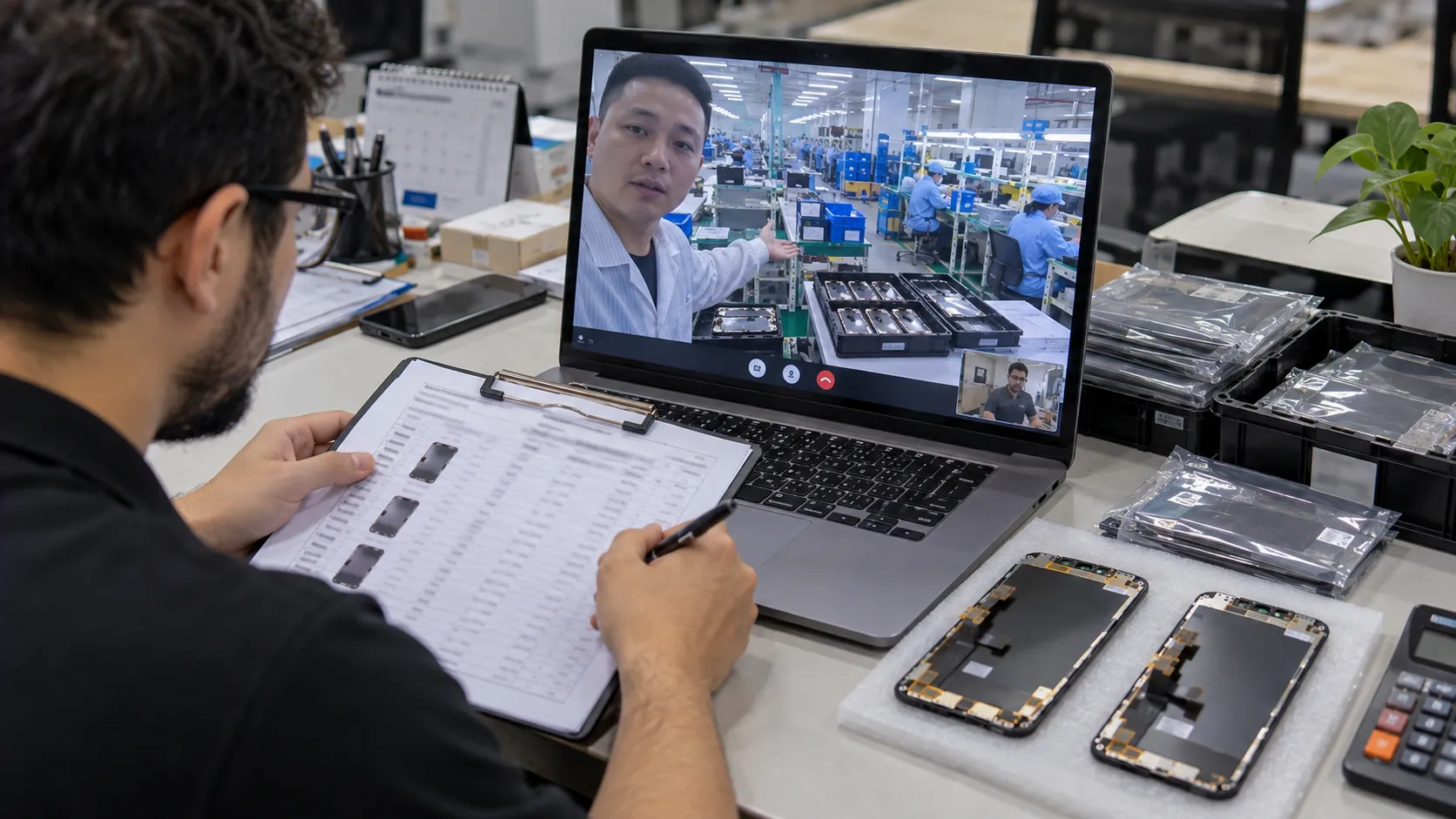
How to Conduct a Remote iPhone LCD Factory Audit?
A full on-site audit is not always practical, especially for a first-time relationship or a smaller order. A structured remote audit can still surface most of what matters:
- Company and facility verification - legal or business registration information where available, physical production location, and whether the product range offered is consistent with what the facility is described as capable of producing.
- Production process visibility - willingness to walk through assembly steps, testing stages, and inspection points, ideally supported by photos or video specific to your product line rather than generic marketing footage.
- Quality-control capability - how incoming materials are inspected, what happens at process and final inspection, and how defects are classified and recorded.
None of these checks require inventing numbers. If a supplier cannot substantiate a specific claim - production capacity, certification, defect rate - the correct response is to ask them to document it, not to assume it is true because it sounds plausible. A step-by-step version of this process is covered in how to run a remote iPhone LCD factory audit.
What Documents to Request From an iPhone LCD Supplier?
Ask for whatever documentation the supplier is willing to provide: product specification sheets by model, test or inspection records for the specific batch or sample you receive, packaging specifications, and written warranty terms. A supplier's willingness to provide documentation - and the specificity of what they send - tells you more than the documents' content alone. A full reference list of documents an iPhone LCD supplier should be able to provide is useful to keep on hand before your first request, since vague or generic paperwork that could apply to any product is a weaker signal than a specification sheet tied to the exact model you asked about.
iPhone LCD Quality-Control Capability: What to Ask About?
Quality control is a process, not a statement. A supplier's claim of "strict QC" means little without a description of what happens at each stage: incoming inspection of raw materials and components, in-process checks during assembly, functional testing of the finished screen, appearance inspection, and a final check before packaging. Ask specifically what is tested at each stage - display function, touch response, appearance, connector condition - and how results are recorded. A supplier that can only say "we check everything carefully" has not actually described a process. This section answers one question only: does the supplier have a defined process at all. Whether that process holds up under scrutiny is a separate question, covered next.

How to Verify an iPhone LCD Manufacturer's Quality Claims?
Move every claim through the same sequence: Claim → Evidence → Sample → Trial Order → Bulk Monitoring.
- "High quality" should lead to a specific specification or inspection standard, not an adjective.
- "Stable quality" should lead to a sample evaluation and, eventually, a batch-consistency check.
- "Strict QC" should lead to a description of inspection stages and how records are kept.
- "Fast delivery" should lead to a confirmed lead time tied to your actual order volume.
- "Good warranty" should lead to written terms, not a verbal assurance.
Vague marketing language is not evidence. If a supplier's answer to a specific question is another adjective, that is worth noting rather than accepting. This step turns a stated QC process into something you can actually confirm - the full framework for verifying manufacturer quality claims walks through how to structure these questions in practice.
One pattern worth watching for directly:
if the quoted grade or specification quietly shifts once you push back on price, that is not routine negotiation. It usually means you and the supplier were never pricing the same product to begin with.
How to Test iPhone LCD Samples Before a Bulk Order?
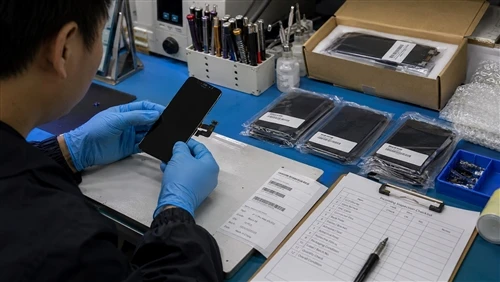
Sample testing exists to catch problems before they scale, not to confirm that the supplier is competent in general. A structured sample evaluation should cover display function, brightness and color consistency, touch response accuracy, presence of dead pixels or backlight leakage, general appearance, and - where relevant - fit and connector condition. Agree on testing criteria before you evaluate, not after, so a disappointing result cannot be reframed as a misunderstanding.
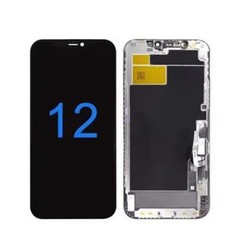
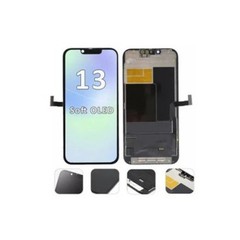
It also matters to distinguish what kind of problem you are looking at. A defect present in a sealed sample straight from the factory points differently than the same symptom appearing after handling or installation - manufacturing defect, shipping damage, and installation damage are not interchangeable categories, and treating them as the same thing makes it harder to hold the right party accountable. If you are testing a specific line such as iPhone 13 series LCD screens for the first time, apply the same criteria consistently across every unit in the sample set rather than judging the batch by its best or worst piece.
But sample approval only confirms one thing: that this specific unit, tested once, met the agreed standard. The next question is whether that standard survives production at scale - which is a different evaluation entirely.

Why Sample Quality Does Not Guarantee Bulk-Order Consistency?
This is where many buyers get burned even after doing sample testing correctly. The sample only proves what one unit, tested once, was capable of.
What determines whether the bulk shipment matches it is the supplier's process control - consistent incoming materials, stable assembly procedures, and a final inspection standard applied across every unit rather than a sampled few. Ask how the supplier uses the approved sample as a reference point for the bulk batch, and whether pre-shipment inspection compares finished units against that same reference rather than a general internal standard. This is one of the most commercially important distinctions in LCD sourcing, and it is covered in more depth in how sample quality compares to bulk-order consistency.
A supplier who cannot explain what, if anything, might differ between the sample and a full production run has usually not thought through that question - which is reason enough to ask it again before the order ships, not to assume the worst.

How to Compare Multiple iPhone LCD Manufacturers?
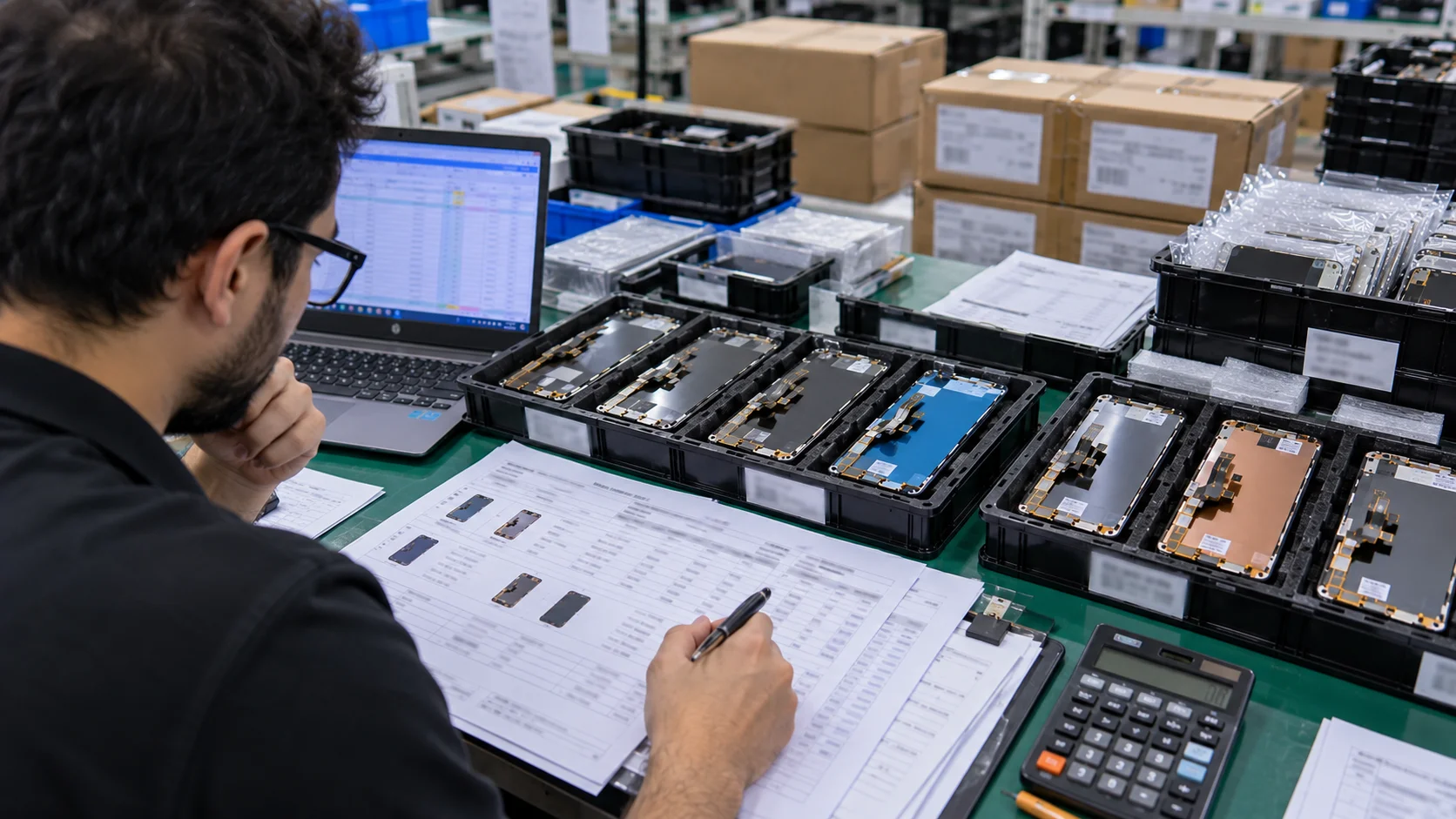
A side-by-side comparison only works if you are comparing the same things. Use a consistent scorecard across every supplier under consideration:
| Evaluation Factor | What to Verify | Why It Matters |
|---|---|---|
| Manufacturing capability | Production scope and process visibility | Confirms actual supply capability |
| Product specification | Exact model, grade, and tolerance | Prevents mismatched expectations |
| QC process | Inspection stages and recorded results | Signals process maturity |
| Sample performance | Structured test results against agreed criteria | Reduces first-order risk |
| Batch consistency | Controls linking sample to bulk production | Reduces recurring quality problems |
| MOQ | Minimum order and mixed-model flexibility | Affects inventory risk |
| Lead time | Production and shipping timeline | Affects stock planning |
| Warranty | Written coverage and exclusions | Defines post-sale risk |
| Communication | Response quality and technical clarity | Affects how issues get resolved |
Two suppliers quoting the same "grade" on the same model can still differ meaningfully once every row in this table is checked rather than the price column alone - which is what it actually takes to compare two iPhone LCD manufacturers side by side instead of judging them on isolated quotations.

Why the Lowest Quotation Is Not the Lowest Procurement Cost?
A cheaper unit price that produces a higher return rate, more inspection labor on your end, replacement shipments, or customer complaints can end up costing more than a higher quotation that performs consistently. This is not a claim that expensive suppliers are always better - it is a reason to compare quotations against the same specification, grade, packaging, and warranty terms rather than the number alone. The concept of total procurement cost, and how to estimate it without forcing a formula that does not fit your situation, is covered in understanding true procurement cost beyond unit price.
How to Evaluate MOQ and Mixed-Model Ordering?
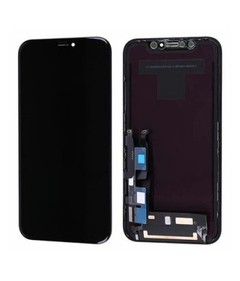
Minimum order quantity affects different buyers differently. A small repair business needs flexibility to order across several models without committing to a large quantity of any single one; a distributor may be more concerned with whether MOQ scales sensibly with order size; a repair chain often needs to know whether slow-moving models can be mixed into a single order without hitting a separate per-model minimum. Do not assume a published MOQ figure applies uniformly - confirm current terms directly with the supplier, including whether models like iPhone XR LCD screens can be combined with faster-moving models in the same order. The tradeoffs are explored further in how MOQ and mixed-model ordering affect inventory risk. A supplier that quotes the identical MOQ regardless of model, grade, or your order history is usually reciting a standard policy rather than reflecting an actual production plan for your specific order - worth a direct follow-up question rather than taking the number at face value.
How to Evaluate Lead Time and Supply Stability?
Lead time is rarely a single number - it includes order confirmation, production scheduling, packaging, and shipment, and each stage can shift depending on model availability, order volume, and whether you are ordering during a peak period. Ask what specifically affects lead time for your order rather than accepting a general promise, and treat consistency of delivery over multiple orders as more meaningful than a single fast quote.
What to Confirm About Warranty and Defect Handling?
Before placing an order, get warranty terms in writing: what is covered, the warranty period, what evidence is required to file a claim, how replacements or credits are issued, and who is responsible for damage that occurred during installation versus damage present on arrival. If warranty terms are not documented in writing, the buyer has less clarity about how defects will actually be handled after delivery - which is a risk worth pricing in before the order ships, not after a claim is disputed. The specific terms a B2B buyer should hold a supplier to are laid out in what a B2B LCD warranty should actually cover.

How a Trial Order Validates an iPhone LCD Supplier?
A trial order sits between sample testing and a full bulk commitment, and it reveals things a sample cannot: whether production quality holds at a slightly larger scale, whether packaging protects the product in transit, whether the supplier's documentation and defect-handling process work the way they described, and whether communication stays reliable once money has actually changed hands. Evaluate the trial order against the same criteria you used for the sample, not a looser standard. A practical framework for structuring this step is covered in how supplier evaluation works through a trial order.
iPhone LCD Supplier Red Flags to Watch For
None of the following proves fraud or poor quality on its own - but each one is a signal that warrants more verification before you commit further:
- Unwillingness to provide basic company or production information
- Inability to describe manufacturing or QC processes beyond general statements
- Product specifications that shift between conversations
- Vague or verbal-only warranty terms
- Pressure to place a large order quickly, before samples or a trial order
- A quotation unusually below the range of comparable suppliers with no clear explanation
- Resistance to reasonable sample evaluation or agreed testing criteria
- Unexplained differences between the sample received and what the final quotation describes
Treat these as prompts to ask more questions, not as a verdict. A longer list of situational examples is available in common iPhone LCD supplier red flags.
iPhone LCD Manufacturer Evaluation Checklist
Company verification
☐ Business identity is clear and consistent across communications
☐ Production location has been verifiable, not just claimed
☐ Claimed manufacturing scope matches the products actually offered
Product verification
☐ Model numbers and specifications are defined in writing
☐ Exact quality grade is agreed, not assumed
☐ Compatibility requirements are documented
Quality verification
☐ A defined QC process with named inspection stages has been described
☐ Defect recording and classification has been explained
☐ Batch-consistency controls between sample and bulk have been confirmed
Commercial verification
☐ Current MOQ and mixed-model policy is confirmed
☐ Realistic lead time has been quoted for your order size
☐ Payment, shipping, and warranty terms are documented in writing
Validation
☐ Samples have been tested against agreed criteria
☐ A trial order has been completed and documented
☐ The approved sample is kept on file as a reference for future batches
How Evaluation Priorities Differ by Buyer Type?
Small repair businesses often weigh MOQ flexibility, mixed-model access, and manageable sample cost most heavily. Wholesalers and distributors tend to prioritize batch consistency, product range, and supply continuity over any single quotation. Repair chains generally care most about standardized quality, repeatable results across locations, and clear documentation for defect handling. None of these priorities is universal - they reflect how each business type absorbs risk differently, and it is worth deciding which of these you are before weighting the evaluation criteria above.
How to Prepare an Accurate iPhone LCD RFQ?
An RFQ that omits key details produces quotations that cannot be fairly compared. A useful RFQ specifies exact models and quantities, target market or destination, required quality grade or specification, packaging requirements, expected purchasing frequency, and whether samples are needed before quotation. The more precisely this information is stated up front, the more the quotations you receive will actually be comparable using the scorecard earlier in this guide - which is really the point of learning how to prepare an accurate iPhone LCD RFQ before the first one goes out, rather than fixing it after quotations start coming back inconsistent.
FAQ
How can I tell whether an iPhone LCD supplier is a real manufacturer?
Ask them to describe their production and inspection process in specific terms, and see whether that description stays consistent across separate conversations and matches what you observe in the sample.
What should I ask an iPhone LCD manufacturer before ordering?
At minimum: exact specification and grade, inspection stages and how defects are recorded, current MOQ and mixed-model policy, lead time, and written warranty terms.
How many samples should I test before a bulk order?
Enough to represent normal variation rather than a single best-case unit - the right number depends on your order size and risk tolerance, and should be agreed with the supplier in advance.
How can I verify sample-to-bulk consistency?
Confirm that the supplier uses the approved sample as a reference during production and that pre-shipment inspection checks finished units against that same reference.
What should an iPhone LCD supplier include in a quotation?
Exact model and grade, quantity tiers, MOQ, packaging, lead time, payment and shipping terms, and warranty coverage - not unit price alone.
What should a B2B LCD warranty cover?
Written scope, warranty period, eligible defects, exclusions, evidence requirements, and how replacements or credits are processed.
What information should I include in an RFQ?
Models, quantities, destination market, required quality grade, packaging requirements, purchasing frequency, and whether samples are needed first.
What is the single most important factor when choosing an iPhone LCD screen manufacturer?
Whether the supplier can reproduce the approved sample's quality across a full bulk order - not how good any one sample looks on its own.
Final Decision Framework
Verify → Test → Compare → Trial → Monitor → Scale.
Verify the supplier's identity and process claims. Test samples against agreed criteria. Compare quotations using the same scorecard across every candidate. Run a trial order before committing to full volume. Monitor consistency once bulk orders begin. Only then scale the relationship. No single claim, sample, or quotation should carry the whole decision - the evidence across this sequence should.
If you are sourcing iPhone LCD screens for wholesale, distribution, or repair-business purchasing, the same six-stage sequence applies before your next supplier decision. We supply iPhone LCD screens for wholesale, distribution, and repair-business purchasing. We do not provide local phone repair services or single-screen installation.

Ready to Move Forward?
Once verification, sample testing, and supplier comparison are done, the next step is straightforward: send your target models, quantities, destination market, and quality requirements in one message, and you'll receive current model availability, MOQ, sample options, and quotation details in return.