









How Suppliers Should Respond to Batch Quality Problems?
When several units from the same iPhone LCD shipment show the same fault, the real question for a wholesale buyer isn't just "why did this happen." It's whether the supplier has a structured way to confirm the scope of the problem, stop it from reaching more customers, work out what actually caused it, and put in place a fix that holds up on the next order. One bad screen out of five hundred is usually just a warranty claim. The moment the same fault turns up on unit after unit from one shipment, the situation changes - the buyer isn't dealing with a single unlucky part anymore, and treating it that way is where a lot of batch issues get mishandled. This article lays out what that response should look like at each stage - from the moment a problem is reported through to closing the case and verifying that it doesn't come back.
Why Batch Quality Problems Are Different From Individual Defects?
One defective screen in an order of five hundred is, on its own, not unusual. Components fail, cosmetic issues slip through inspection, and no supplier can promise a zero-defect shipment. What changes the picture is repetition: the same symptom showing up across multiple units, a shipment-specific failure rate that's noticeably higher than the buyer's normal experience, or a defect that keeps surfacing in a particular model or production run.
That distinction matters commercially. A single bad unit costs one replacement. A batch-level issue costs technician time re-testing incoming stock, unplanned returns from end customers, disrupted repair schedules, and - if it isn't caught early - a second wave of the same complaint from the next shipment. Buyers who are already working to reduce recurring iPhone LCD return rates in their repair or resale business know that the pattern is the signal worth acting on, not the individual unit. The rest of this article treats a batch problem as a distinct category that calls for containment and root-cause work, not just a one-off warranty exchange.

What Buyers Should Report Before Asking for a Resolution?
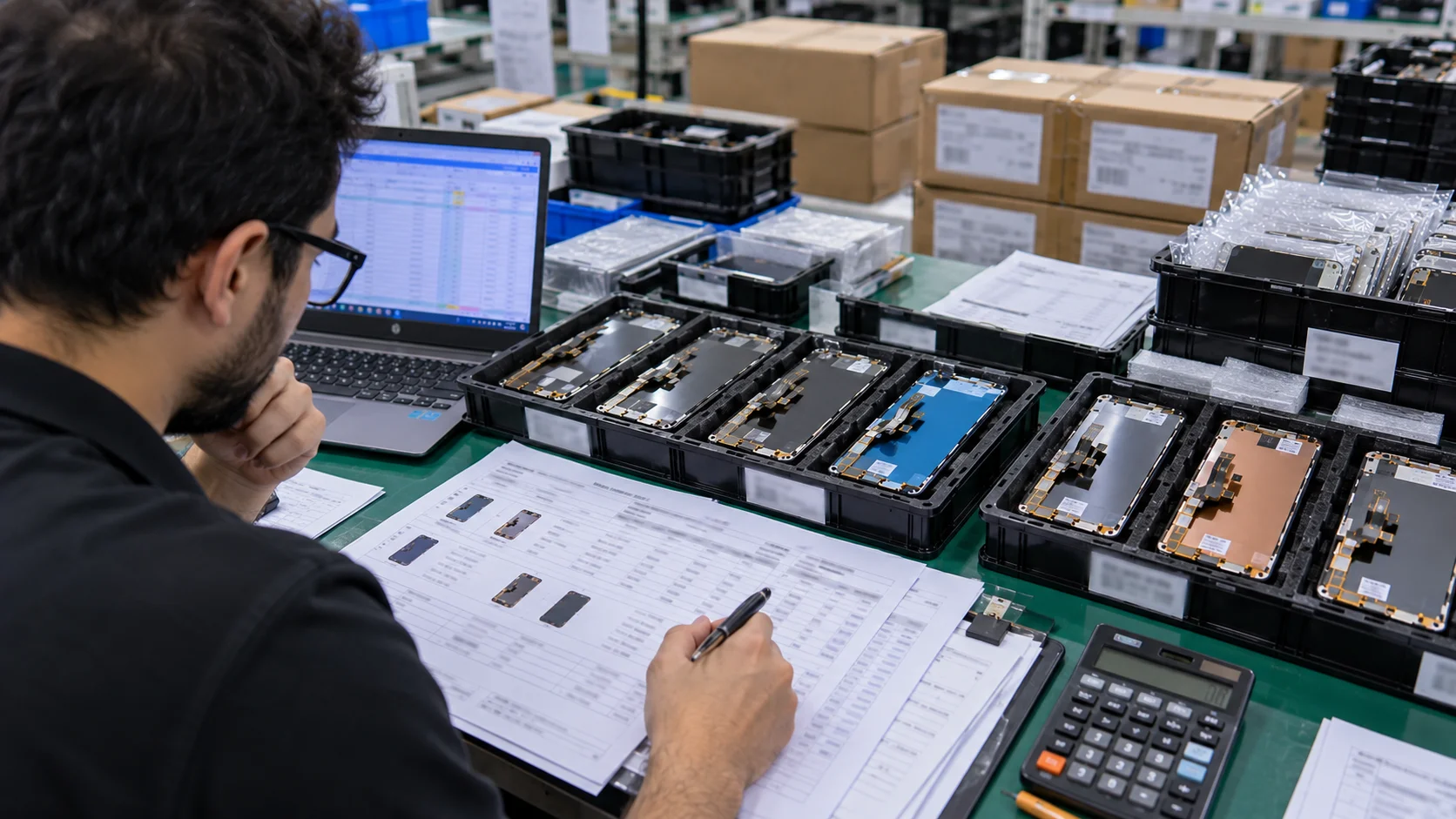
A supplier can only investigate as fast as the information they're given. Vague statements - "a lot of these screens are bad" - don't point to a cause, and they usually lead to a slower back-and-forth rather than a faster resolution. Before contacting the supplier, it helps to have the following ready:
- Product/model and the specific order or shipment reference
- Batch or production reference, if it's visible on the packaging or paperwork
- Quantity received and quantity actually inspected or tested
- Number of units showing the defect, and whether the symptom is identical across them
- Defect type and how it presents (display, touch, backlight, cosmetic, assembly)
- Inspection or test method used to find it
- Whether the defect was found before or after installation
- Photos or video of the affected units
- Packaging and shipping condition at receipt
This is close to the same information covered when submitting a complete LCD defect report - the more specific the evidence, the less time gets spent on clarifying questions before the actual investigation starts. There's no fixed defect-rate threshold that has to be crossed before a report is worth sending; a supplier should be able to work with whatever evidence is available, even from a small number of units.
Step 1 - Confirm and Classify the Quality Problem
Before anything else, the supplier needs to establish what category the reported issue actually falls into. Display problems, touch-response issues, backlight faults, cosmetic marks, assembly gaps, packaging damage, and installation-related symptoms are not interchangeable - each points toward a different part of the process.
Symptoms like abnormal display behavior, unresponsive touch zones, dead pixels, backlight leakage, visible lines, uneven brightness, or intermittent function are evidence, not a conclusion. A display line, for example, can come from a panel or driver issue, from pressure damage during installation, or from a connector that wasn't seated correctly. Classifying the symptom is the starting point for the investigation - it isn't the investigation itself, and a supplier that jumps straight to a cause without checking the evidence is skipping a step.
Step 2 - Contain the Affected Batch
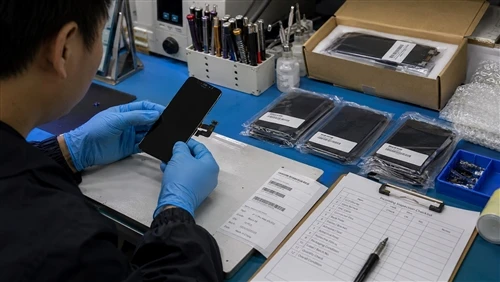
Before a root cause is confirmed, a responsible supplier should limit how far the problem can spread. That typically means reviewing what's left in inventory from the same production run, checking whether other shipments came from the same lot, and increasing inspection on any remaining stock before it goes out. Where it's practical, units already confirmed defective get separated from units that are still awaiting verification, so the two don't get mixed back into general stock.
This step matters even when the cause isn't yet clear, because waiting for a full root-cause finding before doing anything can mean more affected units reach other buyers in the meantime. It's also where the buyer's own process intersects with the supplier's - the same logic that governs handling defective screens in a bulk order on the receiving end (isolate, don't reinstall, don't mix with verified stock) applies to the supplier's side of the same shipment.
Step 3 - Determine Whether the Problem Is Manufacturing, Installation, Handling, or Transport Related
This is the step that decides everything downstream - the remedy, who bears the cost, and what gets changed to prevent recurrence - so it needs to be evidence-based rather than assumed. A supplier who blames installation without reviewing evidence, or a buyer who assumes every fault is a manufacturing defect, are both skipping the same step.
| Possible Cause | Typical Evidence | What Should Be Checked | Next Action |
|---|---|---|---|
| Manufacturing/component defect | Consistent symptom across multiple units from the same lot, present before installation | Batch/lot reference, whether other units from the same run show the same symptom | Supplier investigates root cause, isolates affected lot |
| Assembly issue | Defect tied to a specific process step (e.g., seal, connector, frame fit) | Physical inspection of affected units, comparison against unaffected stock | Supplier reviews assembly step and QC checkpoint |
| Installation damage | Symptom appears only after handling/installation, physical stress marks near the damage site | Photos of the specific area, installation method used, tool marks | Compared against installation guidance and evidence from both sides |
| Transport/handling damage | Damage pattern consistent with impact or pressure, packaging condition at receipt | Packaging photos, carrier handling reports, damage location vs. packaging weak points | Reviewed against shipping and packaging records |
| Storage/environmental issue | Symptom develops after a period in storage, humidity or temperature exposure | Storage conditions, time between receipt and use | Buyer-side storage practices reviewed alongside product specification |
This is the same question addressed in more depth when distinguishing installation damage from a manufacturing defect: the actual answer depends on the specific evidence in front of both parties, not on which side is arguing louder. Neither party should treat this table as a verdict - it's a starting point for narrowing down what to check next.
One practical distinction worth flagging: a fault appearing after installation doesn't, by itself, prove that installation caused it. Timing is useful evidence - it narrows where to look - but it isn't a conclusion on its own. A connector that was already marginal from assembly can fail the first time it's handled, and a screen that looked fine on receipt can still be carrying a manufacturing defect that only shows up once it's mounted and powered on. The physical evidence and the batch pattern still need to line up with the timing before responsibility gets assigned either way.

Step 4 - Investigate the Root Cause
There's a difference between the symptom, the immediate cause, and the root cause. A display line is a symptom. A damaged ribbon connector might be the immediate cause. Why that connector was damaged - during assembly, during packing, or during handling after it left the factory - is the root cause, and it's the part that actually determines what needs to change.
A useful investigation pulls together the defect samples themselves, any available production or inspection records for the affected lot, the buyer's photos and test results, packaging and shipment information, and - where retained samples exist - a comparison against units from unaffected batches. Fixing the individual units in front of the buyer without identifying why the batch produced them in the first place tends to mean the same complaint shows up again on the next order.

Step 5 - Communicate Clearly With the Buyer
Professional communication on a batch issue tends to follow a predictable sequence: acknowledge the report, confirm what's already known, ask for anything still missing, explain what the investigation will look at, say what happens to the affected units in the meantime, give a realistic timeframe for an update, share the findings once they're available, agree on the corrective action, and follow up after it's been applied.
What matters most in that sequence is what it avoids - defensive language, blame assigned before the evidence has been reviewed, or promises made before the cause is understood. A buyer working through a batch problem isn't looking for reassurance; they're looking for a supplier who can say clearly what's known, what isn't yet, and when that will change.
Step 6 - Decide the Appropriate Corrective Action
The right remedy depends on what's actually been confirmed: how many units are affected, how severe the defect is, what the agreed warranty terms cover, what the evidence shows, and what's practical given the batch's current status. Depending on those factors, the outcome could be replacement of the confirmed defective units, a credit, additional inspection before further shipment, rework where that's technically appropriate, or replacement folded into a subsequent order.
No single remedy is automatically correct for every case, and warranty terms shouldn't be assumed rather than confirmed in writing. A buyer restocking replacement iPhone 15 LCD screens after a batch issue, for example, may need a different resolution path than one dealing with a smaller order of an older model - the volume affected and the buyer's own inventory position both factor into what's practical.
Step 7 - Verify the Corrective Action Before Closing the Case
Replacing the affected units resolves the buyer's immediate problem; it doesn't automatically mean the underlying quality issue has been resolved. Agreeing on a remedy isn't the same as confirming the problem is actually fixed. Before a case gets closed, it's worth checking that the affected units have been fully isolated, that any replacement stock has passed its own inspection, that the corrective action actually addresses the cause that was identified (not just the symptom the buyer first reported), and that related batches or shipments have been assessed for the same risk.
This is what closed-loop quality management means in practice - the loop only closes once there's evidence the fix worked, not once the paperwork is done.
How Suppliers Can Prevent the Same Batch Problem From Happening Again?
Once a root cause is confirmed, the preventive side of the response should feed back into the process that produced the problem in the first place: updating the relevant inspection point, strengthening batch testing at that step, reviewing the specific production control involved, and improving traceability so the same lot can be identified quickly if the issue resurfaces. Where the cause involved packaging or handling rather than the product itself, that review extends to how units are packed and moved before they reach the buyer.
None of this is worth much as a one-time statement - the value is in whether the next few batches from the same line actually show the improvement, which is something a buyer can track over subsequent shipments rather than take on faith.

What Buyers Should Expect From a Reliable iPhone LCD Supplier?
The framework above translates into a fairly practical checklist for evaluating a supplier's quality-management maturity, separate from evaluating the product itself:
- Responds to a defect report with specific questions, not a generic denial or a generic approval
- Can trace an affected unit back to a batch or production reference
- Investigates before assigning responsibility, rather than after
- Explains warranty terms clearly rather than leaving them ambiguous
- Provides a realistic timeline and follows up without being chased
- Treats a repeated defect as a pattern worth investigating, not a series of unrelated cases
Buyers sourcing across multiple models sometimes find it useful to check whether this consistency holds across a supplier's full range - for instance, whether the same batch-verification standard applied to a recent iPhone 14 Pro Max LCD screen order is also applied to less frequently ordered models, where quality control can quietly get less attention.
Red Flags in Supplier Responses to Batch Quality Problems
Certain response patterns are worth treating as warning signs, not because they automatically prove misconduct, but because they suggest the supplier's quality-management process isn't structured enough to handle a batch-level issue:
- Blaming installation or handling before reviewing any evidence
- Declining to investigate a defect that's shown up more than once
- Asking for "more proof" without offering a clear process for submitting it
- Ignoring batch or shipment references entirely
- Treating repeated failures as unconnected individual cases
- Giving no concrete next step or timeline
- Changing the explanation for the cause each time it's raised
- Offering replacement units without looking into whether the issue will recur
- Refusing to state what the warranty terms actually cover
- Going quiet after the immediate complaint is settled, with no follow-up
None of these on their own means a supplier is unreliable - a single slip in an otherwise solid response doesn't erase a good track record. What's worth reconsidering is a pattern: several of these showing up together, or the same one repeating across more than one incident.
Batch Quality Incident Workflow: From Report to Closure
The seven steps above are the reasoning behind the response. In practice, they compress into a shorter sequence that adds an intake and a closing checkpoint on either end:
Report - the buyer submits the defect with supporting evidence.
Verify - the supplier confirms the report is complete and the defect is reproducible or documented.
Classify - the symptom is categorized (display, touch, backlight, cosmetic, assembly).
Contain - remaining inventory from the same batch is reviewed and, where needed, held back.
Investigate - the root cause is traced using production, inspection, and shipment evidence.
Determine responsibility - manufacturing, installation, handling, or transport is identified based on evidence.
Correct - a remedy is agreed based on what's confirmed.
Re-test - replacement units and remaining batch stock are verified before they ship.
Prevent recurrence - the relevant process step is reviewed and adjusted.
Close the case - the buyer confirms resolution and the finding is documented for future reference.

Batch Quality Incident Checklist for Wholesale Buyers
Order information
- Model and quantity ordered
- Shipment/order reference
- Batch or production reference, if available
Defect information
- Defect type and symptom description
- Quantity inspected vs. quantity affected
- Test or inspection method used
Evidence
- Photographs and video
- Test results
- Packaging condition on arrival
- Installation conditions, if the defect appeared after handling
Supplier response
- Date the report was acknowledged
- Investigation status and timeline given
- Root-cause finding, once available
- Corrective action agreed
- Replacement/credit decision
- Follow-up confirmation once resolved
How Batch Problems Affect the Buyer's Total Procurement Cost?
The cost of a batch quality problem rarely stops at the unit price of the defective screens. It usually includes the labor spent re-inspecting incoming stock more carefully than usual, the technician time lost to replacing units already installed, and the cost of expedited replacement shipping and return handling once the defect is confirmed.
Some of the cost is harder to put a number on but no less real - the customer trust a repair business spends when a screen fails shortly after installation, and the extra scrutiny that gets applied to every shipment from that supplier afterward. None of this shows up on the original invoice, which is exactly why unit price alone is a poor way to compare suppliers when quality-management history is uneven between them.
When Should a Buyer Continue Working With a Supplier?
Weighing that pattern against everything else the supplier has done matters more than reacting to any single incident. What's more useful is weighing several factors together: how severe the issue actually was, how transparent the supplier was in explaining it, how quickly they responded, whether the root-cause finding held up, and whether the corrective action was actually verified rather than just promised.
A supplier that responds well to a first-time batch issue - clear communication, a confirmed cause, a workable remedy - is a different case from one that's shown the same pattern of defects and the same vague responses more than once. What decides that comparison isn't whether a defect occurred at all - every supplier will have one eventually - it's whether the response, the second time and the third, actually looked any different from the first.
FAQ
What should a buyer do when multiple LCD screens from the same batch fail?
Document the batch and shipment reference, the number of units affected out of the total received, and the specific symptom, then report it to the supplier as a batch-level issue rather than a series of separate warranty claims - this gives the supplier the context needed to check for a pattern rather than investigating each unit in isolation.
How can buyers distinguish a manufacturing defect from installation damage?
By comparing the evidence against both possibilities rather than assuming one - whether the symptom appeared before or after installation, whether it matches known manufacturing failure patterns or physical damage patterns, and whether other units from the same batch show the same issue.
Should a supplier inspect the remaining inventory from an affected batch?
Yes, as a containment step - checking remaining stock from the same production run before more of it ships out is a standard part of limiting how far a batch-level issue spreads.
What information should be included in a defect report?
Model, order/shipment reference, batch reference if available, quantity affected out of quantity received, defect symptom, inspection method, and supporting photos or video.
What should a supplier do after confirming a batch defect?
Contain the remaining affected stock, complete a root-cause investigation, agree on a corrective action with the buyer, verify that the fix actually addresses the confirmed cause, and check whether related batches carry the same risk.
How can buyers verify that a corrective action actually worked?
By checking whether replacement units pass the buyer's own inspection process and whether the same defect shows up again in the next shipment from the same supplier - a corrective action that holds is one that doesn't need repeating.
When does a recurring batch problem indicate supplier risk rather than a one-off issue?
When the same or a closely related defect shows up across more than one shipment, especially if the supplier's explanation for the cause changes each time or the corrective action from the previous incident clearly wasn't applied.
Final Takeaway
A batch quality problem isn't, by itself, proof that a supplier is unreliable - every supply chain produces the occasional bad run. What actually separates a professional response from a weak one is whether it's evidence-based, traceable, timely, corrective, and verified before the case is closed. That's the standard worth applying the next time a batch issue comes up, and it's also the standard worth confirming in advance rather than discovering during an incident.
If a recent shipment has raised exactly this kind of question, the fastest path to a specific answer is having the affected model numbers, order quantity, shipment reference, and any test results on hand before reaching out - vague reports take longer to resolve than specific ones. From there, buyers can request our warranty terms and batch quality-control information and get a documented answer in writing, one that still holds up the next time a similar question comes up, whether that's on the next order or the fifth one after this.