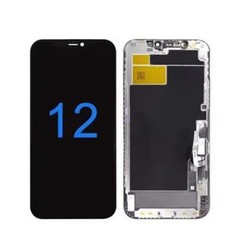
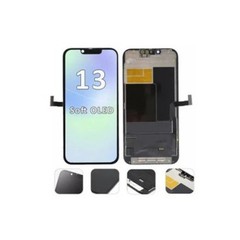
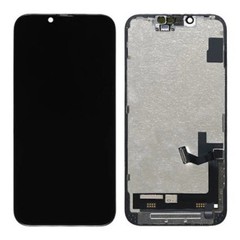
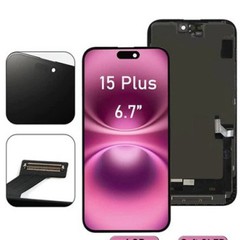
Let me start with the question I get asked most often by new wholesale buyers.
"Which iPhone model should I stock the most of right now?"
It sounds simple. It isn't - because the right answer depends entirely on your market, your customer base, and where you are in your business cycle. A distributor supplying independent repair shops across the UK has a completely different stocking priority than a repair chain in the UAE or a reseller building an Amazon operation in North America.
What I can give you is the framework we use internally, built from a decade of shipping iPhone screens to buyers in over 30 countries and watching which inventory decisions produced margin and which ones produced stock sitting on a shelf.
This guide covers everything: the full iPhone lineup from 6 through 16, the grade structure that actually matters for wholesale buyers, factory-direct pricing as of June 2026, the margin calculation per model, and the five-year market outlook that should be informing your purchasing decisions right now. If you are a repair shop owner, regional distributor, or B2B buyer evaluating iPhone LCD wholesale suppliers, this is the article to read before your next order.
Part 1: The iPhone Repair Market in 2026 - The Numbers Behind the Opportunity
Before the product specifics, the market context matters.
The global mobile phone repair market was valued at $50.2 billion in 2023 and is projected to grow at a CAGR of 6.8% from 2023 to 2030. The US mobile phone repair market alone is expected to reach $16.1 billion by 2027. Screen repair is the largest single category driving that number - display damage is consistently the most common reason a smartphone enters a repair shop.
In 2023, 72 million smartphones were repaired in the US due to cracked screens, up 18% from 2022. 68% of smartphone users prefer local repair shops over carriers, with 45% citing cost savings as the primary reason.
The average cost of replacing an iPhone is $650, compared to an average repair cost of $150 for a screen replacement - making repair the economically rational choice for most users. That gap is widening, not narrowing. Apple's out-of-warranty screen repair costs range from $129 for an iPhone SE to $379 for the iPhone 16 Pro Max. Independent repair shops offering quality aftermarket screens at 40–60% of Apple's price have a compelling value proposition in every market.
29% of US consumers used third-party repair services in 2023, up from 19% in 2021 following right-to-repair laws. That trend is accelerating globally as right-to-repair legislation in the EU, UK, and multiple US states removes barriers to independent repair.
This is the market your wholesale iPhone LCD supply chain is serving. It's large, growing, and structurally supported by legislative tailwinds. The business question is how to position your sourcing within it.
Part 2: Understanding iPhone Screen Grades - The Foundation of Every Sourcing Decision
The most important knowledge gap we see in first-time wholesale buyers is grade confusion. The iPhone screen market uses overlapping terminology that different suppliers apply inconsistently. Here is what the grades actually mean, stripped of marketing language.
Grade 1: Incell LCD
Technical definition:
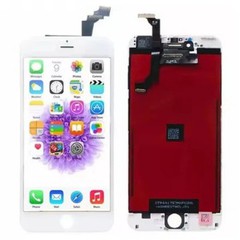
Incell integrates the touch digitizer directly into the LCD panel structure. Apple used this technology from iPhone 6 through iPhone 11. No Incell option exists for iPhone 12 or newer - those models use OLED exclusively.
What wholesale buyers actually receive:
- Brightness: 400–500 nits
- Color temperature: slightly cooler than OEM reference on most batches
- Touch accuracy: smooth under normal conditions, sensitive to flex cable quality
- Supply stability: excellent - mature production, stable pricing
The quality issue that defines this grade:
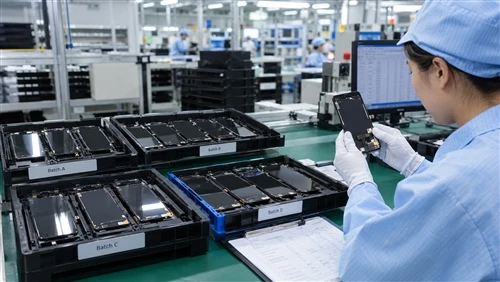
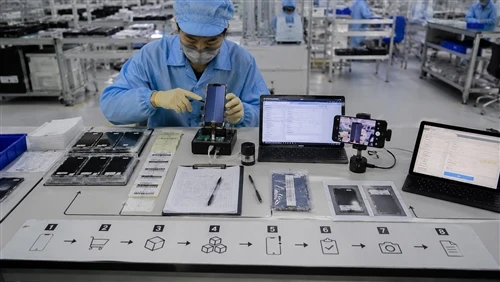
Batch-to-batch color temperature variance. Two shipments from the same supplier can produce screens with visibly different color characteristics if the polarizer source shifted between production runs. At our factory, we calibrate every batch against a reference panel using a spectrophotometer. We reject batches that fall outside tolerance. Many suppliers do not run this check. When you ask a supplier how they control batch-to-batch color consistency and they cannot answer with specifics, that is a warning.
Who should buy Incell:
Shops servicing iPhone 6 through iPhone 11, high-volume budget repair operations, markets where customers prioritize repair cost over premium display quality.

Grade 2: Hard OLED
Technical definition:
OLED panels using a rigid glass substrate, manufactured to OEM specification using supply chain components equivalent to Apple's. Applies to iPhone X through current generation models.
What wholesale buyers actually receive:
- Brightness: 500–600 nits
- Color accuracy: significantly closer to OEM than Incell
- Touch response: near-identical to original in daily use
- More fragile than Soft OLED under physical stress due to rigid substrate
The honest limitation:
Hard OLED is more susceptible to cracking under pressure than Soft OLED. The savings from choosing a Hard screen instead of a Soft screen may not justify the trade-off in fragility. For shops doing high-volume repairs in markets with careful customers, Hard OLED works well. For shops where phones come in with significant frame damage alongside screen damage, Soft OLED holds up better under installation stress.
Who should buy Hard OLED:
Mid-market repair operations, shops handling iPhone X through iPhone 14 in volume, operations where per-unit cost matters more than the marginal durability improvement of Soft OLED.

Grade 3: Soft OLED
Technical definition:
OLED panels using a flexible polyimide substrate - the same display substrate architecture Apple uses in its own manufacturing. Thinner, more flexible, closer to OEM display character than Hard OLED.
What wholesale buyers actually receive:
- Brightness: 600–700 nits - customers notice the difference outdoors
- Color calibration: closest to OEM of any aftermarket grade
- Durability: more flexible under installation stress, lower cracking risk
- Defect rates: 0.5–1.0% in our production data versus 1–2.5% for Hard OLED and 1–3% for Incell
The grade we most frequently recommend for iPhone 12 and newer:
The per-unit premium over Hard OLED is $6–12 depending on the model. The reduction in field return rates, the better customer reaction, and the review score improvement from that quality delta typically justify the cost within the first two months of stocking it.
Who should buy Soft OLED:
Shops in premium markets (US, UK, Germany, Australia), iPhone 12 through 16 repairs, Pro and Pro Max models where customers are quality-sensitive, any shop that markets itself on quality rather than price.

Grade 4: Original Refurbished
Technical definition:
Genuine Apple panels pulled from disassembled or traded-in devices, professionally cleaned, re-bonded with new glass, and tested to original specification. The panel itself is Apple's manufacturing.
What wholesale buyers actually receive:
- True Tone support on compatible models - the only aftermarket grade that offers this
- Color accuracy identical to OEM, because it is OEM
- Defect rate under 0.5% in our data
- Compatibility with Apple's diagnostics without third-party part alerts on most models
The constraint:
Supply variability. Original Refurbished availability depends on upstream disassembly volumes. Some models are consistently available; others are periodically constrained. This grade works well as a premium upsell tier at 10–15% of your volume. It does not work as your primary stock for models where you need reliable weekly supply commitments.
Who should buy Original Refurbished:
Shops offering explicit "genuine parts" repair positioning, insurance repair operations, EU-market shops catering to consumers who specifically ask about part authenticity.

Part 3: Complete Grade Comparison - Quick Reference for Wholesale Buyers
| Incell LCD | Hard OLED | Soft OLED | Original Refurbished | |
|---|---|---|---|---|
| Compatible models | iPhone 6–11 | iPhone X–16 | iPhone X–16 | iPhone X–15 |
| Brightness | 400–500 nits | 500–600 nits | 600–700 nits | Original spec |
| True Tone support | No | No | No | Yes (compatible models) |
| Outdoor visibility | Adequate | Good | Very good | Excellent |
| Arrival defect rate | 1–3% | 1–2.5% | 0.5–1.0% | Under 0.5% |
| Batch color consistency | Variable | Good | Very good | Excellent |
| Supply stability | Excellent | Good | Good | Variable |
| Best for | Budget / volume | Mid-market | Premium | Top-tier / upsell |
Part 4: iPhone Wholesale Price Reference - All Models, June 2026
All prices FOB Shenzhen, factory-direct. Prices reflect current market conditions and are subject to revision based on component supply and model lifecycle position.
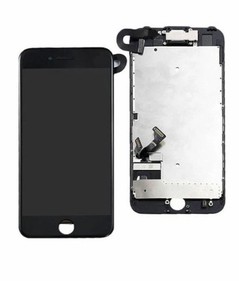
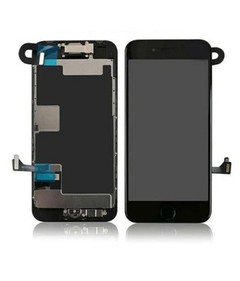
iPhone 6 Through iPhone 8 Series - Legacy Volume Tier
These models are fully mature in the repair lifecycle. Supply is stable, prices have settled at their floor, and repair demand is steady in emerging markets and among users who hold devices for extended periods.
| Model | Grade | MOQ 50 pcs | MOQ 200 pcs | MOQ 500 pcs |
|---|---|---|---|---|
| iPhone 6 | Incell LCD | $4.80 | $4.20 | $3.70 |
| iPhone 6 Plus | Incell LCD | $5.20 | $4.60 | $4.10 |
| iPhone 6S | Incell LCD | $5.50 | $4.90 | $4.30 |
| iPhone 6S Plus | Incell LCD | $6.00 | $5.40 | $4.80 |
| iPhone 7 | Incell LCD | $6.00 | $5.30 | $4.70 |
| iPhone 7 Plus | Incell LCD | $7.00 | $6.20 | $5.50 |
| iPhone 8 | Incell LCD | $6.50 | $5.70 | $5.10 |
| iPhone 8 Plus | Incell LCD | $7.80 | $6.90 | $6.10 |
Sourcing note on 8-series:
iPhone 8 and 8 Plus have a specific 3D Touch layer compatibility issue with low-quality flex cables that produces ghost touch complaints 30–60 days post-installation. We changed our flex cable source for these models in early 2024. If your current supplier hasn't done the same, this is a specific question worth asking.
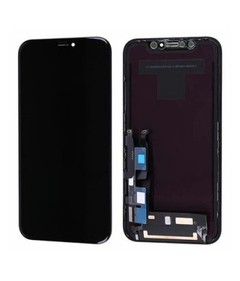
iPhone X / XR / XS Series - OLED Transition Models
The iPhone X introduced OLED to the iPhone lineup in 2017. Parts supply for X through XS Max is fully mature; pricing is settled. XR is still LCD, placing it in the Incell tier.
| Model | Grade | MOQ 30 pcs | MOQ 100 pcs | MOQ 300 pcs |
|---|---|---|---|---|
| iPhone XR | Incell LCD | $10.50 | $9.20 | $8.20 |
| iPhone X | Hard OLED | $16.00 | $14.00 | $12.50 |
| iPhone X | Soft OLED | $24.00 | $21.50 | $19.00 |
| iPhone XS | Hard OLED | $18.50 | $16.50 | $14.50 |
| iPhone XS | Soft OLED | $27.00 | $24.00 | $21.50 |
| iPhone XS Max | Hard OLED | $22.00 | $19.50 | $17.50 |
| iPhone XS Max | Soft OLED | $32.00 | $28.50 | $25.50 |
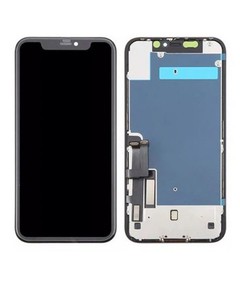
iPhone 11 Series - Peak Volume, Highest Repair Frequency
The iPhone 11 series remains among the highest-volume repair models globally in 2026. Devices are 6–7 years old - fully in mature repair territory. iPhone 11 (LCD) drives the highest unit volume; 11 Pro and Pro Max drive the highest margin per job.
| Model | Grade | MOQ 50 pcs | MOQ 200 pcs | MOQ 500 pcs |
|---|---|---|---|---|
| iPhone 11 | Incell LCD | $9.50 | $8.40 | $7.50 |
| iPhone 11 | Original Refurb | $28.00 | $25.00 | $22.50 |
| iPhone 11 Pro | Hard OLED | $19.00 | $17.00 | $15.00 |
| iPhone 11 Pro | Soft OLED | $29.00 | $26.00 | $23.00 |
| iPhone 11 Pro | Original Refurb | $52.00 | $47.00 | $42.00 |
| iPhone 11 Pro Max | Hard OLED | $24.00 | $21.50 | $19.00 |
| iPhone 11 Pro Max | Soft OLED | $36.00 | $32.00 | $28.50 |
| iPhone 11 Pro Max | Original Refurb | $65.00 | $58.00 | $52.00 |
Market insight:
iPhone 11 represents approximately 22% of our total monthly wholesale volume as of Q1 2026. The majority is Incell, but Original Refurbished orders from EU clients - particularly Germany and the Netherlands - have grown 34% year-on-year as consumer awareness of True Tone increases under right-to-repair awareness campaigns.
iPhone 12 Series - OLED Across the Board, Stable High Volume
iPhone 12 was the first year Apple moved all four models to OLED. No LCD option exists for this series. Parts supply is fully mature and pricing is at its stable floor.
| Model | Grade | MOQ 30 pcs | MOQ 100 pcs | MOQ 300 pcs |
|---|---|---|---|---|
| iPhone 12 Mini | Hard OLED | $16.50 | $14.50 | $13.00 |
| iPhone 12 Mini | Soft OLED | $25.00 | $22.50 | $20.00 |
| iPhone 12 | Hard OLED | $19.50 | $17.50 | $15.50 |
| iPhone 12 | Soft OLED | $29.00 | $26.00 | $23.00 |
| iPhone 12 | Original Refurb | $55.00 | $49.00 | $44.00 |
| iPhone 12 Pro | Hard OLED | $23.00 | $20.50 | $18.00 |
| iPhone 12 Pro | Soft OLED | $33.00 | $29.50 | $26.50 |
| iPhone 12 Pro | Original Refurb | $62.00 | $56.00 | $50.00 |
| iPhone 12 Pro Max | Hard OLED | $27.00 | $24.00 | $21.50 |
| iPhone 12 Pro Max | Soft OLED | $38.00 | $34.00 | $30.50 |
| iPhone 12 Pro Max | Original Refurb | $72.00 | $64.00 | $57.00 |
iPhone 13 Series - Current Workhorse, Best Volume/Margin Balance
In June 2026, the iPhone 13 series is the single most balanced model tier in terms of volume, margin, supply stability, and price. Launched September 2021, devices are 4.5 years old - fully in peak repair demand. This is your highest-priority inventory right now.
| Model | Grade | MOQ 30 pcs | MOQ 100 pcs | MOQ 300 pcs |
|---|---|---|---|---|
| iPhone 13 Mini | Hard OLED | $18.00 | $16.00 | $14.50 |
| iPhone 13 Mini | Soft OLED | $27.00 | $24.00 | $21.50 |
| iPhone 13 | Hard OLED | $22.00 | $19.50 | $17.50 |
| iPhone 13 | Soft OLED | $32.00 | $28.50 | $25.50 |
| iPhone 13 | Original Refurb | $58.00 | $52.00 | $46.00 |
| iPhone 13 Pro | Hard OLED | $27.00 | $24.00 | $21.50 |
| iPhone 13 Pro | Soft OLED | $39.00 | $35.00 | $31.50 |
| iPhone 13 Pro | Original Refurb | $72.00 | $64.00 | $57.50 |
| iPhone 13 Pro Max | Hard OLED | $32.00 | $28.50 | $25.50 |
| iPhone 13 Pro Max | Soft OLED | $45.00 | $40.00 | $36.00 |
| iPhone 13 Pro Max | Original Refurb | $85.00 | $76.00 | $68.00 |
Data point from our distribution clients:
Shops that switched from Hard OLED to Soft OLED on iPhone 13 series reported an average 40% reduction in customer return conversations within 90 days. At $6–10 per unit price difference, that math consistently favors Soft OLED.
iPhone 14 Series - Peak Demand Window Right Now
iPhone 14 launched September 2022 and is now 3.5 years old - entering the most active phase of its repair lifecycle. Parts prices have stabilized after the post-launch premium period. iPhone 14 standard and 14 Pro are the top two models by volume in our wholesale shipments for Q1–Q2 2026. Stock now, before demand peaks further.
| Model | Grade | MOQ 30 pcs | MOQ 100 pcs | MOQ 300 pcs |
|---|---|---|---|---|
| iPhone 14 | Hard OLED | $26.00 | $23.00 | $20.50 |
| iPhone 14 | Soft OLED | $38.00 | $34.00 | $30.50 |
| iPhone 14 | Original Refurb | $68.00 | $61.00 | $54.50 |
| iPhone 14 Plus | Hard OLED | $29.00 | $26.00 | $23.00 |
| iPhone 14 Plus | Soft OLED | $42.00 | $37.50 | $33.50 |
| iPhone 14 Pro | Hard OLED | $34.00 | $30.50 | $27.00 |
| iPhone 14 Pro | Soft OLED | $48.00 | $43.00 | $38.50 |
| iPhone 14 Pro | Original Refurb | $92.00 | $82.00 | $73.00 |
| iPhone 14 Pro Max | Hard OLED | $40.00 | $36.00 | $32.00 |
| iPhone 14 Pro Max | Soft OLED | $56.00 | $50.00 | $44.50 |
| iPhone 14 Pro Max | Original Refurb | $108.00 | $96.00 | $86.00 |
Dynamic Island note on Pro models:
The Dynamic Island cutout on iPhone 14 Pro and Pro Max requires tighter dimensional tolerances than flat-display models. Budget panels with loose manufacturing tolerances produce visible fitment gaps around the cutout - immediately noticeable on a feature that's prominently visible. For 14 Pro and Pro Max, Soft OLED is our baseline recommendation, not an upgrade option.
iPhone 15 Series - Growing Fast, Margin Optimization Tier
iPhone 15 launched September 2023 and is now 2.5 years old. Repair demand is growing approximately 35–40% quarter-on-quarter in our shipping data. Fixers can save an average of $150 using a Soft OLED screen replacement kit for the iPhone 15 series versus Apple's official pricing - that margin gap drives customers firmly toward independent repair.
Prices are still 15–20% above where they will settle in 12 months as the parts lifecycle matures. The right strategy is building supply relationships now and increasing stock depth progressively as repair volume grows through late 2026.
| Model | Grade | MOQ 20 pcs | MOQ 100 pcs | MOQ 300 pcs |
|---|---|---|---|---|
| iPhone 15 | Hard OLED | $32.00 | $28.50 | $25.50 |
| iPhone 15 | Soft OLED | $46.00 | $41.00 | $37.00 |
| iPhone 15 | Original Refurb | $82.00 | $73.00 | $65.00 |
| iPhone 15 Plus | Hard OLED | $36.00 | $32.00 | $28.50 |
| iPhone 15 Plus | Soft OLED | $52.00 | $46.50 | $41.50 |
| iPhone 15 Pro | Soft OLED | $58.00 | $52.00 | $46.00 |
| iPhone 15 Pro | Original Refurb | $112.00 | $100.00 | $89.00 |
| iPhone 15 Pro Max | Soft OLED | $68.00 | $61.00 | $54.00 |
| iPhone 15 Pro Max | Original Refurb | $128.00 | $114.00 | $102.00 |
iPhone 16 Series - Early Stage, Build Relationships Not Inventory
iPhone 16 launched September 2024 and is now 20 months old. Repair demand is building but not yet at volume. Supply chain is still maturing on Pro models specifically, and we see inter-batch variation that we're actively working to narrow.
Our recommendation: establish your iPhone 16 supply relationship now with modest initial orders. Do not build deep inventory at current prices - 16-series parts will decline 15–25% over the next 12 months as supply matures.
| Model | Grade | MOQ 20 pcs | MOQ 50 pcs | MOQ 200 pcs |
|---|---|---|---|---|
| iPhone 16 | Hard OLED | $42.00 | $37.50 | $33.00 |
| iPhone 16 | Soft OLED | $58.00 | $52.00 | $46.50 |
| iPhone 16 Plus | Hard OLED | $48.00 | $43.00 | $38.00 |
| iPhone 16 Plus | Soft OLED | $66.00 | $59.00 | $52.50 |
| iPhone 16 Pro | Soft OLED | $72.00 | $64.00 | $57.00 |
| iPhone 16 Pro Max | Soft OLED | $85.00 | $76.00 | $67.50 |
Part 5: Margin Analysis - What Each Series Actually Returns Per Job
For a $180 iPhone 14 Pro Hard OLED repair, the shop's screen cost is roughly $35–$45. Labor is $30–$40. Sourcing directly from wholesale suppliers rather than local distributors typically saves 15–30% per screen.
Let's run the numbers properly for the three highest-priority series in 2026.
iPhone 13 Standard - Soft OLED, US Market
| Component | Cost |
|---|---|
| Wholesale screen (MOQ 100) | $28.50 |
| Shipping per unit | $2.50 |
| Technician labor (40 min at $22/hr) | $14.67 |
| Total cost per job | $45.67 |
| Customer charge (US mid-market) | $145–$175 |
| Gross margin per job | $99–$129 (68–74%) |
iPhone 14 Pro - Soft OLED, UK Market
| Component | Cost |
|---|---|
| Wholesale screen (MOQ 100) | $43.00 (~£34) |
| Shipping per unit | £2.00 |
| Technician labor (50 min at £18/hr) | £15.00 |
| Total cost per job | £51.00 |
| Customer charge (UK mid-market) | £165–£200 |
| Gross margin per job | £114–£149 (69–75%) |
iPhone 15 Pro - Soft OLED, German Market
| Component | Cost |
|---|---|
| Wholesale screen (MOQ 100) | $52.00 (~€48) |
| Shipping per unit | €2.50 |
| Technician labor (50 min at €20/hr) | €16.67 |
| Total cost per job | €67.17 |
| Customer charge (DE mid-market) | €195–€235 |
| Gross margin per job | €128–€168 (66–71%) |
The margin picture across iPhone repairs is consistently strong at Soft OLED grade - 66–75% gross margin per job across all major markets. The difference between series is less about margin percentage and more about volume and absolute margin per job. iPhone 13 and 14 drive the most jobs per month right now. iPhone 15 and 16 drive higher margin per job as they age into the repair window.
Part 6: Stocking Strategy - The Right Models at the Right Depth for H2 2026
Based on our wholesale data and the market analysis above, here is the inventory framework we recommend for a repair shop or distributor running 150–200 iPhone screen repairs per month.
Primary Inventory - Build Depth Here (70% of iPhone budget)
| Model | Grade | Recommended Monthly Volume | Why Now |
|---|---|---|---|
| iPhone 14 | Soft OLED | 30–40 units | Peak repair window, stable pricing |
| iPhone 14 Pro | Soft OLED | 18–25 units | High margin, strong demand |
| iPhone 13 | Soft OLED | 25–35 units | Highest volume model globally |
| iPhone 13 Pro | Soft OLED | 15–20 units | Strong margin, consistent turnover |
| iPhone 15 | Soft OLED | 15–22 units | Opening repair window, growing fast |
| iPhone 11 | Incell LCD | 20–30 units | Volume legacy model, budget market |
Secondary Inventory - Moderate Depth (20% of iPhone budget)
| Model | Grade | Recommended Monthly Volume |
|---|---|---|
| iPhone 12 | Soft OLED | 12–18 units |
| iPhone 14 Pro Max | Soft OLED | 8–12 units |
| iPhone 15 Pro | Soft OLED | 8–12 units |
| iPhone 13 Pro Max | Soft OLED | 8–10 units |
| iPhone 12 Pro | Soft OLED | 8–12 units |
Premium Upsell Tier - Carry Lightly (10% of iPhone budget)
| Model | Grade | Recommended Monthly Volume |
|---|---|---|
| iPhone 14 | Original Refurb | 5–8 units |
| iPhone 13 | Original Refurb | 5–8 units |
| iPhone 15 | Original Refurb | 3–5 units |
| iPhone 15 Pro | Original Refurb | 3–5 units |
Original Refurbished at 10–15% of your total volume gives you a "genuine parts" conversation with quality-conscious customers without the supply variability risk of relying on it for core repair volume.
Part 7: The True Cost Formula - Why Per-Unit Price Is the Wrong Metric
The cost of repair parts for smartphones accounts for 35% of total repair cost, with labor making up 45% and overhead 20%. That allocation makes parts cost the most controllable variable in your margin structure - but controlling it means understanding true cost, not just invoice price. Gitnux
True cost per successful installation:
(Unit cost + Shipping) ÷ (1 − arrival defect rate) + (Field return rate × rework cost) + (Field return rate × customer attrition value)
Comparison: budget supplier vs. factory-direct on iPhone 14 Soft OLED, UK market
| Budget Supplier | Factory Direct (Ours) | |
|---|---|---|
| Unit cost | £28 | £34 |
| Shipping per unit | £2 | £2 |
| Arrival defect rate | 2.8% | 0.6% |
| Field return rate | 3.5% | 0.8% |
| Rework cost per return | £48 | £48 |
| Customer attrition cost (60% × £310 CLV) | £186/return | £186/return |
| True cost per successful installation | £47.30 | £37.20 |
The budget supplier appears £6 cheaper per unit. In true cost, factory-direct supply saves £10.10 per installation - and generates 7–9 fewer customer callbacks per 100 repairs.
At 150 units per month, that difference is over £1,500 per month in hidden cost elimination. Per year: more than £18,000.
Part 8: The Five-Year Market Outlook - What Shapes iPhone Screen Wholesale Through 2031
Every sourcing decision made today carries a multi-year implication. Here is where the market is heading.
Trend 1: Right-to-Repair legislation locks in structural demand growth.
The EU Right to Repair Directive takes full legal effect on July 31, 2026. It mandates that manufacturers provide spare parts for seven years post-discontinuation and explicitly opens repair access to third-party shops on equal terms with authorized service centers. For EU-facing distributors and the wholesale supply chains behind them, this legislation creates a legally enforced floor under repair demand that compounds annually as consumer awareness grows.
Trend 2: OLED is now the entire iPhone lineup - Incell is a contracting market.
Every iPhone sold since the iPhone 12 series uses OLED exclusively. As iPhone 11 and earlier models age out of active repair demand over the next 2–3 years, the iPhone screen wholesale market becomes entirely OLED-centric. Buyers who build their supply chain around Soft OLED sourcing now are building for the market as it will exist through 2031. Buyers still centered on Incell are managing a declining category.
Trend 3: Replacement cycle lengthening creates a larger repair window per device.
The average cost of replacing an iPhone is $650 compared to an average repair cost of $150 - making repair the rational economic choice for most users. As iPhone prices continue to rise and replacement cycles extend further, the probability of a device requiring multiple repairs over its lifetime increases. Each iPhone in active use today is a longer-term revenue opportunity for repair shops than it was three years ago.
Trend 4: Quality differentiation becomes a competitive marketing asset.
As right-to-repair consumer education campaigns raise awareness of part quality, repair shops that can credibly document their sourcing - grade documentation, factory certification, defect rate data - will differentiate from those buying on price alone. In premium repair markets, the ability to say "we use ISO-certified factory-direct parts with documented quality verification" is becoming a measurable competitive advantage, not just an operational preference.
Trend 5: Factory-direct wholesale relationships replace trading company intermediaries at scale.
The phone parts wholesale market is consolidating as buyers become more sophisticated about direct factory access. China's Huaqiangbei market supplies approximately 60% of global parts. The buyers capturing the most value from that supply chain are the ones building direct relationships with manufacturers - eliminating the 15–30% markup that trading company intermediaries add without improving quality.
Part 9: What Factory-Direct iPhone LCD Wholesale Supply Looks Like in Practice
We want to be specific about what a factory-direct relationship delivers, because the phrase is used loosely in this market by suppliers who are not manufacturers.
Factory-direct with Huikaicheng means:
You know who manufactured your screens.
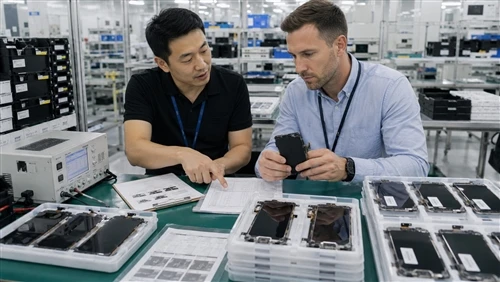
Not who shipped them - who made them. You have our business registration, ISO 9001 certificate number, and have seen our production floor on a video call or in person.
You have batch-specific QC data.
When your 200-unit iPhone 14 Soft OLED order ships, you receive the calibration data for that production batch - color temperature readings against our reference panel, defect count, pass rate. This data exists because we generated it as part of producing your order, not because we created it for your request.
Your contact knows your business.
Not a generic sales inbox. A sourcing contact who knows your model mix, your volume cadence, your market, and who proactively alerts you to stock situations or price movements before they affect your operation.
Your terms reflect the relationship.
30% deposit / 70% pre-shipment balance for new accounts, improving to net-30 for established clients. Volume tier pricing that rewards consistent ordering. Defect replacement policy that is documented, not negotiated on a case-by-case basis.
That is what wholesale iPhone LCD supply looks like at the level where it consistently supports a profitable repair business rather than creating the supply chain uncertainty that undermines it.
Frequently Asked Questions
What iPhone models have the highest repair demand right now in 2026?
iPhone 13 series leads global repair volume - devices are fully in their peak repair window at 4.5 years old. iPhone 14 is in its peak window at 3.5 years. iPhone 15 repair demand is growing rapidly. For distributors, these three series represent approximately 65–70% of active iPhone repair market volume.
Is Incell LCD still worth stocking in 2026?
Yes, for iPhone 6 through iPhone 11. Incell has no application in iPhone 12 or newer (OLED only). For shops still servicing significant volumes of iPhone 11 and older, Incell remains the correct grade. The category is contracting as older devices age out - plan your Incell inventory accordingly.
What's the minimum order to get started with factory-direct pricing?
Our entry MOQ is 20–50 units per model depending on the series. Sample orders of 5–10 units are available at a slightly higher per-unit cost for quality verification before volume commitment. We encourage sample orders for any new model or grade relationship.
How long does shipping from your factory to Europe or North America take?
DHL Express from Shenzhen: UK 3–5 business days, Germany/Netherlands 3–5 business days, USA 4–6 business days, Australia 5–7 business days. We provide tracking numbers on all shipments.
Do you provide QC documentation with orders?
Yes. Commercial invoice, packing list, and batch QC inspection data are provided with every order. ISO 9001 and RoHS certificates are available on request.
What is your defect rate and replacement policy?
Our current average arrival defect rate is 0.6% across all models. Defects verified within 90 days of receipt are replaced in the next shipment or credited against invoice.