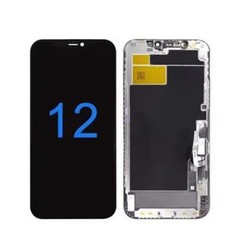
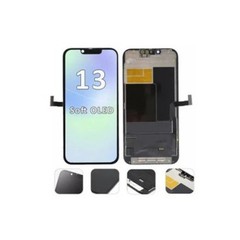
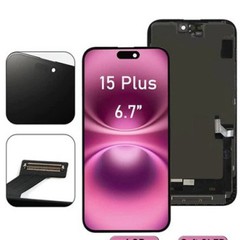
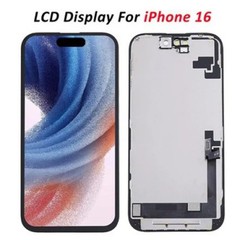
I want to start with a story I've heard more times than I can count.
A repair shop owner in Birmingham - let's call him Daniel - spent three months building his iPhone screen inventory by buying from the cheapest supplier he could find on Alibaba. The per-unit price was $4 lower than anything else he'd seen. The screens looked fine in photos. The supplier's store had a four-star rating and hundreds of transactions.
Then the complaints started. Color shifts after two weeks. Ghost touch on every third iPhone 13. A batch of iPhone 14 screens where the backlight failed within 30 days. By the time Daniel ran the numbers, he'd spent more on repeat repairs and replacement screens than the $4 per-unit "saving" had generated in six months.
He contacted us after that. The first question he asked was: "How do I make sure this doesn't happen again?"
That question is what this guide answers. Not how to find the cheapest iPhone LCD wholesale supplier - but how to find one whose product actually performs at volume, across models, across batches, month after month. Because in the repair business, those are not the same thing.
Why Supplier Verification Matters More in 2026 Than Ever Before?
The iPhone screen wholesale market has grown significantly in complexity over the past five years. The global smartphone repair market is projected to reach $22.66 billion in 2026, growing at approximately 8% annually through 2035. That growth has attracted more factories, more trading companies, and more intermediaries into the supply chain - and with them, more inconsistency in what gets sold under the same quality labels.
"Grade A Incell." "OEM Quality." "Original Grade." These terms are used by suppliers ranging from ISO-certified manufacturers with calibrated production lines to single-room resellers repackaging screens bought from a night market. The labels are identical. The products are not.
Industry reports suggest that up to 30% of replacement parts in the aftermarket may not meet claimed quality standards. That number has real consequences for repair shops: it means that on a straight probability basis, nearly one in three suppliers you encounter without a proper vetting process will deliver product that underperforms its claimed specification.
The good news: a systematic vetting process catches the large majority of bad suppliers before they cost you anything. Here's what that process looks like.
Part 1: Factory vs. Trading Company - Understanding What You're Actually Buying From
The first and most important distinction in iPhone screen wholesale sourcing is whether you're buying directly from a manufacturer or from a trading company.
What a factory is:
A manufacturer with its own production facilities, production staff, and quality control process. When you order from a factory, the same team that calibrates the display assembly, tests the flex cable connection, and inspects the final product also processes your order. Quality control is internal and traceable.
What a trading company is:
A business that sources screens from one or multiple factories, adds a margin, and resells to wholesale buyers. Trading companies are not inherently bad - some maintain rigorous incoming inspection and add genuine value. But many do not, and the buyer has no direct visibility into which factory's product they're actually receiving on any given shipment.
Why this matters for batch consistency:
The most common sourcing complaint we hear from repair shops is not that a product was bad - it's that the first shipment was good and the second shipment was different. This almost always traces to a trading company that switched upstream suppliers between orders without notifying the buyer. When you source from a factory direct, the production process and component sourcing are fixed. When you source from a trading company, they may switch factories between your orders based on price.
How to tell which you're dealing with:
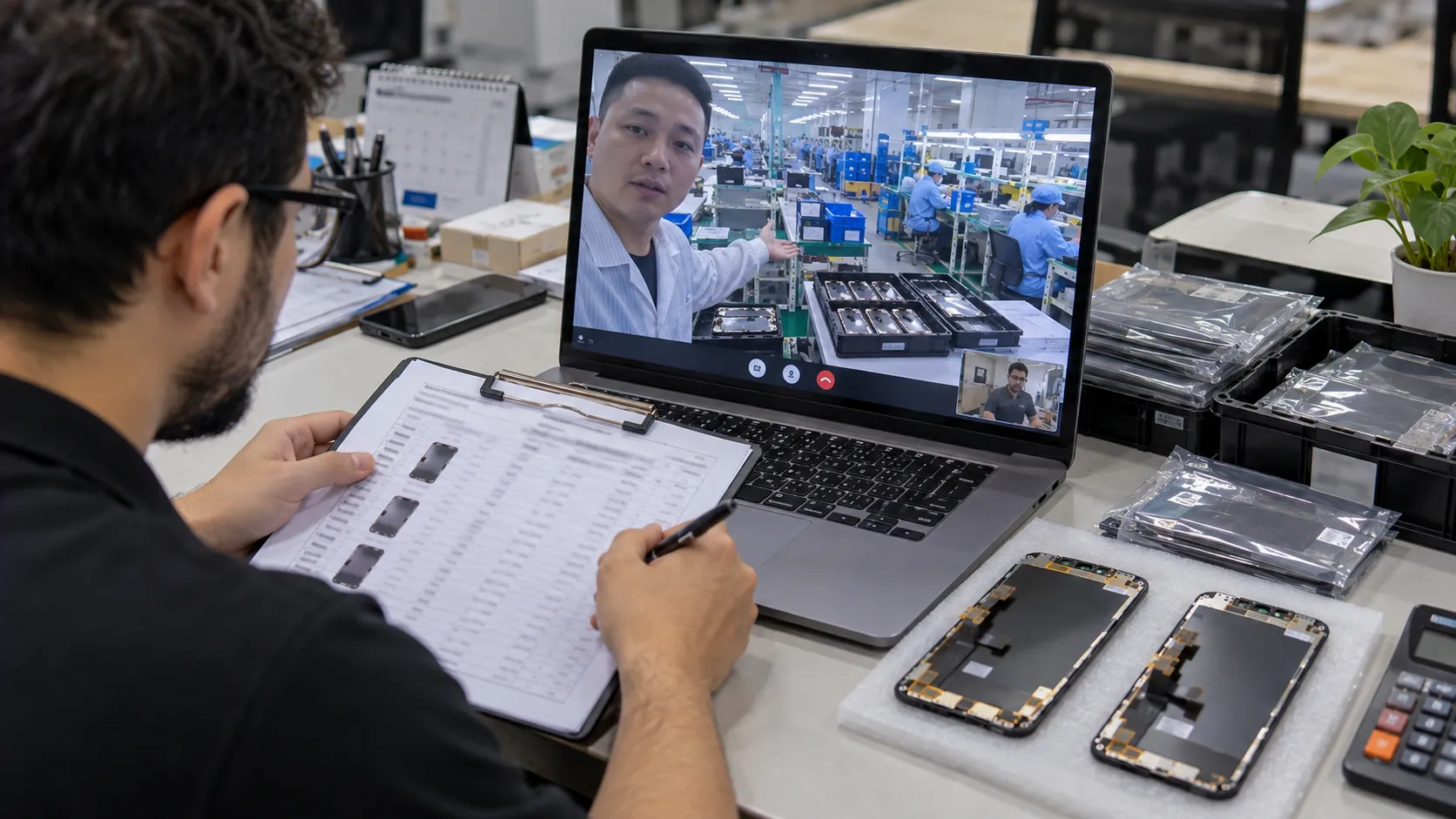
Ask to see the factory's production floor on a 10-minute video call. Any manufacturer can do this without preparation. A trading company claiming to be a factory will struggle to show you a live production line on short notice. Also request the factory's Business License - the registered business type will indicate whether it's a manufacturing entity or a trading company. In China's business registry, these are distinct classifications.
Part 2: The 8 Verification Questions Every Wholesale Buyer Should Ask
These are the eight questions we'd want a buyer to ask us - and that we ask of any upstream component supplier we evaluate. A supplier that can answer all eight with specifics is one worth working with. A supplier that deflects or responds with generic reassurances on more than two is one to approach with caution.
Question 1: What is your measured arrival defect rate, and can you provide batch documentation?
This is the single most diagnostic question you can ask. A factory running a genuine QC operation tracks defect rates by batch, by model, and over time. They can pull this data because it's how they manage their own production quality.
What a good answer looks like: "Our current average arrival defect rate across all models is 0.6%. Here are the QC inspection reports from our last three production batches for iPhone 14 Soft OLED."
What a bad answer looks like: "Our quality is very good. Our customers are very satisfied. We rarely have returns."
The first is data. The second is marketing. When a supplier cannot produce defect rate documentation, it means either they don't track it (they have no QC discipline) or they do track it and it's not good (they don't want to share it). Neither scenario is one you want in your supply chain.
Question 2: How do you control batch-to-batch color consistency?
This is the question that separates manufacturers who understand wholesale needs from those who don't.
Batch-to-batch color variation is the most common quality complaint in the iPhone screen wholesale market. A repair shop installs iPhone 13 screens from batch one without issue, then installs batch two and a customer immediately says "this screen looks different from my original." That's not an installation problem. It's a manufacturing process control problem.
The root cause is usually polarizer variance - slight differences in the polarizer film between batches that shift the display's color temperature. A factory that controls this runs spectrophotometer calibration on every production batch against a reference panel and rejects batches where the color delta exceeds their tolerance threshold.
Ask specifically: "What equipment do you use for color calibration? What's your tolerance threshold? Can you show me calibration data from recent batches?"
A factory that can answer this question has thought seriously about what wholesale customers actually need. Most haven't.
Question 3: What are your flex cable specifications and component sources?
The flex cable is the ribbon connector that links the display assembly to the phone's logic board. It's the component most often responsible for field failures - ghost touch, unresponsive zones, connection degradation after several months of normal use.
Better flex cables use higher-purity copper traces with tighter manufacturing tolerances. The raw material cost difference is roughly $0.35–0.65 per unit - a savings that some factories take at the expense of a meaningfully higher field return rate.
Ask: "Where do you source your flex cables? What specification do they meet? Have you changed your flex cable source in the last 18 months?"
That last question is specifically useful. Factories that have had return rate problems traceable to flex cables often quietly changed suppliers. The ones who can tell you about that change and what improved are the ones who were actually tracking the problem.
Question 4: What does your pre-shipment inspection process look like?
Every shipment should go through a pre-shipment inspection before it leaves the factory. Ask what that inspection covers and how it's documented.
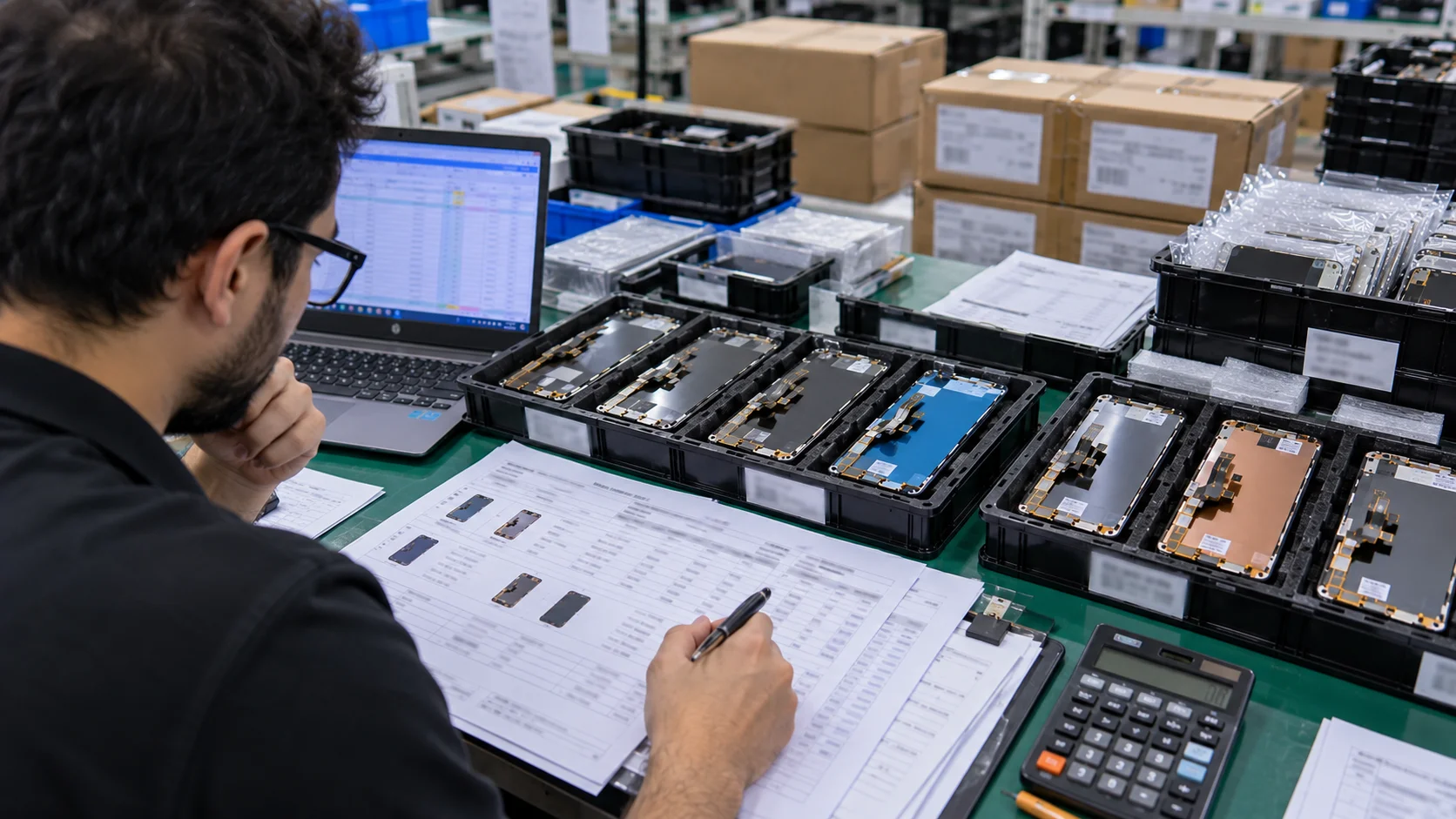
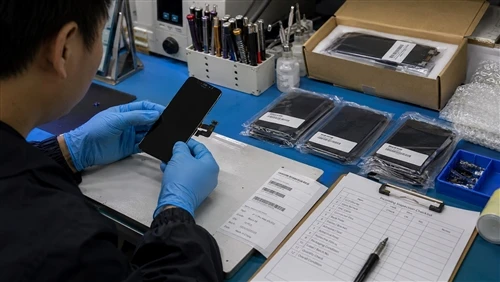
A thorough pre-shipment inspection for iPhone LCD screens includes: display function test (brightness, touch response, pixel check), color temperature measurement against a reference, backlight uniformity check, flex cable continuity test, and physical inspection of the assembly for damage.
Ask for a sample inspection report - a real one, from a recent batch, with actual measurements. If the factory can produce this on request, their QC process is real. If they send you a generic template with no specific data, it's a document they created for buyer presentations, not one they actually use.
Question 5: What is your replacement policy for verified defective units?
The warranty policy tells you how confident the factory is in their own product. A factory running quality product offers a clear defect replacement policy - typically 90 days from receipt for verified arrival defects, with replacement in the next shipment or credit against invoice.
Factories that are less confident add conditions: short windows, high defect rate thresholds before replacement kicks in, requirements to return defective units at buyer's expense (which often costs more in shipping than the unit is worth), or the vague "we handle these case by case."
Get the replacement policy in writing as part of your purchase order terms before you commit to volume.
Question 6: Can you provide references from existing wholesale clients in my market?
This is standard due diligence in any B2B supply relationship, and any established factory should be able to provide two or three client references without hesitation.
When you contact those references, ask three things: How long have you been ordering from this supplier? What has the defect rate been in practice, compared to what was quoted? And - this is the most revealing question - describe a situation where something went wrong and how the factory handled it.
A factory's response to problems is as important as their baseline quality. Every supply chain has incidents. The ones that maintain long-term client relationships are the ones that handle those incidents fairly.
Question 7: What is the lead time for stock items versus custom orders?
For current-generation iPhone screens (12 through 16 series), a factory carrying real inventory should be able to ship stock items within 2–4 business days of order confirmation.
A quoted lead time of 2–3 weeks on standard models usually means one of two things: the factory doesn't carry stock (they're a trading company sourcing to order) or they're significantly supply-constrained. Both affect your ability to run a reliable repair operation.
Ask specifically: "What's your current stock level on iPhone 14 Soft OLED 100 units? When could you ship?"
Question 8: What certifications do you hold and can you provide documentation?
For wholesale buyers in EU, UK, and Australian markets, product certifications aren't optional. ISO 9001 certification indicates a quality management system that's been externally audited. RoHS certification confirms compliance with EU restrictions on hazardous substances in electronics. CE marking is required for goods sold in the EU.
Request the actual certificates - not logos on a website, but PDF documents with certification numbers you can verify with the issuing body. ISO 9001 certificates issued by accredited bodies list the certification number and the issuing organization's accreditation. You can cross-check them at IAF's public registry.

Part 3: How to Evaluate Sample Orders - What to Test and What to Look For
The sample order is the most cost-effective quality verification step in the wholesale sourcing process, and it's the step most buyers either skip (impatient to get to volume pricing) or do incorrectly (testing screens immediately out of the box without allowing time for field behavior to emerge).
Here's a proper sample evaluation protocol for 5–10 units per model:
Day 1 - Out-of-box inspection:
- Display function: check all pixels, no dead zones, no pressure marks
- Color temperature: compare against an OEM reference screen of the same model in the same lighting conditions. Do they match? Are they close?
- Backlight uniformity: set the screen to a plain white background at full brightness. Any patches of uneven brightness are visible here
- Touch response: test all four corners and the center zone. Any hesitation or dead spots?
- Physical assembly: check bezel alignment, flex cable routing, connector seating
Week 1–2 - Installation and initial use:
Install the screens in actual devices and use them under normal conditions. The failure modes that emerge quickly (within two weeks) are usually component assembly problems - a poorly seated flex connector that causes intermittent ghost touch, for example.
Week 3–4 - Temperature and stress testing:
Color temperature issues often emerge when a device heats up under use. Install the screens in devices that will be used actively - not left on a shelf. Any color shift that wasn't visible in the first week often becomes apparent at week three.
The comparison that matters most:
Compare your sample screens against the OEM screen in the same model side by side, in natural light and in artificial light. Differences that are subtle under fluorescent shop lighting become obvious in daylight. Your customer is going to use the phone in both environments.
Document everything with photos. If you need to raise a quality issue with the factory, photographic evidence from a systematic evaluation is significantly more persuasive than a general complaint.

Part 4: Red Flags - When to Walk Away Before the First Order
Some supplier behaviors are warnings. A few are decisive exit signals. Here's how to read them.
Walk away immediately if:
The supplier insists on Western Union, MoneyGram, or cryptocurrency as the payment method for any significant order. Legitimate factories at commercial scale do not require untraceable payment channels. This is the clearest single indicator of fraud risk in cross-border parts sourcing.
The supplier cannot produce their business registration documents on request. Any registered company in China can provide their Business License within minutes of a request. Inability or unwillingness to do so means either the company isn't properly registered or they're concealing something about the registration.
The per-unit price is dramatically below market across multiple models. If a supplier is quoting iPhone 15 Soft OLED at $22 when the market rate for that grade is $41–46, one of three things is true: the grade labeling is false, the component quality has been significantly cut, or the quote is bait that will shift at order time. Occasionally all three. In ten years of supply chain work, I have never seen a supplier deliver genuinely competitive quality at a price 45–50% below market.
Be cautious if:
The supplier refuses sample orders or sets a sample MOQ equal to their volume MOQ. Confidence in product quality is expressed by willingness to let the product speak for itself on a small scale. Resistance to samples is a quality confidence signal.
Communication response time is inconsistent or drops off after initial contact. In the early stages of a supplier relationship, communication behavior is a reliable proxy for how they'll respond when there's a problem with an order. Suppliers who are slow to respond when they want your business will be slower when they need to address a problem.
The supplier has no verifiable client references. An established wholesale factory has clients. If references aren't available, the question to ask is why.
Part 5: Payment Structure - Protecting Yourself as a New Buyer
First-time orders with a new supplier carry the most financial risk. The right payment structure reduces that risk without making you unreasonably difficult to do business with.
For initial orders (first 1–3 orders with a new supplier):
Use Alibaba Trade Assurance if sourcing through the platform - it provides genuine escrow protection and a dispute mechanism. For direct-factory relationships, the standard structure is 30% deposit to confirm the order, 70% balance after pre-shipment photos and inspection confirmation. This protects you against full payment loss while giving the factory a deposit covering their materials cost.
Do not pay 100% upfront for a first order with any new supplier, regardless of how confident you feel. The cost of that protection discipline is zero.
As the relationship develops:
After three to five successful orders, most factories offer improved payment terms - sometimes net-30, sometimes improved deposit percentages. These terms reflect accumulated trust on both sides and are the reward for the vetting process working as it should.
Part 6: The Cost of Not Vetting - A Real Calculation
Let's return to Daniel from Birmingham, whose story opened this article, and put actual numbers on what inadequate supplier vetting cost his business over a six-month period.
He was ordering 120 iPhone screens per month across models. The "cheap" supplier's price was $4 less per unit than the alternatives he'd seen. Monthly "saving": $480.
Over six months, his field return rate on those screens ran at 4.2% - compared to an industry benchmark of 0.6–0.9% for quality factory-direct supply. That's a 3.3-percentage-point differential, or roughly 4 additional comeback repairs per month.
Each comeback cost: replacement screen ($32) + technician labor (45 minutes at £18/hr = £13.50) + customer communication overhead (£4) + customer attrition probability (60% × £310 lifetime value = £186). Total per comeback: £235.
Monthly hidden cost from poor supplier: 4 comebacks × £235 = £940 Monthly "saving" from lower per-unit price: $480 ≈ £380
Net monthly loss from the sourcing decision: −£560 Over six months: −£3,360 - in addition to the damage to his review profile and repeat customer rate.
This isn't an unusual case. It's a pattern we see repeatedly from buyers who switch to quality-verified supply.
Part 7: What Factory-Direct Wholesale iPhone Screen Supply Actually Looks Like
We want to be specific about what the sourcing relationship looks like when it's built correctly, because "factory direct" gets used as a marketing phrase by suppliers who are not factories.
Factory direct means:
You know who manufactured the product. Not who sold it to you - who made it. You have the factory's business registration, their ISO certificate, and you've seen their production floor.
You have batch-specific QC data for your orders. When your shipment of 200 iPhone 14 Soft OLED screens ships, you can see the calibration data for that production batch - the color temperature readings, the defect count, the pass rate. That data exists because the factory generated it as part of producing your order.
You have a consistent contact who understands your business. Not a generic sales inbox - a person who knows your models, your volume pattern, and your market. Who can proactively flag when a model is going out of stock or when pricing is about to shift.
You have terms that reflect the relationship, not just the transaction. Replacement policy for defects. Volume pricing tiers that reward consistent ordering. Payment terms that improve as trust accumulates.
That's what a wholesale iPhone LCD screen supply relationship looks like when it's functioning properly. It takes 60–90 days to establish - two or three orders, a sample evaluation, a few conversations about QC processes and market needs. But once it's in place, it becomes a competitive advantage: lower true cost per installation, more predictable inventory, and fewer of the callbacks that eat shop profitability.
Industry Outlook: What the Next Five Years Mean for Wholesale Buyers
Before closing, it's worth addressing where the market is heading - because sourcing decisions made today should account for the environment you'll be operating in through 2030.
Right-to-Repair legislation is creating structural demand in Europe.
The EU Right to Repair Directive requires full implementation by July 31, 2026, mandating manufacturers provide post-warranty repairs and spare parts for up to 10 years. Separate EU smartphone repairability legislation from June 2025 mandates seven years of spare part availability after market withdrawal. For distributors building EU-facing businesses, this legislation reinforces demand structurally for the next decade.
The market is shifting toward quality accountability.
60% of consumers cite concerns over repair quality due to limited access to genuine parts as their primary reason for hesitation about independent repair. As awareness of part quality grows - accelerated by Right-to-Repair consumer education campaigns - shops that can credibly demonstrate quality sourcing will differentiate from those that can't. Grade documentation and supplier verification become marketing assets, not just operational hygiene.
OLED is now the only game for current-generation iPhones.
Every iPhone sold since the 12 series uses OLED exclusively. The Incell LCD market will continue contracting as iPhone 11 and earlier models age out of active repair demand. If your supply chain isn't built around Soft OLED sourcing for iPhone 12 through 16, it needs to be.
Smartphone replacement cycles are lengthening permanently.
The average global smartphone replacement cycle reached 21 months in 2023, and that figure continues to extend as device prices rise. Longer device ownership means more repairs per device over its lifetime - a straightforward tailwind for the repair parts wholesale market through the entire forecast period.
The business opportunity for well-positioned wholesale buyers and repair chains is real and growing. The foundation it requires is a supply chain that delivers consistent quality at scale. That starts with the supplier vetting process this article describes.
Quick-Reference Checklist: Before Your First Wholesale Order
- Before placing any volume order with a new iPhone screen supplier, confirm:
- Business registration documents received and verified
- Production floor confirmed via video call (not just photos)
- Defect rate data provided with batch documentation
- Color consistency calibration process explained with specifics
- Replacement/warranty policy confirmed in writing
- Client references provided and contacted
- Lead time confirmed for your specific models
- Sample order placed, received, and tested over minimum 2 weeks
- Payment terms agreed (30% deposit / 70% pre-shipment for first order)
- Certifications verified (ISO 9001 number cross-checked with registry)
Ten items. Each one takes 10–30 minutes to verify. The combined investment is around three hours. The risk it eliminates is the kind that cost Daniel £3,360 in six months.
Frequently Asked Questions
How do I know if I'm dealing with a factory or a trading company?
Request a video call showing the production floor, and ask for their Business License with the registered business type. In China's business registry, manufacturing entities and trading companies are categorized differently. Also ask whether they can show you calibration equipment and QC records for a recent batch - a trading company doesn't have these because they don't run the production.
What MOQ should I expect from a factory-direct supplier?
For current-generation iPhone screens (12–16 series), standard MOQ at factory-direct pricing is typically 10-20 units per model. Sample orders of 5–10 units at a slightly higher per-unit cost are available from any supplier confident in their product.
Is Alibaba a reliable way to source iPhone screens wholesale?
Alibaba Trade Assurance provides genuine buyer protection for initial orders and is a reasonable starting point for new buyer relationships. The risk is that the platform includes both factories and trading companies under the same interface, and quality verification is your responsibility, not the platform's. Use it as a starting point, but apply the same vetting criteria described in this guide.
How long should I test samples before placing a volume order?
Minimum 7 days, ideally 15. The failure modes that matter most - color shift under temperature, ghost touch from flex cable degradation, backlight uniformity issues - often take 1–3 weeks of normal device use to manifest. An out-of-box test on Day 1 tells you almost nothing about field performance.
What's a reasonable defect rate expectation from a quality supplier?
For factory-direct supply on iPhone OLED screens (12 series and newer), expect 0.5–1.0% arrival defect rate. Above 2% is a problem. Above 3% on a consistent basis means the QC process isn't functioning.