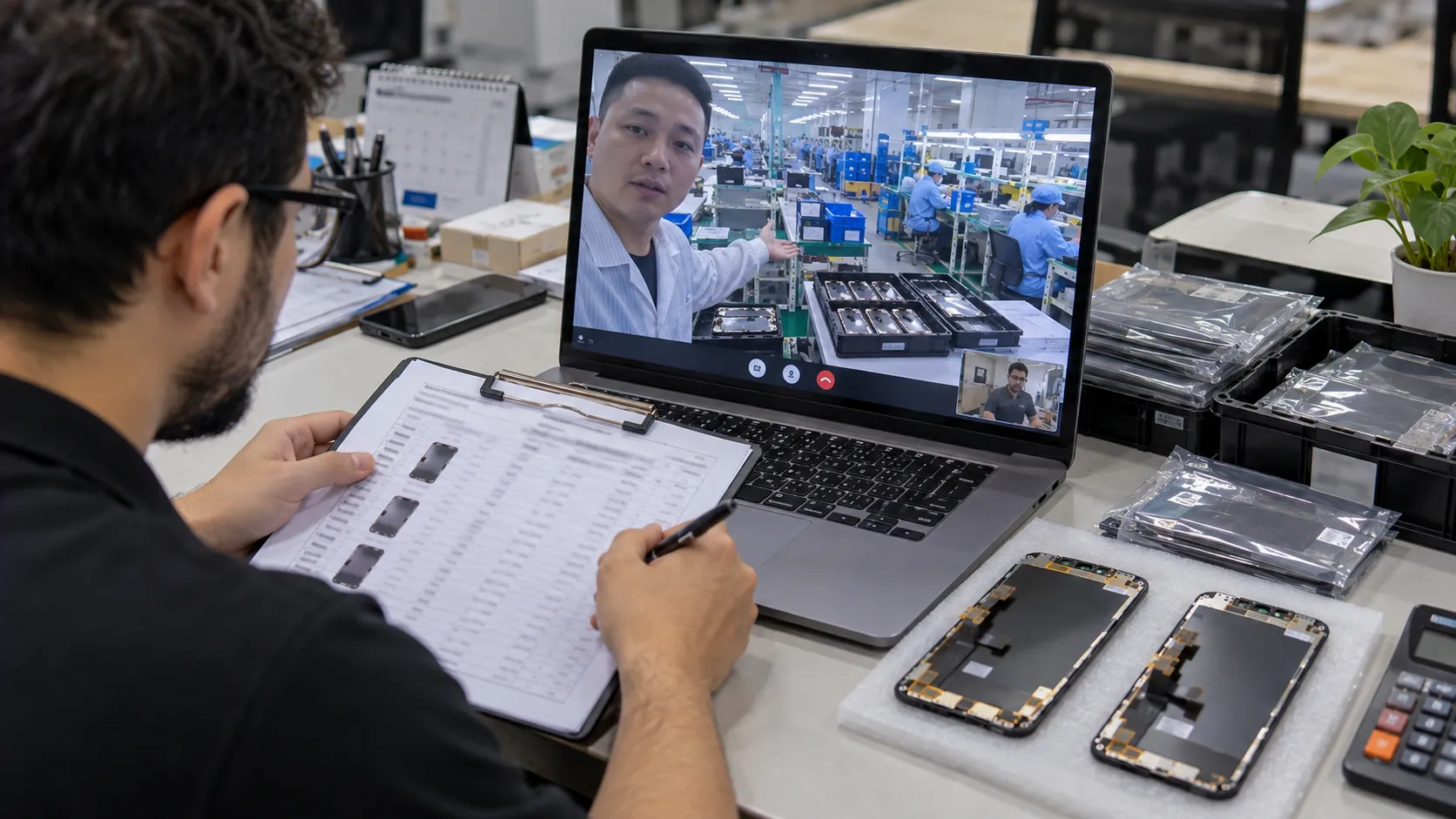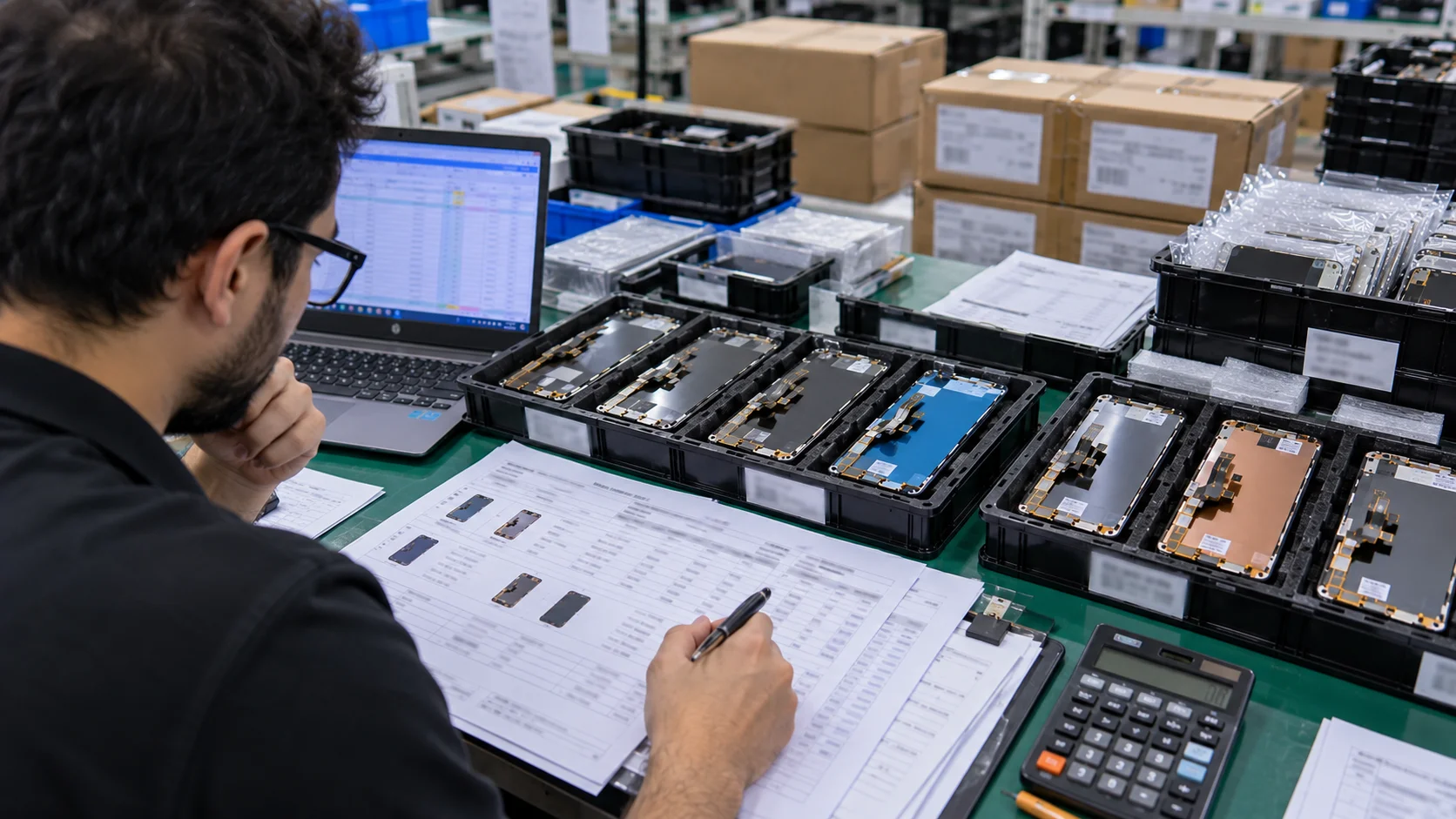
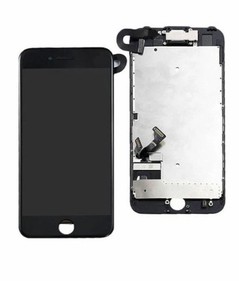
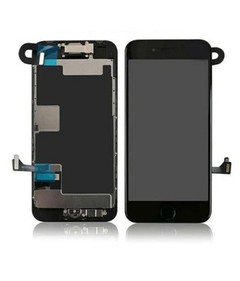
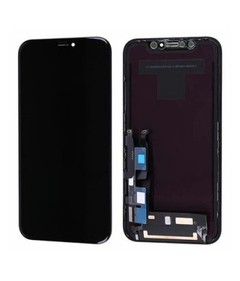
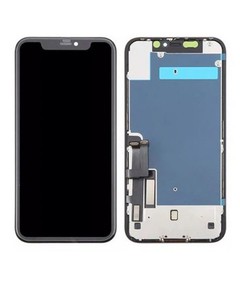
Let me tell you something that took me a few hard years to learn in this business.
When I started working on the supply side of iPhone screen sourcing back in 2015, the market was simpler. There were fewer grades, fewer models, and fewer buyers who knew enough to ask the right questions. Today, the repair parts market has matured into a genuinely complex B2B industry - and the buyers who thrive are the ones who approach sourcing the same way a manufacturer approaches production: systematically, with full cost visibility, and with a clear understanding of where the market is heading.
This guide exists because most sourcing articles online are written by people who have never set foot on a production floor, never managed a QC line, and never personally dealt with a batch of defective screens arriving at a client's warehouse two weeks before Christmas. I have done all three.
What follows is the sourcing framework we've built over a decade of supplying repair chains, regional distributors, and independent shops across six continents. It covers the complete picture - product grades, pricing dynamics, supplier verification, market trends, and the five-year industry outlook that should be shaping your inventory strategy right now.
Part 1: The State of the Market - Why 2026 Is a Pivotal Year for iPhone Screen Wholesale
Before you can source intelligently, you need to understand the market you're sourcing for.
The global smartphone repair market is valued at approximately $24.8 billion in 2026 and is projected to reach $45.4 billion by 2033, growing at a CAGR of 7.2%. Screen repair is the engine of that growth - the global smartphone screen repair segment alone was valued at $10.1 billion in 2023, accounting for 52% of total repair market value.
That number has a direct implication for wholesale buyers: the floor under this market is concrete. Screens crack. Users keep devices longer as replacement costs rise. And the infrastructure to service that demand - repair shops, distributors, refurbishers - needs a reliable supply chain behind it.
Three structural forces are reshaping that supply chain right now, and every serious wholesale buyer needs to understand them.
Force 1: Right-to-Repair Legislation Is Creating Structural Demand
This is the single most important policy development for iPhone screen wholesalers in the next five years.
The EU Right to Repair Directive entered into force on July 30, 2024, with full implementation across all EU member states required by July 31, 2026. The directive mandates that manufacturers offer post-warranty repairs, provide spare parts for up to 10 years, and prohibits hardware or software techniques that impede repair.
From June 2025, EU legislation enforces minimum repairability requirements for smartphones and tablets, mandating seven years of spare part availability and at least five years of software updates after a device is withdrawn from the market.
What does this mean for wholesale buyers? Demand for aftermarket iPhone screens in Europe is being legislatively reinforced. 79% of EU citizens believe manufacturers should be required to make it easier to repair digital devices, and 77% would rather repair their devices than replace them. That sentiment is now backed by law. Europe's smartphone repair industry is forecasted to expand at 9.8% CAGR from 2024–2030, reaching €8.5 billion by 2030.
For distributors supplying EU markets, this is not an incremental opportunity. It's a structural shift that favors established supply relationships with reliable factories over spot-buying from unknown sources.

Force 2: Replacement Cycles Are Lengthening - Permanently
The average global smartphone replacement cycle has reached 21 months, and that figure continues to extend as device prices rise and right-to-repair access improves. In the UK and Germany, surveys show consumers keeping flagship devices for 3+ years on average.
The direct consequence for repair shops: the volume of devices entering the repair window at any given time keeps growing. A device held for three years instead of two generates 50% more lifetime repair probability. For screen wholesalers, this extends the active demand lifecycle for every model in your inventory - particularly the iPhone 13 and 14 series, which are entering peak repair demand right now.
Force 3: Independent Repair Is Capturing Market Share From OEM Service
Independent repair shops hold 55% of the global smartphone repair market share. Third-party repair providers dominate with 72% of total revenue share worldwide. The US smartphone repair market is projected to grow from $5.04 billion in 2024 to $8.37 billion by 2030 at 9.1% CAGR, driven by rising demand for affordable, convenient repair solutions from third-party providers.
This matters for wholesale sourcing because independent shops and distributors - your customer base - are gaining share in a growing market. That's a favorable supply-demand dynamic for a factory-direct wholesale relationship.
Part 2: iPhone Screen Grades - What Every Wholesale Buyer Must Know?
Understanding grade differentiation is not optional. It's the single most important knowledge area for anyone purchasing iPhone LCD screens wholesale.
The market uses inconsistent terminology. What one supplier calls "Grade A" another calls "OEM equivalent." What one calls "Incell" another bundles with "Standard." This section defines the grades as they actually exist, not as they're marketed.
Grade 1: Incell LCD
Technical definition: Incell is a manufacturing process where the touch digitizer layer is integrated directly into the LCD panel. Apple used this technology in the iPhone 6 through iPhone 11 series.
What you're actually getting:
- Brightness range: 400–500 nits
- Color temperature: typically slightly cooler than OEM reference
- Touch accuracy: smooth under normal conditions, sensitive to flex cable quality variance
The quality issue nobody tells you upfront:
Batch-to-batch color temperature variation. On a good production run with tight polarizer tolerances, Incell looks excellent. On a batch where the polarizer source shifted, two screens from the same supplier can look visibly different. This is the single most common complaint we receive about Incell screens - not from one factory, but universally across the grade.
At our factory, we run spectrophotometer calibration against an OEM reference panel on every production batch. We reject batches where the color delta exceeds our threshold. Not every factory does this. When evaluating Incell suppliers, ask specifically: How do you verify batch-to-batch color consistency? Can you share the data?
Best market fit:
High-volume repair operations, budget-market repair shops, iPhone 6 through iPhone 11 sourcing. Incell is the right grade when your customer base asks "how cheap can you fix it" - not "will it look exactly like the original."
| Model Range | Grade | Typical MOQ 50 Price | Typical MOQ 200 Price |
|---|---|---|---|
| iPhone 6 | Incell | $4.80 | $4.20 |
| iPhone 8 | Incell | $6.50 | $5.70 |
| iPhone 11 | Incell | $9.50 | $8.40 |
Grade 2: OEM-Grade OLED (Hard OLED / Soft OLED)
Technical definition:
OEM-grade aftermarket screens manufactured to original Apple specifications - same panel resolution, brightness spec, and touch IC - using supply chain components equivalent to Apple's own, but not sourced through Apple's official procurement.
Hard OLED vs. Soft OLED - the distinction that matters:
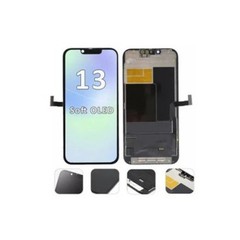
Hard OLED uses a rigid glass substrate. Soft OLED (also called flexible OLED) uses a polyimide substrate - thinner, lighter, and closer to what Apple uses in its current flagship lineup. For iPhone X through iPhone 16, Soft OLED is the specification that produces a result indistinguishable from the OEM display in everyday use.
Why this grade matters for iPhone 12 and newer:
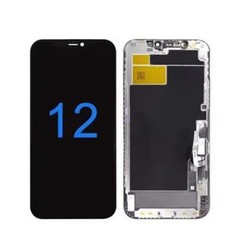
Starting with the iPhone 12, Apple moved all four models to OLED. There is no Incell option for iPhone 12 and later - OEM-grade is the entry point for these models.
The Dynamic Island factor for Pro models:
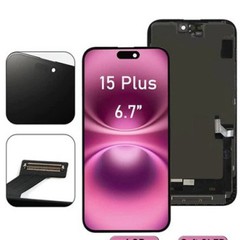
On iPhone 14 Pro and 15 Pro, the Dynamic Island cutout requires tighter panel dimensional tolerances than earlier models. Budget-grade panels with loose manufacturing tolerances produce visible gaps around the Dynamic Island - a highly visible design feature that customers on Pro models notice immediately. Soft OLED is the minimum grade we recommend for any Pro or Pro Max model.
| Model Range | Grade | MOQ 30 Price | MOQ 100 Price |
|---|---|---|---|
| iPhone 14 | Hard OLED | $26.00 | $23.00 |
| iPhone 14 | Soft OLED | $38.00 | $34.00 |
| iPhone 15 | Hard OLED | $32.00 | $28.50 |
| iPhone 15 | Soft OLED | $46.00 | $41.00 |
| iPhone 15 Pro | Soft OLED | $58.00 | $52.00 |
Grade 3: Original Refurbished
Technical definition: Genuine Apple panels - pulled from scrapped or trade-in devices - professionally cleaned, re-bonded with new glass, and tested to confirm they meet original specification. The OLED or LCD panel itself is Apple's manufacturing.
Why this grade commands a premium:
- True Tone support on compatible models (genuine competitive differentiator)
- Arrival defect rate under 0.5% in our QC data
- Compatible with Apple's diagnostic system without third-party part notifications on most models
- Color accuracy indistinguishable from new OEM - because it is OEM
The honest limitation:
Supply inconsistency. Original Refurb availability depends on the upstream volume of devices being disassembled. Some months we have strong supply across all models; some months specific models are constrained. If you need 200 units of iPhone 13 Original Refurb on a predictable monthly schedule, we need to plan that as a forward allocation, not a spot order.
Market positioning:
45% of US consumers report they would pay more for repairs using original or OEM-quality parts, and this preference is stronger on current-generation models. In premium repair markets - Western Europe, North America, Australia - Original Refurb is a genuine upsell tool that produces both higher margin per job and better review outcomes.
| Model | Grade | MOQ 20 Price | MOQ 100 Price |
|---|---|---|---|
| iPhone 13 | Original Refurb | $58.00 | $52.00 |
| iPhone 14 | Original Refurb | $68.00 | $61.00 |
| iPhone 15 | Original Refurb | $82.00 | $73.00 |
| iPhone 15 Pro | Original Refurb | $112.00 | $100.00 |
Part 3: The Complete Grade Comparison - Quick Reference for Wholesale Buyers
| Factor | Incell LCD | Hard OLED | Soft OLED | Original Refurb |
|---|---|---|---|---|
| Model compatibility | iPhone 6–11 | iPhone X–16 | iPhone X–16 | iPhone X–15 |
| True Tone support | No | No | No | Yes (where applicable) |
| Brightness | 400–500 nits | 500–600 nits | 600–700 nits | Original spec |
| Arrival defect rate | 1–3% | 0.8–1.5% | 0.5–1.0% | Under 0.5% |
| Batch consistency | Variable | Good | Very good | Excellent |
| Supply stability | Excellent | Good | Good | Variable |
| Price (iPhone 14, MOQ 50) | N/A | $26 | $38 | $68 |
| Best for | Budget / volume | Mid-market | Premium | Top-tier / upsell |
Part 4: Wholesale Price Reference - All Active Models, May 2026
Prices FOB Shenzhen, factory-direct. Subject to market movement.
iPhone 11 Series (Peak Volume - Highest Repair Frequency)
| Model | Incell (MOQ 50) | Soft OLED (MOQ 50) | Orig. Refurb (MOQ 20) |
|---|---|---|---|
| iPhone 11 | $9.50 | - | $28.00 |
| iPhone 11 Pro | $19.00 (Hard) | $29.00 | $52.00 |
| iPhone 11 Pro Max | $24.00 (Hard) | $36.00 | $65.00 |
iPhone 12 Series (Stable, High Volume)
| Model | Hard OLED (MOQ 30) | Soft OLED (MOQ 30) | Orig. Refurb (MOQ 20) |
|---|---|---|---|
| iPhone 12 | $19.50 | $29.00 | $55.00 |
| iPhone 12 Pro | $23.00 | $33.00 | $62.00 |
| iPhone 12 Pro Max | $27.00 | $38.00 | $72.00 |
iPhone 13 Series (Current Workhorse - Best Volume/Margin Balance)
| Model | Hard OLED (MOQ 30) | Soft OLED (MOQ 30) | Orig. Refurb (MOQ 20) |
|---|---|---|---|
| iPhone 13 | $22.00 | $32.00 | $58.00 |
| iPhone 13 Pro | $27.00 | $39.00 | $72.00 |
| iPhone 13 Pro Max | $32.00 | $45.00 | $85.00 |
iPhone 14 Series (Peak Demand Window - Best Stocking Priority Now)
| Model | Hard OLED (MOQ 30) | Soft OLED (MOQ 30) | Orig. Refurb (MOQ 20) |
|---|---|---|---|
| iPhone 14 | $26.00 | $38.00 | $68.00 |
| iPhone 14 Plus | $29.00 | $42.00 | - |
| iPhone 14 Pro | $36.00 | $48.00 | $92.00 |
| iPhone 14 Pro Max | $41.00 | $56.00 | $108.00 |
iPhone 15 Series (Growing Demand - Margin Optimization Tier)
| Model | Hard OLED (MOQ 20) | Soft OLED (MOQ 20) | Orig. Refurb (MOQ 20) |
|---|---|---|---|
| iPhone 15 | $32.00 | $46.00 | $82.00 |
| iPhone 15 Plus | $36.00 | $52.00 | - |
| iPhone 15 Pro | $43.00 | $58.00 | $112.00 |
| iPhone 15 Pro Max | $48.00 | $68.00 | $128.00 |

Part 5: How to Evaluate a Wholesale iPhone Screen Supplier - 8 Questions That Separate Factories from Resellers?
Finding a supplier is easy. Finding a supplier whose product performs consistently at volume over 12 months is the actual challenge. Here are the eight questions we'd ask any factory - including ourselves.
1. Can you provide your business registration and factory certification?
Any legitimate manufacturer can supply their Business License, ISO 9001 certificate, and RoHS compliance documentation. If these are unavailable or vague, stop the conversation.
2. What is your measured arrival defect rate, and can you show batch data?
This is the question that separates manufacturers from resellers. A factory running its own production and QC has this data. "Our quality is very good" is a marketing statement. A defect rate figure with supporting batch records is data. Expect 0.5–1.5% for a credible factory-direct supplier on iPhone OLED.
3. How do you control batch-to-batch color consistency?
This is the most underrated quality question in the market. Ask specifically about the calibration process - what equipment is used, what tolerance is accepted, how often calibration is verified. A factory without a clear answer to this question is the source of the "screens look different" complaints that account for the majority of customer dissatisfaction in screen repairs.
4. What is your replacement policy for defective units?
Standard industry practice is replacement or credit within 90 days of receipt for verified arrival defects. Factories confident in their quality offer this clearly. Factories less confident add conditions that make claims difficult to exercise.
5. Can you provide references from existing wholesale clients?
Two or three references in your market. Contact them. Ask how long they've been ordering, what the defect rate has been in practice, and how the factory handled a problem when one occurred.
6. What is the lead time from confirmed order to shipment?
For stock items (current-model iPhone screens), a factory carrying real inventory answers: 2–4 business days. Answers of "2–3 weeks" on standard models suggest the factory is sourcing from upstream rather than shipping from stock.
7. Can I start with a sample order before committing to volume?
Yes, always, from any serious supplier. Five to ten units, at a slightly higher per-unit cost. If a supplier resists sample orders, walk away.
8. What shipping terms do you offer, and which do you recommend for my market?
A factory with genuine logistics experience recommends FOB Shenzhen or DDP depending on your market and volume. A factory without it says EXW for everything, leaving all logistics complexity and cost risk on your side.
Part 6: The True Cost Formula - Why Per-Unit Price Is the Wrong Metric
Every wholesale buyer needs this calculation before the next sourcing decision.
True cost per successful installation:
(Unit cost + Shipping per unit) ÷ (1 − arrival defect rate) + (Field return rate × rework cost) + (Field return rate × customer attrition value)
Worked example - iPhone 14 Soft OLED, UK market:
Supplier A (cheaper, higher defect rate):
- Unit: $34 → £27 / Shipping per unit: £2 / Defect rate: 2.5% / Field return: 3.2%
- Rework cost per return: £48 / Customer attrition per return: £186 (60% × £310 CLV)
- True cost: £38.60/unit + hidden cost £7.49 = £46.09 per successful repair
Supplier B (factory direct, our rates):
- Unit: $38 → £30 / Shipping per unit: £2 / Defect rate: 0.6% / Field return: 0.9%
- Rework cost per return: £48 / Customer attrition per return: £186
- True cost: £32.19/unit + hidden cost £2.11 = £34.30 per successful repair
Supplier A appears £3 cheaper per unit. In true cost, Supplier B saves £11.79 per installation - and generates 7–8 fewer customer callbacks per 100 repairs.
The math is not close.
Part 7: Industry Trend Analysis - The Five-Year Outlook Every Wholesale Buyer Needs to Know
This is the section most sourcing guides skip. We include it because your inventory decisions today should be informed by where the market is heading, not just where it is.
Trend 1: Right-to-Repair Creates a Multi-Year Demand Tailwind in Europe
The EU Right to Repair Directive requires full implementation across all member states by July 31, 2026. Manufacturers must offer post-warranty repairs and provide spare parts availability for up to 10 years. Separate EU smartphone repairability legislation from June 2025 mandates seven years of spare part availability after market withdrawal.
Practical implication for distributors: European repair shops are about to operate in a legally reinforced repair-first environment. Consumer awareness of repair rights is rising rapidly. The structural demand for quality aftermarket iPhone screens in the EU will grow significantly through 2028–2030 as the directive's effects compound.
If you are currently building a wholesale distribution business targeting Europe, the legislative wind is at your back. This is not a temporary trend - it's a structural market shift.
Trend 2: OLED Dominance Is Complete - The Incell Market Is Contracting Predictably
The iPhone 12 was the last year Apple sold any LCD model in its lineup. Every iPhone sold since then uses OLED. As the iPhone 11 series ages into lower repair frequency over the next 2–3 years, the repair market will become overwhelmingly OLED-centric.
What this means for inventory strategy: Start reducing your Incell depth relative to OLED. The iPhone 11 is still a volume model today, but by 2028, the repair window on 11-series devices will be meaningfully smaller. Invest in building OLED sourcing relationships - specifically Soft OLED for Pro models - because that is where the market volume will concentrate.
Trend 3: Original Refurbished Demand Will Grow as Right-to-Repair Awareness Increases
Right-to-repair legislation is raising consumer awareness of part quality and authenticity. 77% of EU citizens would rather repair their devices than replace them, and that preference increasingly comes with an expectation of quality parts. As consumers become more informed about the difference between aftermarket and original components, demand for Original Refurbished screens will grow - particularly in the EU market where the legislation explicitly emphasizes "genuine" parts availability.
For distributors, this trend supports building an Original Refurbished inventory tier now, even at modest quantities, in anticipation of growing demand over the 2026–2030 period.
Trend 4: Emerging Markets Are the Next Growth Frontier
Asia-Pacific is the fastest-growing repair market, with accelerating demand across China, India, and Southeast Asia driven by soaring device penetration and expanding local service infrastructure. Latin America and the Middle East and Africa are emerging as notable opportunities, with volume and revenue rising rapidly.
Africa's mobile repair industry reached $900 million in 2023 with a 25% increase in smartphone adoption in Sub-Saharan regions. The Middle East smartphone repair market is projected to grow from $1.1 billion in 2023 to $2.4 billion by 2030 at 12% CAGR.
For wholesale buyers building distribution businesses, these markets are underpenetrated relative to their device volumes. Entry now, while competition is establishing itself, is strategically different from entering in three years.
Trend 5: Supply Chain Consolidation - The Case for Direct Factory Relationships
The phone parts wholesale market is consolidating. Smaller trading companies that sit between factories and buyers are being squeezed as buyers become more sophisticated about factory-direct sourcing and as China's 2025 customs and tax reform imposed full traceability across export supply chains, creating compliance burdens that disadvantage the traditional trading company model.
The direct-factory wholesale relationship - where a repair chain or distributor sources from the manufacturing facility with full visibility into QC process, batch data, and production lead times - is becoming the standard operating model for serious B2B buyers. The trading company layer in the middle exists to serve buyers who don't have direct relationships or don't yet have the volume to justify them. As you scale, eliminating that layer is both a cost and a quality improvement.
Part 8: What Wholesale Buyers Get From Working With Us Directly
We want to be direct about what a factory-direct relationship with Huikaicheng actually delivers - not as a sales pitch, but as a specific answer to the question every wholesale buyer should be asking: what's in it for my business?
Margin advantage: Factory-direct pricing on iPhone screens runs 15–30% below domestic distributor pricing in most markets. On 200 units per month at an average $35 unit price, that's $1,050–$2,100 per month staying in your margin rather than a middleman's.
Batch consistency: Every production batch is calibrated against an OEM reference panel. When you order three consecutive months of iPhone 14 Soft OLED from us, the screens match each other. This eliminates the "screens look different" callback pattern that plagues shops sourcing from multiple suppliers or uncalibrated factories.
Defect rate transparency: We share our measured defect rate data with wholesale clients. Our current average across all models is 0.6% on arrival. We don't hide behind vague quality claims - the number is the number, and our replacement policy covers the gap when it matters.
Market intelligence: We ship to 30+ countries. We know which models are moving in which markets, where pricing is heading, and how Right-to-Repair legislation is affecting demand patterns in different regions. That intelligence informs our clients' sourcing decisions, not just our production schedule.
Scalability: Whether you're starting with a 30-unit sample order or placing a 1,000-unit monthly commitment, the supply chain and QC process is the same. You're not getting a different product tier because your volume is smaller.
Frequently Asked Questions
What is the minimum order for wholesale iPhone screens?
Standard MOQ is 20–50 units per model depending on the series. Sample orders of 5–10 units are available at slightly higher per-unit pricing for quality verification before volume commitment.
Do you ship internationally?
Yes - to 30+ countries via DHL Express, FedEx, and air freight depending on destination and order volume. Transit times range from 3–7 business days for most major markets.
What payment methods do you accept?
T/T bank transfer (30% deposit / 70% pre-shipment balance is standard for new accounts), PayPal for sample orders, and Alibaba Trade Assurance for buyers preferring platform protection on initial orders.
How do you handle defective units?
Defects verified within 90 days of receipt are replaced in the next shipment or credited against invoice. Our current average arrival defect rate is 0.6% across all models.
Can I mix models in a single order?
Yes. MOQ applies per model, not per shipment. Mixed-model orders across iPhone series are standard.
Do you provide samples before a bulk order?
Yes. We encourage sample orders - 5–10 units per grade per model - before volume commitment. Any manufacturer confident in their product should offer this without hesitation.
Summary: The Sourcing Decision Framework
Before placing any wholesale iPhone screen order, work through these five checkpoints:
- Match grade to market - Incell for budget / legacy models, Soft OLED for iPhone 12+, Original Refurb as a premium upsell tier
- Calculate true cost, not unit price - Run the formula in Part 6 against your current supplier's defect and return data
- Verify the supplier with specifics - Business registration, defect rate data, references, and a sample order
- Understand your landed cost - FOB price plus shipping, duty, and VAT/GST for your specific market
- Build toward the trend - OLED capacity, EU market positioning, and direct factory relationships are the three structural investments that compound over the next five years
The wholesale iPhone screen market rewards buyers who approach it as a business discipline, not a price hunt. The data in this guide exists to support that discipline.