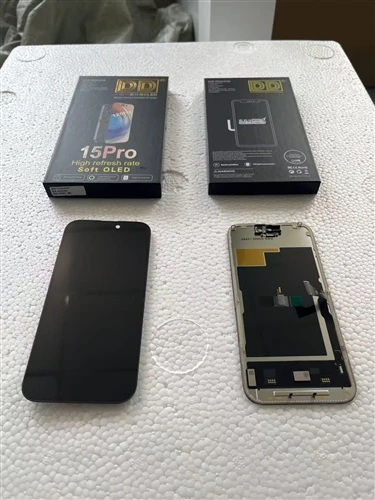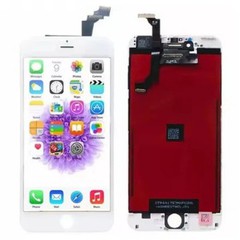
Switching suppliers is one of the most expensive things a repair business can do. You re-test every SKU, retrain staff on a new grade of parts, eat the returns while you learn a new vendor's weak spots, and gamble that their stock won't vanish mid-season. So choosing the right phone parts wholesale supplier the first time isn't a purchasing task - it's one of the bigger strategic decisions you'll make all year.
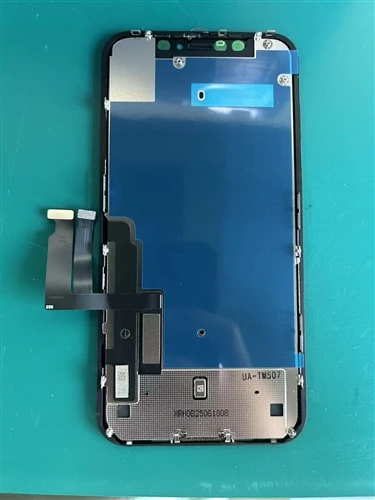
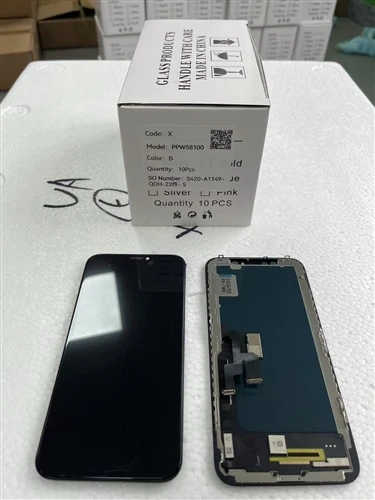
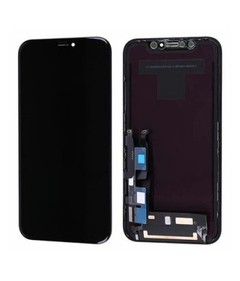
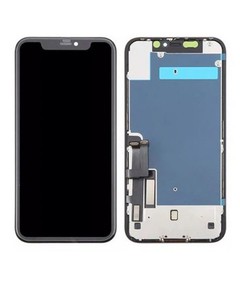
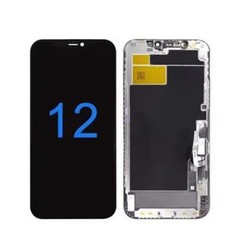
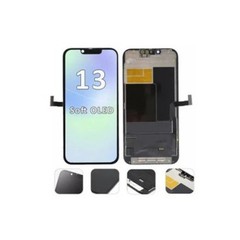
We've been on the manufacturing side of that decision since 2015. From a single 10,000㎡ facility we ship over 28 million screens a year to repair chains and distributors across South America, Africa, the Middle East, and Europe. A recent order from a mobile-parts distributor in Argentina is a good example of how this works in practice: a single 35,000-piece order spanning five models - iPhone X, 11, XR, 12 Pro, and 12 Pro Max - with Incell AAA on the LCD models (XR and 11) and matched OLED grades on the rest. One purchase order, one quality standard, one shipment plan. That vantage point has shown us what makes these partnerships last - and what makes buyers come back six months later asking to switch again.
This is the framework we'd use if we were in your seat, sourcing parts instead of making them. It's written for repair chains, distributors, and refurbishers buying at volume - not for one-off retail repairs.

Your parts supplier is a partner, not a price tag
Here's the mindset shift that separates buyers who scale from buyers who churn: a cell phone parts supplier isn't a vendor you ping for the lowest quote. They're the most upstream link in your own quality chain. If their screens drift, your customers complain. If their stock runs dry in October, your peak season stalls. If their packaging is sloppy, your return rate climbs.
That's why "who's cheapest this week" is the wrong opening question. The right one is: who can I still be ordering from, profitably, in three years? The eight checks below are how you answer that.
The 8 checks that separate a partner from a reseller
Most "10 proven ways" lists online are filler. These eight are the ones that actually predict whether a supplier relationship survives contact with real volume.
| # | What to verify | Why it predicts long-term fit |
|---|---|---|
| 1 | Manufacturer vs. trading company | A factory controls quality at the source; a reseller just passes panels through |
| 2 | Documented defect/return rate | The single best predictor of your future support load |
| 3 | Real production capacity | Determines whether they survive your peak season |
| 4 | Catalog breadth (one-stop) | Consolidating SKUs cuts freight, admin, and risk |
| 5 | Stock depth on core models | Out-of-stock is the silent killer of repair revenue |
| 6 | Logistics and lead times | Slow shipping quietly destroys margins |
| 7 | Payment and MOQ flexibility | Protects your cash flow as you scale |
| 8 | After-sales and warranty in writing | Separates a partner from a one-time seller |
1. Confirm they actually manufacture
A trading company talks about "our partners." A factory gives numbers. Ask for line count, floor space, and the production technology in use. For reference, ours runs 12 fully automated lines across 10,000㎡ using SMT and COF assembly. If a supplier can't describe their own floor, you're paying a middleman markup for the privilege of having less control.
2. Ask for the return rate in writing
"High quality" is a word. "Return rate below 1%, with 100% pre-shipment testing on backlight, touch, and display" is a number you can hold them to. A serious mobile phone parts wholesale partner will put it in writing and send 1–2 samples first.
3. Pressure-test their capacity against your peak
The supplier who's perfect in spring can collapse in Q4. Ask about monthly capacity and whether they keep stock on your core movers. We hold 500,000+ units of high-demand models (iPhone 11/XR/8/13 series) and open a priority production channel for urgent orders - because the buyers who lose money aren't the ones paying a few cents more, they're the ones waiting three weeks for backorders.

One-stop vs. multi-vendor: the hidden cost of a fragmented catalog
A lot of buyers chase the best price on each individual part and end up with five suppliers. On paper they "saved." In practice they're now juggling five sets of freight, five payment terms, five quality baselines, and five points of failure.
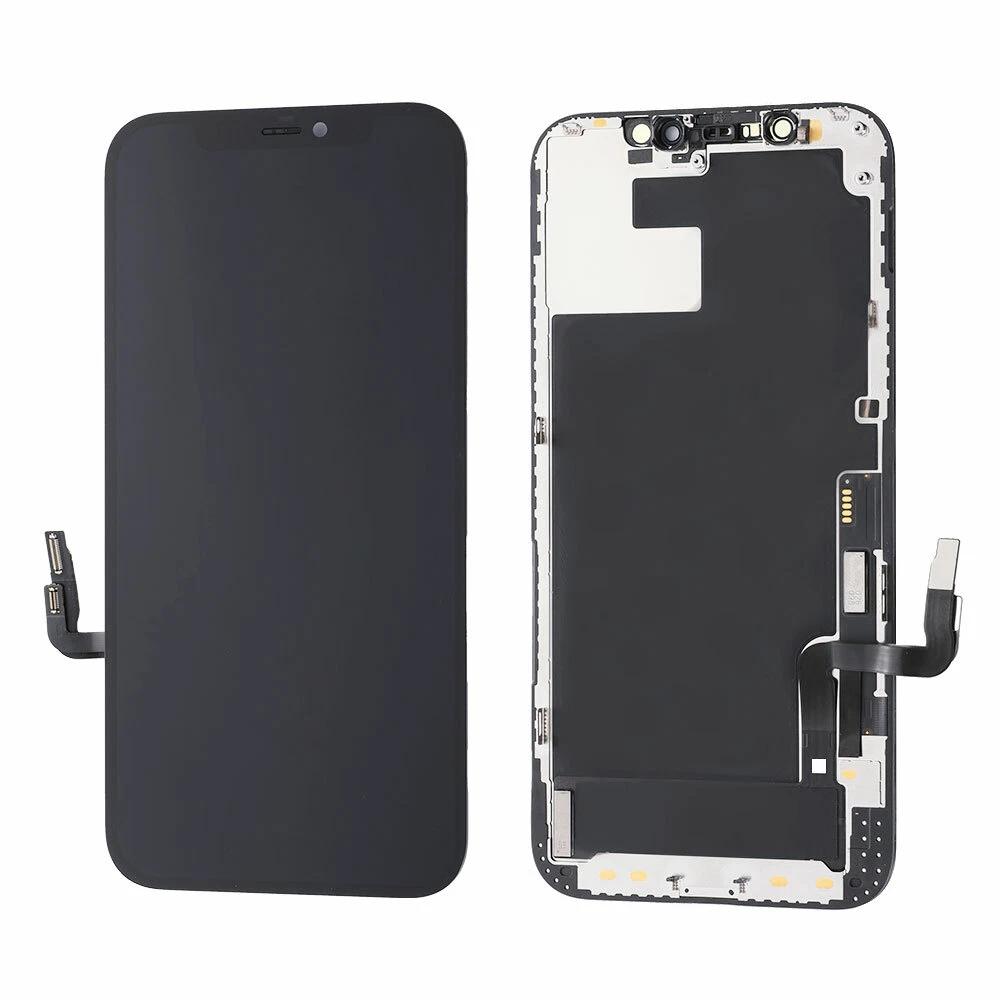
Our Argentina partner's order is a useful illustration. Those five iPhone models span two completely different display technologies - Incell LCD for the XR and 11, and OLED for the X, 12 Pro, and 12 Pro Max. A buyer chasing the lowest price per model could easily have split that across three or four vendors. Instead, consolidating all 35,000 pieces with one factory meant a single QC standard across both technologies, one consolidated shipment to clear Argentine customs once instead of several times, and one point of contact when timing mattered. Consolidating your catalog with one capable phone parts wholesale supplier quietly removes cost that never shows up on an invoice:
- One freight consolidation instead of five partial shipments
- One quality baseline to test and trust, not five
- One relationship with leverage for better terms as volume grows
- One support contact when something goes wrong
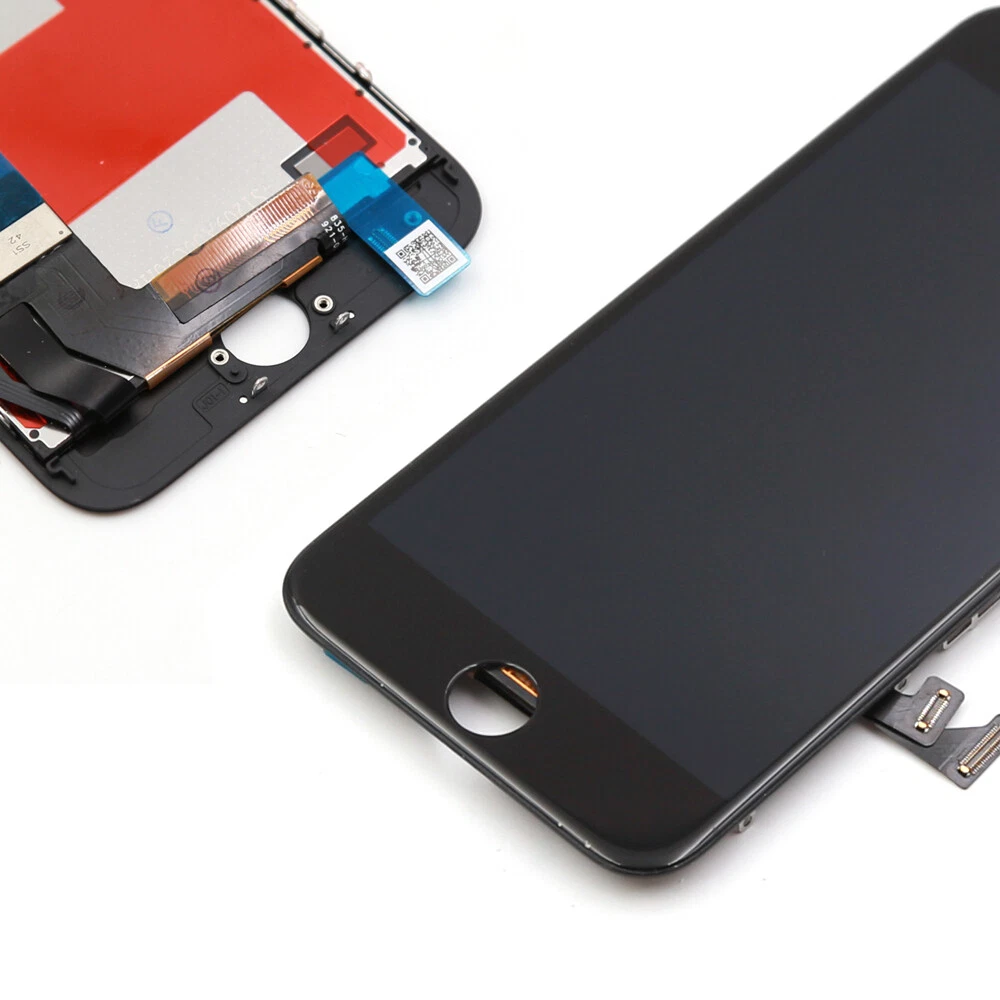
This is why we built our catalog across the full iPhone Series 5–16 range, plus the grade options (Incell, premium aftermarket, OEM refurbished, OLED) most markets need. The goal is for a distributor to source their whole screen program in one place rather than stitching it together.
Logistics, payment, and lead time - where deals quietly break
Buyers obsess over unit price and underweight the operational stuff that actually determines whether a partnership works.
| Operational factor | What to confirm before committing |
|---|---|
| Shipping methods | DHL, UPS, FedEx, TNT, EMS - and realistic transit (ours: 3–7 days to destination) |
| Dispatch speed | Same-day on stocked models; how fast on OEM/custom |
| Lead time | Get it stated by model and quantity, in writing |
| Payment terms | L/C, installments, and how flexible as trust builds |
| MOQ policy | Bulk and small-batch both supported, so you can test before scaling |
A supplier who's vague about any of these will be vague when it matters - mid-order, mid-season, when you need a straight answer fast.
Red flags that a "factory" is really a reseller
After enough years on this side, the warning signs are consistent:
- Talks about "partners" and "networks," never their own floor
- Can't or won't share defect-rate data
- No samples before a bulk commitment
- Prices that are dramatically below everyone else (someone skipped QC)
- Warranty discussed in chat but never written into terms
- No customization - a real factory can print your logo and adjust packaging
Where phone parts wholesale is heading (2026–2031)?
The sourcing decisions you make now should account for the next five years. From the factory floor, here's what's reshaping the phone parts wholesale supplier landscape:
- Incell matures into the volume backbone. For iPhone 11–15, Incell now delivers near-OLED performance at roughly 40% lower cost. These models will anchor repair demand for years, especially in emerging markets.
- "Refurbished Original" becomes a premium category. Reclaimed original glass on new flex cables is a fast-growing, eco-conscious tier - and buyers who can source it reliably will own that margin.
- AI-driven QC sets a new bar. Automated visual inspection catches pixel-level defects humans miss; "zero-defect" shifts from slogan to measurable standard.
- Sourcing consolidates. As margins tighten, buyers move away from five-vendor fragmentation toward one-stop factory partners with broad catalogs and stable supply.
- Right-to-repair expands the legitimate aftermarket. Stronger EU and US repair laws push demand toward suppliers who can document quality and origin.
The pattern across all five: the winners won't be the cheapest invoice this quarter - they'll be the buyers locked into the most stable, most documentable supply.
Your pre-partnership checklist
Before you commit to any cell phone parts supplier, confirm:
- Verified manufacturer status (line count, floor space, technology)
- Documented return rate and 100% pre-shipment testing
- Capacity and core-model stock depth for your peak
- Catalog breadth to consolidate your SKUs
- Shipping methods, transit times, and dispatch speed
- MOQ, tiered pricing, and payment terms
- OEM logo/packaging options if you're building a brand
- Warranty and returns written into the contract
Sourcing directly from our factory
We manufacture; you source with confidence. We produce iPhone LCD and OLED screens across Series 6–17, hold 500,000+ units of core models in stock, ship stocked items the same day via DHL/UPS/FedEx (3–7 days to most destinations), and back every order with 100% pre-shipment testing, a 12 months warranty. Tiered pricing and annual rebates reward partners as volume grows, and OEM logo printing and custom packaging let you build your own brand on factory-direct supply.
If you're sourcing for a repair chain, distribution business, or refurbishing operation, send us your model list and target quantities and our purchasing team will return a customized quote and sample kit.
➡️ Browse the wholesale catalog by model: iPhone 11 Series LCD · iPhone X Series LCD · all iPhone series
➡️ Request a bulk quote and free samples: Contact our team
FAQ
How do I verify a phone parts wholesale supplier is a real factory?
Ask for line count, floor space, production technology, and documented return-rate data. Manufacturers answer with specifics; resellers answer with adjectives. Always test 1–2 samples before any bulk order.
Can you handle large mixed-model orders across LCD and OLED?
Yes. A typical example is a recent 35,000-piece order from an Argentina distributor covering five models - iPhone X, 11, XR, 12 Pro, and 12 Pro Max - combining Incell AAA LCD screens with OLED panels in one consolidated shipment. We manage mixed-technology orders under one quality standard and one delivery plan, which simplifies both your customs clearance and your inventory.
Is it better to use one supplier or several for phone parts?
For most growing businesses, consolidating with one capable supplier lowers freight, simplifies quality control, and earns better terms as volume grows. Multi-vendor sourcing often looks cheaper per part but costs more in total overhead and risk.
What MOQ is needed for wholesale phone parts pricing?
It varies by model. We support both bulk and small-batch orders, with tiered pricing - the larger the volume, the lower the per-unit cost. Share your target quantity and we'll show you where the price breaks fall.
How fast can a wholesale order ship internationally?
Stocked core models dispatch the same day via DHL, UPS, FedEx, TNT, or EMS, typically reaching destinations in 3–7 days. OEM and custom orders usually ship within 3–7 days of payment.
Can you supply with our logo and packaging?
Yes. OEM logo printing and custom packaging are available, which is how many of our distributor partners build their own brand on a factory-direct supply chain.