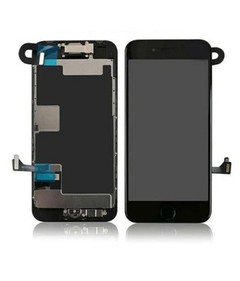
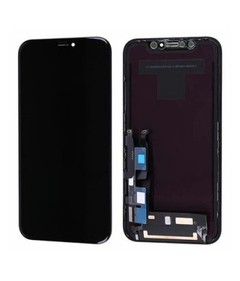

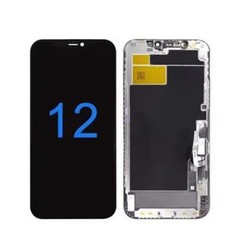
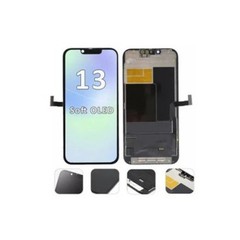


Twelve years ago, one of our earliest wholesale clients was a man named David running a single repair shop in Glasgow. He ordered 50 iPhone 5 screens from us. Paid on time, asked good questions about quality, and always followed up when something wasn't right.
Three years later, David wasn't running a repair shop anymore. He was running a distribution operation supplying 23 independent repair shops across Scotland and Northern England. By the time we had our last conversation before he scaled into a larger logistics setup, his monthly iPhone screen volume from us alone had grown from 50 units to over 2,200.
What David built wasn't complicated. But it required a framework that most people never think about because they're too focused on the first step - finding a factory - without thinking through the second, third, and fourth steps that turn a sourcing relationship into a business.
This is the article I wish I could have handed David at the beginning. It's a complete playbook for building a regional iPhone repair parts distribution business from the ground up - covering business model structure, factory-direct sourcing strategy, how to build and manage a repair shop client network, margin optimization, and the five-year industry trajectory that makes this one of the most durable B2B opportunities in the electronics supply chain right now.
Part 1: Understanding the Opportunity - Why Regional Distribution Is Underserved?
Before building anything, you need to understand exactly what problem a regional distributor solves and why that problem isn't already adequately addressed by existing market structure.
The market size of the Cell Phone Repair industry in the United States is $4.2 billion in 2026. There are 1,447 businesses in the Cell Phone Repair industry in the United States. That's a significant market - and it's served by a supply chain with a structural gap at the regional level. MobileSentrix
At the top of the supply chain, you have factories in Shenzhen manufacturing iPhone screens at scale. At the bottom, you have tens of thousands of independent repair shops, each ordering 30–200 screens per month across multiple models and grades. The gap between those two ends of the chain is where a regional distributor creates value - and captures margin.
China's Huaqiangbei market supplies approximately 60% of global parts supply. But the vast majority of that supply reaches independent repair shops through a fragmented, multi-step distribution chain that adds cost at every layer. A repair shop in Manchester or Melbourne or Miami is typically buying from a local distributor who bought from a regional importer who bought from a trading company who bought from a factory. Each step adds 10–25% margin. By the time the screen reaches the repair shop's bench, it may have passed through three or four hands.
A regional distributor who eliminates two of those layers - sourcing factory-direct and selling directly to local repair shops - can offer repair shops meaningful savings over their current supply chain while capturing the margin that was previously split between multiple intermediaries.
Regional exclusivity agreements can dramatically improve margins by reducing local competition. Relationship-based selling generates higher margins than transactional approaches. Retailers working with trusted distributors often pay premium pricing for reliability and service quality.
That dynamic - relationship-based local supply, factory-direct economics, regional market knowledge that a Shenzhen factory simply doesn't have - is the foundation of a viable distribution business.
Part 2: The Three Distribution Business Models - Choosing Your Structure
Before sourcing a single unit, the most important decision is which business model you're building. The three models have meaningfully different capital requirements, margin structures, and competitive dynamics.
Model 1: Local Stocking Distributor
How it works:
You import iPhone screens directly from a Chinese factory, hold local inventory, and supply repair shops in your region with fast turnaround - typically same-day or next-day delivery.
The margin structure:
You're buying at factory-direct prices ($28–52 for current-generation iPhone Soft OLED depending on model) and selling to repair shops at 20–35% above your landed cost. Wholesale cell phone distributors typically achieve margins of 15–35% depending on volume, exclusivity arrangements, and relationship quality with their repair shop clients.
The capital requirement:
Meaningful upfront inventory investment. To stock 15–20 models across two grades, a minimum viable stocking inventory typically requires $15,000–$40,000 depending on the model mix and depth per model.
The competitive advantage:
Speed and reliability. A repair shop that runs out of iPhone 14 screens at 10am and can get a same-day delivery from you will pay a modest premium over ordering from overseas and waiting 5 days. That speed advantage is the stocking distributor's core value proposition.
Best suited for:
Operators with the capital to fund initial inventory, based in markets with a dense concentration of independent repair shops (major cities, urban regions), who want to build a business on repeat local relationships.
Model 2: Drop-Ship Distributor
How it works:
You take orders from repair shops, forward those orders to your factory supplier, and the factory ships directly to your clients. You don't hold inventory - you hold the client relationship and the margin between factory pricing and your client pricing.
The margin structure:
Typically lower per-unit than stocking distribution (10–18%) because clients know they're waiting for an overseas shipment and price accordingly. Volume commission arrangements with the factory are the typical structure here.
The capital requirement:
Near zero for inventory. Your capital investment is in building the client network and the systems to manage orders efficiently.
The competitive advantage:
No inventory risk. You're not holding stock that depreciates as models age or prices shift. Your exposure is entirely on the relationship and order management side.
Best suited for:
Operators who are building the client network first and managing the logistics coordination as the primary value-add. Often a stepping stone to Model 1 once volume justifies inventory investment.
Model 3: Hybrid Regional Distributor
How it works:
You stock your top 8–12 highest-volume models locally and drop-ship the long tail. This is how most successful regional distributors actually operate after 12–18 months in the business.
The margin structure:
Best of both worlds - you capture the speed premium on stocked models (25–35% margin) and the order coordination margin on drop-shipped models (10–18%).
The capital requirement:
Moderate - you're stocking selectively based on actual demand data from your client base, not guessing at the full model range.
Best suited for:
Operators with 6–12 months of market data from Model 2 who are ready to invest capital in the highest-turnover models while maintaining flexibility on the long tail.
Part 3: Building Your Factory-Direct Supply Relationship - The Foundation Everything Else Rests On
The most consequential decision in building a distribution business is your factory relationship. A distributor is only as reliable as the supplier behind them - and your reputation with local repair shops is entirely dependent on what arrives in your shipments.
Wholesalers offering stable supply, competitive pricing, and reliable quality will have a strong advantage in emerging markets. The wholesale industry is consolidating toward scale and specialization.
Here's what a serious factory-direct iPhone parts supplier partnership looks like from the distributor's side:
Establishing the Relationship - The Right First Conversation
Don't approach a factory with "what's your cheapest price for iPhone 14 screens." That conversation positions you as a price buyer, and price buyers get treated accordingly - minimum service, no priority allocation, no advance notice of price changes.
Approach the conversation differently: "I'm building a regional distribution operation in [market]. My current monthly volume is X screens across these models. I'm looking for a factory partner for a 12–24 month supply relationship with consistent monthly ordering and forward purchasing commitments on key models. I need batch QC documentation, a clear defect replacement policy, and a dedicated account contact."
That conversation positions you as a distribution partner worth investing in - and factories respond to it differently than to a spot buyer inquiry. You'll get better pricing, better service, and access to stock allocation that spot buyers don't get.
What to Verify Before Your First Volume Order?
A checklist every new factory relationship should clear before you commit distribution business to it:
Business registration and certifications:
ISO 9001 certificate number cross-checked against the issuing registry. Business License with manufacturing entity classification, not trading company. RoHS compliance documentation for EU and UK market supply.
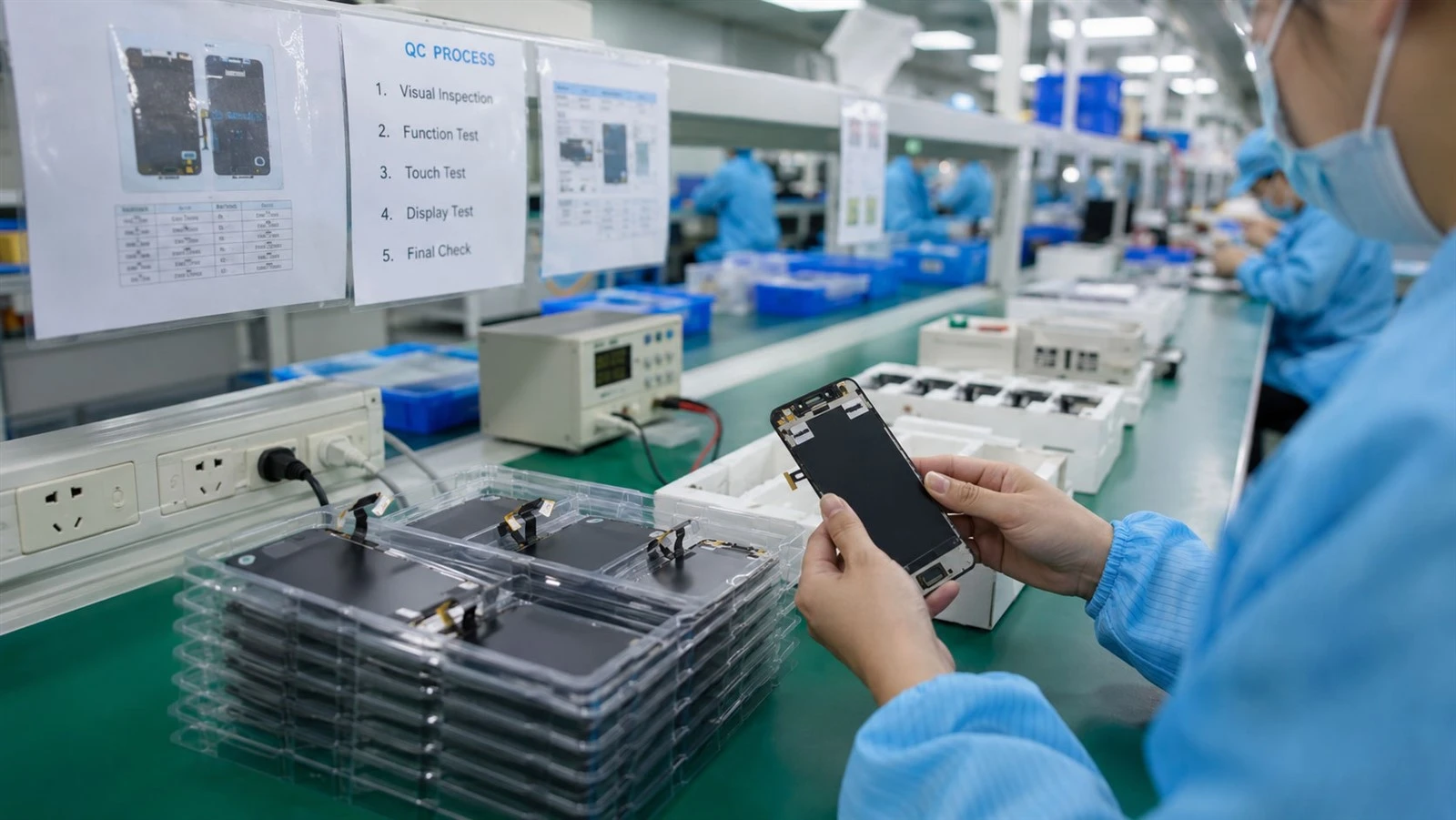
Production verification: 10-minute video call showing the production floor. Any factory can do this without preparation - a trading company pretending to be a factory cannot. Ask to see the calibration equipment specifically.
Defect rate data: Ask for batch QC documentation from the past three production runs on iPhone 13 and 14 Soft OLED. A real manufacturer has this data. A trading company does not.
Sample order evaluation: 10–20 units per model across your planned grade mix. Install, test, run for 30 days. Check color consistency, touch response, backlight uniformity. This step is non-negotiable before committing distribution volume.
Replacement policy: Written confirmation of defect replacement terms - 90 days from receipt, replacement in next shipment or credit against invoice, documented process for submitting claims.
The Pricing Structure That Makes Distribution Economics Work
Your distribution margin depends on the gap between your factory-direct landed cost and your repair shop selling price. The landed cost calculation:
Landed cost per unit = (FOB factory price + Shipping per unit) × (1 + import duty rate) + VAT/GST (reclaimed if VAT registered)
For a UK distributor buying iPhone 14 Soft OLED at MOQ 200:
| Cost component | Amount |
|---|---|
| Factory price (FOB Shenzhen, MOQ 200) | $34.00 (~£26.80) |
| Shipping per unit (DHL, 200 units ≈ 32kg) | ~£1.20 |
| Import duty (~2%) | £0.56 |
| Subtotal pre-VAT | £28.56 |
| UK VAT (20%) - reclaimed on VAT return | £5.71 |
| True landed cost (VAT-registered) | £28.56/unit |
| Repair shop selling price (UK market) | £36–£42 |
| Distributor margin | £7.44–£13.44 (26–47%) |
At 200 units per month of iPhone 14 Soft OLED alone, that margin range represents £1,488–£2,688 monthly gross profit from a single model. Scale across 10–15 models at comparable volumes and the economics of a regional distribution business become compelling.

Part 4: Building Your Repair Shop Client Network - Acquiring and Retaining the Accounts That Drive Volume
A factory relationship without a client network is just inventory. The client network is the actual business.
Relationship-based selling generates higher margins than transactional approaches. Retailers working with trusted distributors often pay premium pricing for reliability and service quality.
Identifying Your Target Repair Shops
Not all repair shops are equal distribution clients. The characteristics of a good distribution account:
Volume:
Shops doing at least 15–20 screen replacements per week generate enough monthly screen volume to justify a regular supply relationship. Below this threshold, the account management effort exceeds the margin value.
Multi-model mix:
Shops that service a range of iPhone models (not just one or two) create more natural diversification across your stocking mix and represent more stable monthly revenue than shops concentrated in a model that may shift in repair frequency.
Payment reliability:
Cash flow is the distribution business's most critical operational constraint. Shops that pay on time (or ideally on account with clear terms) are worth significantly more than shops that order large and pay slowly.
Growth trajectory:
New shops, growing shops, and shops expanding to multiple locations are the distribution clients that compound in value over time. A repair shop opening its second location is doubling your account value.
The Initial Approach - What Actually Works?
Cold outreach to repair shops works when it leads with something concrete. The approach that consistently converts:
Walk in with a sample kit - two or three screen grades for their highest-volume model, labeled clearly, with your pricing sheet and a simple one-page explanation of your supply model (local stock, same-day delivery, 90-day defect guarantee, minimum order 10 units).
Let them install the screens. Follow up in two weeks. The quality speaks louder than anything in your pitch, and a repair shop owner who has installed your screens and had zero issues with the batch is almost always ready to place a first order.
The most common mistake in client acquisition is leading with price. Price-driven clients are the first to leave when a competitor undercuts you by £1. Value-driven clients - the ones who chose you because of reliability, quality, and service - stay through price fluctuations because the total cost of switching to an unknown supplier is higher than the per-unit saving.
Account Management That Drives Retention
Customers prefer long-term stable suppliers. The wholesale industry is consolidating toward scale and specialization.
The repair shop clients who stay with a distributor long-term are the ones for whom the relationship has value beyond the transaction. What creates that value:
Proactive stock notification.
When iPhone 14 Pro screens go on allocation at the factory because of a supply constraint, tell your clients before they run out - don't let them discover the shortage when they're placing an urgent order. This kind of intelligence, which a factory-direct distributor has and a multi-layer intermediary doesn't, is genuinely valuable to repair shop owners managing their own inventory.
Market intelligence sharing.
Your clients are running their businesses, not analyzing the iPhone repair market. Sharing relevant information - which models are entering peak repair demand, which parts prices are likely to shift in the next quarter, how right-to-repair legislation changes what they should be stocking - builds advisor-level trust that price-focused competitors can't replicate.
Fast, fair defect resolution.
How you handle the inevitable bad batch defines your client relationship more than how every good batch goes. A distributor who processes a defect claim quickly and fairly - without interrogation, without excessive documentation requirements, without making the client feel like they're being suspected of fraud - builds account loyalty that compounds over years.
Part 5: Inventory Management - The Operational Core of a Distribution Business
Inventory depreciation is the biggest margin killer. New models typically lose 10–15% of their wholesale value within six months. Carrying costs (insurance, warehousing, working capital) run 8–12% annually, reducing margins by 2–3% on inventory held over 90 days.
This is the operational reality that kills distribution businesses that don't manage it carefully. Here's the framework that works.
The ABC Stocking Model
A-tier models (stock deeply, replenish frequently):
These are your 4–6 highest-volume models - typically iPhone 13, iPhone 14, and iPhone 15 standard and Pro variants currently. Stock 30–45 days of demand depth. Replenish before you hit 10 days remaining to avoid the stock-out that costs you an order and potentially a client.
B-tier models (moderate stock, regular replenishment):
iPhone 12 series, iPhone 11, older X-series, iPhone 14 Pro Max and 15 Pro Max. Stock 15–20 days of demand depth. These move consistently but not as fast as A-tier - the risk of over-stocking is higher.
C-tier models (light stock or drop-ship):
Older models (iPhone 8 and earlier), iPhone 16 (still early lifecycle), less common variants. Stock 5–10 days or drop-ship to avoid the depreciation risk on slow-moving inventory. One mistake that kills early-stage distribution businesses is stocking too many models at full depth. Concentrate capital in A-tier, use the factory relationship for B and C tier fill-in.
Price Lifecycle Management
Every iPhone model follows a predictable price curve: elevated pricing in the early post-launch period, declining as supply matures, stable floor pricing in the mature repair window, then slow decline as the model ages out of peak demand.
The inventory risk points are at the ends of this curve. Don't over-stock newly launched models (iPhone 16 series currently) - prices are still elevated and will fall 15–25% in the next 12 months. Don't hold excessive stock of aging models where repair demand is declining - the combination of price erosion and slower velocity creates inventory write-off risk.
The safe zone is the mature repair window - models 3–5 years old where pricing has stabilized and repair demand is at its peak. Right now, that's iPhone 13 and iPhone 14. These are the models to stock with confidence.
Part 6: The Financial Model - What a Regional Distribution Business Actually Earns?
Let's build a realistic financial model for a mid-size regional distributor in Year 2 of operation, supplying 35 repair shops across a major metropolitan area.
Revenue Model - 35 Repair Shop Accounts, Monthly
| Model Tier | Monthly Units | Avg. Selling Price | Monthly Revenue |
|---|---|---|---|
| iPhone 14 Soft OLED | 180 | £38 | £6,840 |
| iPhone 13 Soft OLED | 210 | £34 | £7,140 |
| iPhone 15 Soft OLED | 120 | £48 | £5,760 |
| iPhone 12 Soft OLED | 150 | £30 | £4,500 |
| iPhone 11 Incell | 140 | £15 | £2,100 |
| iPhone 14 Pro Soft OLED | 85 | £52 | £4,420 |
| Other models | 115 | £28 avg | £3,220 |
| Total | 1,000 units | £33,980/month |
Cost Structure
| Cost Component | Monthly Amount |
|---|---|
| Factory-direct screen cost (avg £22/unit) | £22,000 |
| Shipping and import duties | £1,400 |
| Warehousing and local delivery | £800 |
| Working capital finance cost | £350 |
| Account management overhead | £600 |
| Total costs | £25,150 |
Monthly Gross Profit
£33,980 − £25,150 = £8,830/month gross profit (26% margin)
At 1,000 units per month - a realistic Year 2 volume for a regional distributor with 35 active accounts - the business generates approximately £106,000 annual gross profit before owner compensation and overhead. That's a viable standalone business built on a factory-direct supply relationship and a well-managed local account network.
Scaling to 2,000 units per month (roughly 70–80 active accounts) typically produces annual gross profit in the £180,000–£220,000 range, with improving unit economics from volume pricing tiers and operational leverage on fixed costs.

Part 7: The Five-Year Market Outlook for iPhone Parts Distribution
The business case for building a regional distribution operation in iPhone parts is supported by structural trends that make this a durable opportunity through at least 2031.
Trend 1: Market volume is growing - repair demand is expanding, not contracting
Repair demand is growing, not shrinking. Longer device lifecycles, increasing environmental awareness, and the growing popularity of the Right to Repair movement are all driving steady demand for mobile phone repair parts. For distributors, growing end-market demand means growing client base volume - the accounts you build today will order more in three years than they do now.
Trend 2: Supply chain consolidation favors direct factory relationships
The wholesale industry is consolidating toward scale and specialization. Early supply chain positioning will open doors to higher-margin niche markets. The distribution operations that will be squeezed out over the next five years are the ones in the middle of a long supply chain - adding cost without adding value. The ones that will gain market share are those with direct factory relationships and genuine local service capability.
Trend 3: Right-to-Repair expands the addressable market in regulated regions
The EU Right to Repair Directive, effective July 31, 2026, and parallel legislation in the UK and multiple US states structurally reinforces repair demand in the largest markets for iPhone repair. For distributors supplying these markets, this is a legislatively supported demand tailwind that compound annually as consumer awareness builds.
Trend 4: Quality differentiation becomes a sustainable competitive moat
Buyers who submitted video inspection requests before payment reported 89% fewer disputes - underscoring that verification effort, not price, is the strongest predictor of satisfaction. As the repair parts market matures, quality-verified supply with documented batch data becomes a genuine competitive moat - not just a nice-to-have. Distributors who build their reputation on consistent quality will be significantly harder to displace than those competing primarily on price. Injured Gadgets
Trend 5: The OLED transition creates a higher-value product mix
Every iPhone sold since the iPhone 12 uses OLED exclusively. As older LCD models age out of peak repair demand over the next 3–4 years, the average unit value of a screen replacement - and the average unit margin for a distributor - increases. A distribution business built on OLED-era iPhones will have structurally better unit economics in 2028 than a business built on the mixed LCD/OLED mix of 2023.
Part 8: What a Factory-Direct Distribution Partnership With Us Looks Like?
We supply regional distributors across 30+ countries. The structure of those relationships is worth describing concretely, because "factory direct" is claimed by many suppliers and delivered by fewer.
Dedicated account management.
Every distribution partner has a named contact who knows their market, their model mix, and their ordering cadence. Not a sales rotation - a consistent relationship.
Forward stock allocation.
Distribution partners with committed monthly volumes receive advance stock allocation on key models. You know what you have before you need it, not after you've run out.
Batch QC documentation as standard.
Every shipment includes batch-specific inspection data - color calibration readings, defect counts, pass rates. This isn't a premium service; it's how we operate, because distributors building reputations with local repair shops need to be able to stand behind what they sell.
Volume pricing tiers that improve with relationship depth.
Our pricing structure rewards consistent ordering. Partners at 200 units per month on a given model receive meaningfully better pricing than spot buyers - and partners who grow to 500+ units per month on a model see the economics shift further in their favor.
Market intelligence support.
We track model lifecycle positions, price trajectory, and demand patterns across our global client base. That intelligence helps distribution partners make better inventory decisions - which is good for their business and for the consistency of our supply relationship.
Frequently Asked Questions
How much capital do I need to start a regional iPhone parts distribution business?
For a drop-ship model, minimal capital beyond relationship building costs. For a stocking distribution model, a minimum viable inventory for 10–15 models at 20–30 days depth typically requires £15,000–£35,000 depending on your model mix. Most successful distributors we work with started smaller and scaled inventory investment as client volume grew.
What's a realistic monthly volume target for a first-year distributor?
Most first-year regional distributors reach 300–500 units per month by month 9–12, assuming active client acquisition from month one. 1,000 units per month is a typical Year 2 milestone for operators who execute their client acquisition strategy consistently.
Do I need to be registered as an importer to buy directly from China?
In most markets, yes - you'll need a business entity, a VAT/GST registration for claiming import VAT, and an EORI number (EU/UK) or equivalent for customs clearance. For US distributors, a customs broker relationship handles most of this. These requirements are not complex, but they need to be in place before your first shipment arrives.
How do I handle the "Unknown Part" notification when supplying repair shops?
We provide communication guidance to distribution partners on how to brief their repair shop clients about part pairing notifications on iPhone 12 and newer. The notification is an expected characteristic of aftermarket screens on these models and doesn't affect core phone function - but shops that set this expectation proactively avoid the customer confusion that arises when it's discovered after the fact.
What models should I prioritize stocking in H2 2026?
iPhone 13 and 14 series are your primary volume models right now - both are in peak repair demand with stable pricing. iPhone 15 series is your growth play - build the supply relationship now, scale inventory as repair demand grows through late 2026. iPhone 16 series: establish the relationship, hold light inventory until prices stabilize in Q3 2026.