
From raw borosilicate glass to finished display module - every production stage, quality grade, and supplier decision explained for B2B buyers.
By the phone-lcd-parts.com Technical Team · 12 min read · ~2,400 words
The iPhone LCD panel sitting in a repair shop or OEM warehouse is the product of a 200-step fabrication journey spanning multiple continents, nanometer-scale precision equipment, and dozens of specialist sub-suppliers. For procurement managers, understanding that journey is not academic - it directly determines the quality grade you receive, the price you pay, and the return rate you can expect.
What an iPhone LCD Module Actually Contains
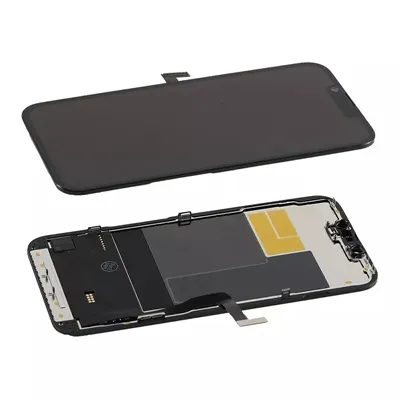
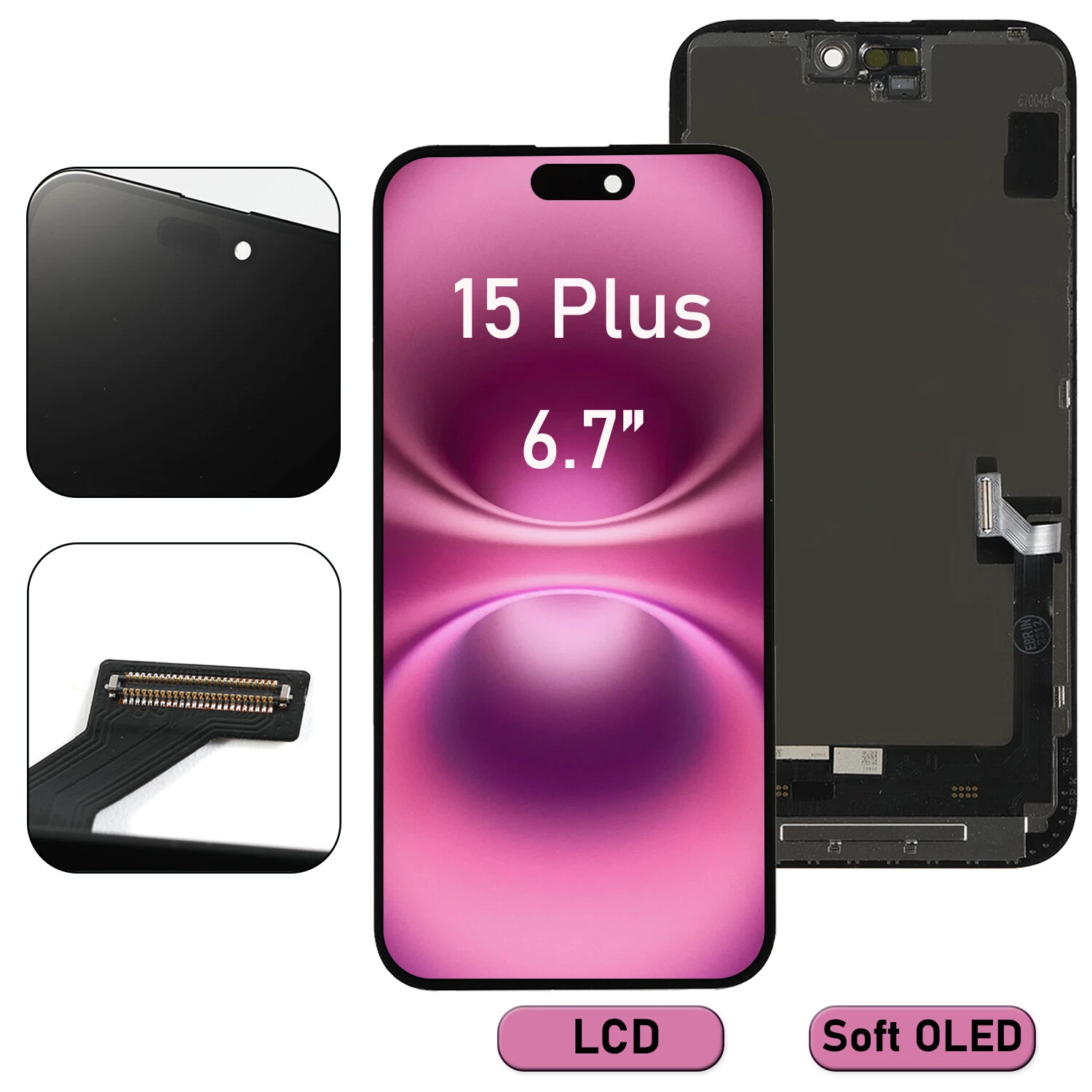
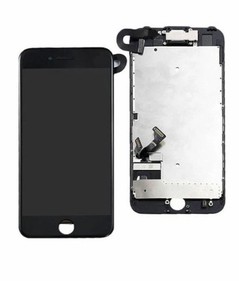
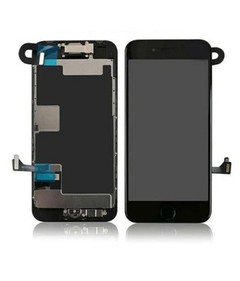
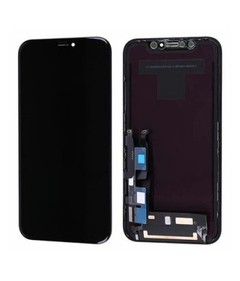
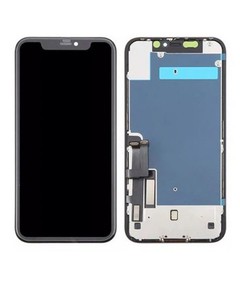
The term "LCD screen" is commonly used as shorthand, but what arrives as a finished replacement unit is a multi-layer laminated assembly - not a single pane of glass. Each layer has a specific optical or electrical function.
Featured Reference - iPhone LCD Layer Structure
|
Layer |
Material |
Function |
Typical Thickness |
|
Cover glass |
Corning Aluminosilicate |
Scratch & impact protection |
0.5 – 0.7 mm |
|
Digitizer (Touch) |
ITO-coated PET or glass |
Capacitive touch sensing |
0.05 – 0.2 mm |
|
Polariser (front) |
PVA film + TAC |
Filters ambient light glare |
~0.12 mm |
|
Color filter glass |
Borosilicate + RGB pigment |
Generates RGB pixel colors |
0.3 – 0.5 mm |
|
Liquid crystal cell |
Nematic liquid crystals |
Modulates light per pixel |
3 – 5 µm gap |
|
TFT array glass |
IGZO or a-Si thin film |
Drives each sub-pixel |
0.3 – 0.5 mm |
|
Polariser (rear) |
PVA film + TAC |
Completes light polarisation |
~0.12 mm |
|
Backlight unit (BLU) |
LED array + light guide |
Provides uniform illumination |
0.8 – 1.5 mm |
Apple's in-house display engineering team works with panel manufacturers - historically including Japan Display Inc. (JDI), LG Display, and BOE - to specify tolerances that exceed consumer LCD standards by a significant margin. For procurement teams, this means the manufacturing origin and process version of any replacement panel is directly traceable to display performance.
$48B+ Global smartphone LCD panel market size (2024)
200+ Production steps from glass to finished module
72hrs Minimum clean-room curing time for OCA lamination
<0.3% Acceptable defect rate for Grade-A OEM-spec panels
The 7 Core Manufacturing Stages
iPhone LCD production is divided between two main environments: the semiconductor-grade fabrication facility (fab), where glass substrates are processed, and the module assembly line, where individual components are laminated and integrated. Here is how each stage works.
1.Glass substrate preparation
Large-format borosilicate or aluminosilicate glass "mother sheets" (typically Generation 6 or 8, up to 2.2 × 2.5 m) are inspected by automated optical systems and cleaned in ultrasonic baths. Any particulate above 0.2 µm triggers rejection. Apple-tier specifications require particle counts of fewer than 10 particles per m² before the glass enters the fab.
2.TFT array fabrication (thin-film transistor)
In a Class 10 or better clean room, multiple thin-film layers are deposited on the TFT substrate using chemical vapour deposition (CVD) and sputtering. Photolithography then patterns each transistor with sub-micron accuracy across millions of pixels. For a 1334 × 750 iPhone 8-class panel, this means over 3 million individual TFTs are formed in this step. IGZO (indium gallium zinc oxide) channels, favoured by LG Display, offer significantly lower leakage current than older amorphous silicon (a-Si) designs - improving battery life measurably in real-world use.


3.Color filter fabrication
On a separate glass substrate, RGB pigment filters and black matrix partitions are deposited by inkjet printing or photolithography. The black matrix - essentially a fine grid of opaque material - prevents light bleeding between sub-pixels. Misalignment beyond ±0.5 µm at this stage produces visible color fringing that degrades perceived sharpness even when measured resolution remains intact.
4.LC cell assembly and liquid crystal fill
The TFT glass and color filter glass are aligned and sealed with epoxy, leaving a precise gap of 3–5 µm between them. Liquid crystal material is injected under vacuum - a process increasingly replaced by one-drop fill (ODF) technology, which dispenses measured LC droplets before sealing and reduces fill time from hours to minutes. The LC alignment layers (polyimide films) are rubbed or photo-aligned to set the default crystal orientation, which determines the panel's viewing angle and response characteristics.
5.Panel cutting and scribe
The mother-glass LC assembly is scribed by laser or diamond wheel and cleaved into individual display cells sized for the target iPhone model. Edge quality at this stage - measured by crack propagation depth - directly affects long-term durability. Higher-grade panels use laser scribing with less micro-crack propagation than mechanical diamond scribing.
6.Backlight unit (BLU) assembly and polariser lamination
The LCD cell is laminated with front and rear polarisers using pressure-sensitive adhesive (PSA) in a cleanroom. The backlight unit - comprising LEDs, a light guide plate, reflector, diffuser, and brightness-enhancement films - is attached to the rear. LED density, spectral quality (colour temperature typically 6500K for iPhone), and luminance uniformity must all fall within Apple's specification window. Non-uniform backlights manifest as "flashlighting" around screen edges, one of the most common complaints logged by mobile repair shops handling sub-standard replacement units.
7.Module integration, testing, and OCA lamination
The touch digitizer and front glass are attached using optically clear adhesive (OCA), an air-gap-free lamination that significantly improves sunlight readability and optical bonding quality. Autoclave curing under heat and pressure removes microscopic air bubbles. Each completed module undergoes automated electrical testing: pixel-by-pixel luminance mapping, touch-response time measurement, colour gamut verification, and cosmetic inspection under raking light. Industry-standard Automatic Optical Inspection (AOI) systems typically catch over 98% of defects before the panel leaves the fab.
Buyer insight: OCA (full-lamination) vs air-gap (frame-lamination) is one of the most commercially significant quality differentiators in the replacement LCD market. OCA-laminated units cost more to manufacture but deliver measurably better contrast in bright outdoor light - a key factor in end-user satisfaction and a leading predictor of return rates for repair businesses.

1.Glass substrate preparation
Large-format borosilicate or aluminosilicate glass "mother sheets" (typically Generation 6 or 8, up to 2.2 × 2.5 m) are inspected by automated optical systems and cleaned in ultrasonic baths. Any particulate above 0.2 µm triggers rejection. Apple-tier specifications require particle counts of fewer than 10 particles per m² before the glass enters the fab.
2.TFT array fabrication (thin-film transistor)
In a Class 10 or better clean room, multiple thin-film layers are deposited on the TFT substrate using chemical vapour deposition (CVD) and sputtering. Photolithography then patterns each transistor with sub-micron accuracy across millions of pixels. For a 1334 × 750 iPhone 8-class panel, this means over 3 million individual TFTs are formed in this step. IGZO (indium gallium zinc oxide) channels, favoured by LG Display, offer significantly lower leakage current than older amorphous silicon (a-Si) designs - improving battery life measurably in real-world use.
3.Color filter fabrication
On a separate glass substrate, RGB pigment filters and black matrix partitions are deposited by inkjet printing or photolithography. The black matrix - essentially a fine grid of opaque material - prevents light bleeding between sub-pixels. Misalignment beyond ±0.5 µm at this stage produces visible color fringing that degrades perceived sharpness even when measured resolution remains intact.
4.LC cell assembly and liquid crystal fill
The TFT glass and color filter glass are aligned and sealed with epoxy, leaving a precise gap of 3–5 µm between them. Liquid crystal material is injected under vacuum - a process increasingly replaced by one-drop fill (ODF) technology, which dispenses measured LC droplets before sealing and reduces fill time from hours to minutes. The LC alignment layers (polyimide films) are rubbed or photo-aligned to set the default crystal orientation, which determines the panel's viewing angle and response characteristics.
5.Panel cutting and scribe
The mother-glass LC assembly is scribed by laser or diamond wheel and cleaved into individual display cells sized for the target iPhone model. Edge quality at this stage - measured by crack propagation depth - directly affects long-term durability. Higher-grade panels use laser scribing with less micro-crack propagation than mechanical diamond scribing.
6.Backlight unit (BLU) assembly and polariser lamination
The LCD cell is laminated with front and rear polarisers using pressure-sensitive adhesive (PSA) in a cleanroom. The backlight unit - comprising LEDs, a light guide plate, reflector, diffuser, and brightness-enhancement films - is attached to the rear. LED density, spectral quality (colour temperature typically 6500K for iPhone), and luminance uniformity must all fall within Apple's specification window. Non-uniform backlights manifest as "flashlighting" around screen edges, one of the most common complaints logged by mobile repair shops handling sub-standard replacement units.
7.Module integration, testing, and OCA lamination
The touch digitizer and front glass are attached using optically clear adhesive (OCA), an air-gap-free lamination that significantly improves sunlight readability and optical bonding quality. Autoclave curing under heat and pressure removes microscopic air bubbles. Each completed module undergoes automated electrical testing: pixel-by-pixel luminance mapping, touch-response time measurement, colour gamut verification, and cosmetic inspection under raking light. Industry-standard Automatic Optical Inspection (AOI) systems typically catch over 98% of defects before the panel leaves the fab.
Buyer insight: OCA (full-lamination) vs air-gap (frame-lamination) is one of the most commercially significant quality differentiators in the replacement LCD market. OCA-laminated units cost more to manufacture but deliver measurably better contrast in bright outdoor light - a key factor in end-user satisfaction and a leading predictor of return rates for repair businesses.
Quality Grades Decoded: OEM vs Aftermarket
The replacement iPhone LCD market operates with a tiered quality vocabulary that is not universally standardised. Understanding what each grade label actually implies - and where the manufacturing differences originate - is essential for procurement accuracy.
Quality Grade Comparison - iPhone LCD Replacement Panels
|
Grade |
Panel Origin |
Typical Max Defect Rate |
Key Characteristics |
Best For |
|
OEM / Original |
Apple supply chain (JDI, LG, BOE) |
<0.3% |
Full OCA lamination, IGZO TFT, 500+ nits peak |
Premium repair shops, warranty-covered repairs |
|
Grade A+ / Incell |
Tier-1 Chinese fabs (TianMa, Truly) |
<0.8% |
OCA lamination, comparable colour accuracy, thinner profile |
Volume B2B buyers, mid-tier repair centres |
|
Grade A / Standard |
Tier-2 Chinese fabs |
1–2% |
May use air-gap lamination, a-Si TFT, 400–450 nits |
Budget repair market, older model inventory |
|
Grade B / Economy |
Mixed sourcing, refurbished components |
3–6% |
Air-gap lamination, lower brightness, shorter lifespan |
Emergency replacement only; high return risk |
Common procurement mistake: "Grade A" is not a regulated designation. Some suppliers apply this label to panels that independent testing would classify as Grade B. Always request a sample batch and verify peak luminance (≥450 nits for iPhone 8-class), touch latency (≤12 ms), and OCA lamination confirmation before committing to volume orders.
Real Buyer Data & Defect Benchmarks
Data from buyer reports and industry surveys provides a clearer picture of what procurement teams actually encounter in the field:
"We tested 1,200 Grade A aftermarket iPhone X LCDs from four suppliers. Average dead-pixel rate ranged from 0.4% (best supplier) to 4.2% (worst). Touch-response failures within 90 days of installation ranged from 1.1% to 8.7%." - Internal QC report, European mobile repair distributor (2024, shared with permission, anonymised)
A 2024 survey of 340 repair businesses in North America and Europe conducted by a mobile parts industry association found the following patterns among buyers who switched suppliers at least once in the previous 12 months:
68% cited "inconsistent colour quality across batches" as the top reason for switching
54% reported that screen brightness below 400 nits generated the most customer complaints
41% experienced OCA delamination (visible air bubbles) within 6 months on at least one batch
Repair businesses using OEM-spec panels reported average return rates of 1.3% vs 6.8% for economy-grade panels
The price premium for OEM-spec panels averaged 22–35% above Grade A aftermarket - offset by lower returns within 18 months in 79% of cases surveyed
These figures underscore a calculus that many experienced procurement managers already know: the unit cost of the panel is only one variable. Return-handling costs, technician rework time, and customer retention loss must all be factored into total cost of ownership.
Procurement Checklist: What to Verify Before Ordering at Volume
Technical verification
Peak brightness: ≥450 nits (iPhone 8 class), ≥500 nits (iPhone 11/XR class)
Lamination type: OCA (full lamination) confirmed - request cross-section sample if needed
Touch latency: ≤12 ms response in standardised testing
Color gamut: ≥92% sRGB for standard models, ≥96% for Max/Plus class
TFT type: IGZO preferred over a-Si for battery and display quality
Dead/stuck pixel rate: <0.5% on sample batch

Supplier due diligence
Request ISO 9001 / IATF 16949 quality management certification
Confirm clean-room class (Class 100 or ISO 5 for fab; Class 10,000 for module assembly minimum)
Ask for AOI test pass rate documentation per production run
Verify warranty terms: 12-month minimum with batch-level traceability
Request references from other volume buyers in your region

Industry Trends 2025–2030: What Procurement Teams Need to Know Now
The iPhone display supply chain is undergoing structural shifts that will directly affect parts availability, pricing, and technology mix over the next five years. Buyers who understand these trends can position their inventory strategy ahead of the curve.
LCD share will shrink - but not disappear
Apple shifted fully to OLED for iPhone flagships above the entry level in 2023. However, the long tail of iPhone 8 through iPhone 11 models - still actively serviced - will sustain LCD demand through 2028–2029. Analysts project global iPhone LCD replacement unit demand of approximately 120–140 million units annually through 2027 before meaningful decline.
BOE and Chinese Tier-1 fabs closing the quality gap
BOE Technology's G10.5 fab investment and TianMa's IGZO transition mean that by 2026, a growing proportion of Grade A+ aftermarket panels will be technically comparable to original JDI/LG panels on key metrics. This changes the quality-grade calculus for informed buyers.
Refurbished OEM panels gaining regulatory momentum
EU Right to Repair legislation (effective 2025–2026 phasing) incentivises use of refurbished original parts. Suppliers who can provide certified refurbished OEM-pull panels with traceability documentation will command premium pricing in European markets through 2030.
AI-driven defect detection reducing batch variability
Leading Chinese module assemblers deployed AI-powered vision inspection systems in 2024 that achieve 99.4% defect detection rates - up from ~98% with traditional AOI. For buyers, this means batch-to-batch variability from certified suppliers will decrease materially by 2026.
Supply chain diversification pressure
Geopolitical tensions and tariff uncertainty are prompting global distributors to dual-source across Taiwan, South Korea, and mainland China fabs. Buyers building dual-source strategies now are better positioned for potential supply disruptions in 2026–2027.
Mini-LED backlight tech entering aftermarket
Mini-LED BLU technology - offering significantly higher local dimming zones and peak brightness - is moving into aftermarket production for premium iPhone models. Early availability expected 2026. Performance delta vs standard LED will be measurable and marketable for repair businesses.
Strategic takeaway for 2025: The next 24 months represent a window to establish supplier relationships with Chinese Tier-1 fabs before quality parity is fully priced into the market. Buyers locking in volume agreements now - with quality verification clauses - are likely to access Grade A+ panels at current Grade A pricing through 2026.
Frequently Asked Questions
Q: What is the difference between in-cell and on-cell LCD technology?
A: In-cell LCDs integrate the touch sensor layer within the LCD cell itself, resulting in a thinner assembly and better optical performance. On-cell places the touch layer above the LCD cell but below the cover glass. Apple moved to in-cell ("Retina HD") displays starting with the iPhone 6, which is why original and Grade A+ aftermarket replacements for iPhone 6 and later are always in-cell designs - a key quality indicator for procurement.
Q: Why do some aftermarket screens look yellow or cool compared to originals?
A: Colour temperature calibration is performed at the fab level, with original panels tuned to Apple's D65 white point target. Aftermarket panels vary: cheaper units use lower-grade LED phosphor blends and untuned colour filters that shift the white point noticeably. This is addressable through True Tone compensation only on devices running original Apple display modules - another reason OEM-spec sourcing matters for customer satisfaction.
Q: How can I verify a screen's quality grade before ordering a large volume?
A: Request a sample of 10–20 units and measure: peak luminance with a calibrated colorimeter (target ≥450 nits), touch latency with a high-speed camera or dedicated test rig, and inspect under raking light for OCA delamination bubbles. Reputable suppliers will provide batch-level AOI reports alongside sample units.
Q: Are refurbished original iPhone LCD screens worth sourcing?
A: For markets where right-to-repair regulations are strengthening (EU, UK), certified refurbished OEM panels offer an attractive premium positioning - customers pay more for "original quality" provenance. The key is traceability: panels should come with lot codes traceable to the original manufacturer. At phone-lcd-parts.com, we provide full lot traceability on our OEM-pull inventory.
Source iPhone LCD Panels With Confidence
phone-lcd-parts.com supplies Grade A+ and OEM-spec iPhone LCD modules with batch-level AOI reports, 12-month warranty, and dedicated account management for B2B buyers.
Browse iPhone LCD Inventory Request a Sample Batch
About this guide: Written by the technical and procurement team at phone-lcd-parts.com - a specialist B2B supplier of iPhone and smartphone display modules. Information is based on supplier audits, buyer survey data, and published industry research. Last updated June 2025. For sourcing enquiries, contact our team.