

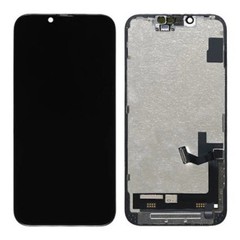
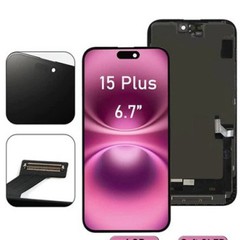
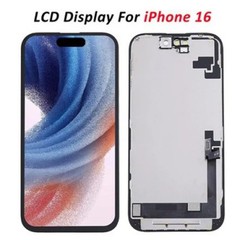
Introduction: Don't Write Off LCD Just Yet

Every year, the smartphone industry declares LCD dead. Every year, millions of users - and billions of dollars in the repair and wholesale market - prove that narrative wrong.
OLED has dominated headlines. But walk into any busy repair shop in New York, London, Berlin, or Shenzhen, and you'll notice something interesting: the technicians are still ordering LCD replacement screens by the crate. The aftermarket demand hasn't slowed. If anything, it's grown more sophisticated.
The truth is, LCD display phones are not a relic. They are a deliberate, practical choice - for budget-conscious consumers, for durability-focused buyers, for outdoor workers, and for the entire ecosystem of repair shops, wholesale distributors, and OEM screen suppliers that keeps the mobile industry running at scale.
In this guide, we break down the best LCD phones in 2026, why they still matter, how they compare to OLED in real-world usage, and - if you're in the mobile repair or distribution business - why LCD devices represent a significant and growing market opportunity.
Whether you're buying a phone, stocking a repair shop, or sourcing wholesale LCD screens for distribution, this guide was written for you.
Why LCD Phones Still Matter in 2026
It's tempting to assume that OLED has completely taken over. But the data tells a more nuanced story.
According to industry research from Counterpoint and IDC, LCD smartphones still account for a substantial share of global unit shipments, particularly in the sub-$300 price segment, which represents the majority of smartphone sales in emerging markets across Southeast Asia, Latin America, the Middle East, and Africa.
Here's what's driving sustained LCD demand in 2026:
- Price sensitivity remains dominant globally. The average smartphone selling price in markets like India, Indonesia, and Brazil is still well below $250. In these segments, LCD is not a compromise - it's a feature set that matches the price point.
- LCD lifespan advantages matter for real users. Unlike OLED panels, LCD screens don't suffer from organic pixel degradation or screen burn-in. For users who keep their devices for 3–5 years - a growing trend driven by economic pressures and sustainability awareness - LCD's longevity is a genuine advantage.
- Outdoor visibility is underrated. High-brightness LCD panels consistently outperform budget OLED screens in direct sunlight readability - a crucial factor for delivery drivers, field workers, construction site managers, and anyone who spends significant time outdoors.
- The repair economy. With right-to-repair legislation gaining momentum in the US, EU, and beyond, consumers are increasingly repairing rather than replacing their devices. LCD replacement screens are cheaper, more widely available, and technically simpler to install - all of which strengthens aftermarket demand considerably.

The best LCD screen phone isn't just a budget compromise. It's the right tool for a specific, very large segment of real-world users.
LCD vs OLED: Which Is Better for You?
This is one of the most Googled questions in the smartphone space - and the honest answer is "it depends." Let's cut through the marketing and look at real-world differences.

Display Quality
|
Feature |
LCD |
OLED |
|
Black levels |
Moderate (backlit) |
Deep (pixel-off black) |
|
Contrast ratio |
1,000:1 – 3,000:1 |
100,000:1+ |
|
Color accuracy |
Excellent (natural tones) |
Excellent (can over-saturate) |
|
Outdoor visibility |
Strong (consistent backlight) |
Variable by model |
|
PWM flicker |
None (DC dimming) |
Present at low brightness |
|
Burn-in risk |
None |
Present over time |
|
Blue light emission |
Lower at screen level |
Higher at low brightness |
Durability & Repairability
This is where LCD wins decisively for the repair and wholesale industry. OLED panels - especially flexible or curved variants - are:
- 2x to 4x more expensive to replace than equivalent LCD screens
- More fragile under pressure and impact
- Harder to source reliably in OEM-grade quality at scale
For repair shops, an LCD replacement job is typically faster, more profitable due to part margin, and easier to warranty. This is why experienced repair technicians often prefer working on LCD-screen devices. If you want a deeper breakdown of the repair economics involved, our guide on how LCD screen replacement works and what it costs walks through the process in practical detail.
Battery Efficiency
Modern LCD panels with local dimming and energy-efficient chipsets have significantly closed the battery gap with OLED. The 2026 generation of LCD smartphones from brands like Xiaomi and Motorola now pairs high-capacity batteries with optimized display drivers, resulting in multi-day battery life that rivals many OLED competitors.
When OLED Wins
To be fair: if you watch a lot of HDR video in dark environments, value the thinnest possible form factor, or want the absolute deepest blacks, OLED has genuine advantages. Flagship users chasing the premium display experience will find it with OLED.
But for the vast majority of everyday smartphone tasks - social media, messaging, navigation, phone calls, light gaming - the difference between a well-tuned LCD and a mid-range OLED is negligible in practice.
Key Features to Look for in the Best LCD Phone
Not all LCD panels are created equal. When evaluating an LCD display phone, these are the specifications that actually matter:
Refresh Rate
Always prioritize IPS LCD over TN. IPS panels offer:
Wider viewing angles (178° vs ~90° for TN)
Better color consistency across the display surface
Higher brightness ceilings
Nearly all quality LCD smartphones in 2026 use IPS panels. TN is essentially obsolete in consumer phones above the entry level.
01
Resolution
For a phone screen, Full HD+ (1080 × 2400 or similar) is the sweet spot. Anything below 720p will show visible pixelation on screens above 5.5 inches. HD+ (720p) is only acceptable for smaller or ultra-budget devices where cost constraints are the primary constraint.
02
Refresh Rate
The shift to high refresh rates has meaningfully improved LCD phones. Look for:
90Hz minimum for smooth everyday scrolling
120Hz for gaming and a premium feel
Variable refresh rate support for battery saving during static content
Xiaomi's Redmi lineup and certain Motorola models now offer 120Hz LCD panels at mid-range prices - a significant leap in usability compared to even three years ago.
03
Brightness
For outdoor use, aim for 500 nits or higher peak brightness. Premium LCD phones targeting outdoor workers sometimes push to 700–800 nits. This is actually a category where many budget OLED screens
04
Best LCD Phones in 2026
Here are the top LCD smartphones worth considering this year - evaluated on display quality, hardware performance, real-world usability, and repairability.

1.iPhone SE (2026 Edition)

2.Xiaomi Redmi Note 14

3.Motorola Moto G Power (2026)

4.Samsung Galaxy A16

5.Realme
Narzo 70
1.iPhone SE (2026 Edition)
Apple's commitment to the Retina HD LCD display in its SE line remains one of the most deliberate product decisions in the industry. The 4.7-inch IPS LCD panel on the SE offers pixel density, color calibration, and True Tone technology that genuinely competes with many OLED panels at the same price point.
Running on Apple's latest A-series chip, the iPhone SE 2026 delivers:
- Retina HD (1334 × 750) LCD display with True Tone and wide color
- Industry-leading processing power for its compact size
- Five-plus years of guaranteed iOS software support
- A genuinely pocketable form factor in an era of phone-size bloat
Who it's for: Users who want Apple's ecosystem, long-term software support, and a device that actually fits in a pocket - without flagship pricing.
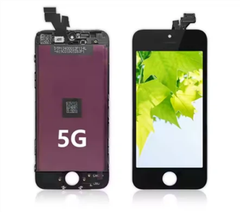
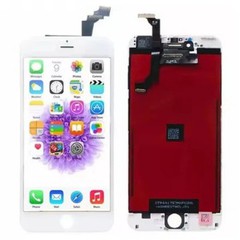
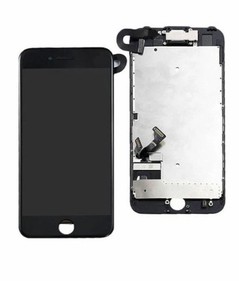
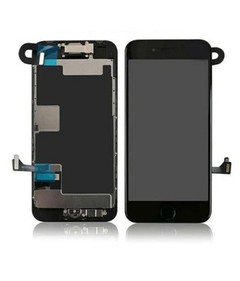
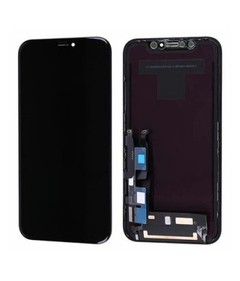
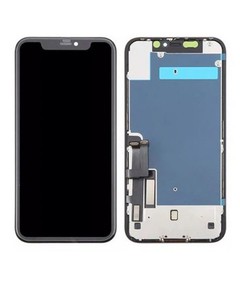
For repair shops: iPhone SE LCD replacement demand is consistently high and stable year-round. The screen module is a standard, high-volume part. You can browse our full range of iPhone LCD replacement screens - stocked across all SE generations with OEM-grade quality and bulk pricing available.
For repair shops, the demand for iPhone SE LCD replacements remains consistently stable and high throughout the year. We invite you to browse our complete range of iPhone LCD replacement screens; we offer OEM-grade quality products-at wholesale prices-for every generation of the iPhone SE.
2.Xiaomi Redmi Note 14
Xiaomi's Redmi Note series has long been the benchmark for value-focused LCD smartphones, and the 2026 iteration continues that tradition with meaningful hardware upgrades.
Key specs:
- 6.67-inch FHD+ IPS LCD, 120Hz
- Qualcomm or MediaTek mid-range chipset depending on market variant
- 5000mAh+ battery with 33W–67W fast charging
- Aggressive pricing for the hardware on offer
The 120Hz IPS panel on the Redmi Note 14 is genuinely impressive - scrolling is fluid, gaming is responsive, and color accuracy sits comfortably in a range suitable for casual photo editing and content creation.
Who it's for: Budget-conscious power users, gaming enthusiasts on a budget, and first-time smartphone buyers upgrading from aging devices.
3.Motorola Moto G Power (2026)
If battery life is your primary criterion, the Moto G Power occupies a category of its own. Motorola continues to prioritize what budget users actually need rather than chasing spec sheet numbers for marketing purposes.
Highlights:
- 6.5-inch FHD+ LCD display
- Massive 6000mAh+ battery
- Clean near-stock Android experience with minimal bloatware
- Military-grade durability certification
The outdoor brightness levels on the Moto G Power's display are above average for the price segment, making it an excellent option for field workers, outdoor enthusiasts, and anyone frustrated by a phone that dies before the workday ends.
Who it's for: Battery-first users, outdoor workers, rural users with limited charging access, and budget buyers who simply want a phone that lasts.
4.Samsung Galaxy A16
Samsung's Galaxy A series continues to walk the line between brand recognition and accessible pricing. The Galaxy A16 LCD version - distinct from the AMOLED variant available in some markets - offers Samsung's hardware quality and One UI software polish at a genuinely approachable price point.
Notable features:
- 6.6-inch FHD+ LCD panel, 90Hz
- Samsung Exynos chipset with reliable day-to-day performance
- Three years of Android OS updates guaranteed
- IP54 water and dust resistance
One UI's display optimization software does meaningful work here - color calibration, blue light filtering, and refresh rate management are all well-implemented and customizable.
Who it's for: Brand-conscious buyers who want the Samsung name without the Galaxy S pricing, and users transitioning from older Samsung devices who value familiarity.
For distributors stocking Samsung-compatible parts, our Samsung LCD replacement screen catalog covers the full Galaxy A series with stable inventory and competitive wholesale pricing.
5.Realme Narzo 70x
Realme has matured significantly as a brand, and the Narzo 70x represents its most confident mid-range LCD offering yet. The device punches above its weight in display quality, with a well-calibrated IPS panel that avoids the common budget pitfall of oversaturated, washed-out colors.
Key specs:
- 6.67-inch FHD+ IPS LCD, 120Hz
- MediaTek Dimensity chipset with gaming optimization
- 5000mAh battery with 33W fast charging
- Gaming-optimized display driver for reduced input latency
Who it's for: Younger users, gaming-focused buyers, and users across Asian and emerging markets where Realme has strong distribution and after-sales service networks.
Why Repair Shops Prefer LCD Devices
If you operate a mobile repair business, you likely know this intuitively. But it's worth articulating clearly, particularly for shop owners who are evaluating their parts sourcing strategy.
Lower Part Cost = Better Margins
An OEM-grade OLED replacement screen for a mid-range Samsung device typically costs $40–$80 at wholesale. An equivalent LCD replacement screen for a comparable device often runs $12–$30. At scale - if you're processing 20–30 screen repairs per week - that cost difference compounds into significant monthly margin improvement.
Higher Repair Success Rate
LCD replacement is a more forgiving process overall. The rigid panel structure means:
Less risk of panel cracking during screen removal
No risk of flex cable damage from improper bending (a common OLED failure mode)
Easier to train new technicians to a consistent quality standard
More predictable results across different skill levels in the shop
Faster Turnaround Per Job
An experienced technician can replace an LCD screen on a common device model in 10–15 minutes. OLED replacements - particularly on devices with adhesive-bonded screens or in-display fingerprint sensors - routinely take 30–45 minutes with additional complexity and failure risk.
For high-volume repair shops, throughput matters as much as margin. LCD devices let you process more jobs per day with the same staff.
Lower Warranty Callback Rate
Data from repair shop networks in the US and Europe consistently shows that LCD replacement warranties generate fewer callbacks than OLED replacements. The reasons include more consistent part quality across suppliers and less sensitivity to installation technique variation.
LCD Replacement Market Trends in 2026

The global mobile phone display replacement market is significant and growing. Here's what experienced distributors and suppliers are observing on the ground:
Installed base effect. The hundreds of millions of LCD phones sold between 2018 and 2024 are now entering their peak repair cycle. Screens crack, backlights degrade, touch layers fail - and the installed base for LCD devices globally is enormous.
Right-to-repair legislation. EU regulations effective in 2025 legally require manufacturers to make spare parts available for longer periods. Multiple US states have passed or are advancing similar legislation. This is structurally expanding demand channels for LCD replacement screens.
Sustainability trends. Environmental awareness is driving consumers toward repair over replacement. A 2024 iFixit survey found that 68% of respondents had repaired or seriously considered repairing their phone rather than upgrading. This trend directly increases replacement screen demand across all panel types - but LCD benefits most due to part accessibility and price.
Emerging market growth. Repair culture is deeply embedded in markets like India, Nigeria, Brazil, and the Philippines - all of which are also high-volume LCD phone markets. Wholesale LCD screen demand from these regions is growing at double-digit rates year-over-year.
OEM quality standards rising. Buyers are increasingly distinguishing between Grade A OEM replacement screens and lower-quality alternatives. This is creating premium pricing power for suppliers who can demonstrate consistent quality control and transparent sourcing.
How to Choose a Reliable LCD Screen Supplier
For repair shops, wholesalers, and distributors, supplier quality is the single biggest variable in your business outcome. Here's what to evaluate before committing to a supply relationship.
OEM vs Aftermarket Grade - Know the Difference
This is foundational. Understanding what you're actually buying matters for both your margins and your customer satisfaction rates. Our detailed breakdown of OEM vs aftermarket LCD screens covers the technical differences, quality indicators, and what to ask suppliers before ordering - worth reading before you place any significant bulk order.
In short:
OEM LCD screens use panel specifications matching the original factory output. Color accuracy, brightness, and touch sensitivity perform equivalently to the original device screen.
High-copy or aftermarket screens use substitute panels with compromised specs. They look similar at first glance but fail faster and generate customer complaints and warranty returns.
01
Stable Inventory and SKU Coverage
A reliable supplier should carry consistent stock across major brands and models - iPhone, Samsung, Xiaomi, Motorola, Oppo, Vivo. Stockouts at critical moments cost you jobs and customer trust.
Ask potential suppliers about:
Minimum order quantities (MOQ)
Lead times for restocking fast-moving SKUs
Whether they offer reserved inventory programs for regular buyers
02
Quality Control Process
Professional suppliers test every unit before shipping. The standard QC process for quality LCD replacement screens includes:
Display uniformity testing (no dead pixels, backlight bleed, or color inconsistency)
Touch sensitivity calibration across the full display surface
Brightness and contrast verification against spec
Flex cable and connector integrity inspection
Ask for their QC rejection rate. Reputable manufacturers typically run 2–5% rejection rates, which reflects how seriously they test outgoing inventory.
03
Global Shipping Capability
If you're purchasing internationally, shipping reliability matters as much as part quality. Look for suppliers with DHL, FedEx, or UPS account integration, experience with customs documentation for your import market, and a track record of consistent transit times with low damage rates.
04
OEM/ODM Support for Larger Buyers
If you're a larger distributor or building a branded product line, OEM and ODM support allows you to customize packaging, labeling, and product specifications. This is a meaningful differentiation for wholesale buyers who are building their own service brand identity.
05
Final Thoughts
LCD phones in 2026 are not a fallback option. They are a deliberate choice made by hundreds of millions of consumers, supported by a robust and growing aftermarket ecosystem that shows no signs of contracting.
For consumers, the best LCD phones this year - the iPhone SE, Xiaomi Redmi Note 14, Moto G Power, Samsung Galaxy A16, and Realme Narzo 70x - offer performance, durability, and value that the vast majority of users will find completely satisfying in daily life.
For repair shops and wholesalers, LCD devices represent the core of your bread-and-butter business. The installed base is enormous, replacement screens are accessible, and the margin profile is attractive - especially when you're working with a factory-direct supplier who can guarantee OEM-grade quality and stable inventory.
For distributors and bulk buyers, the LCD replacement screen market is in a structural growth phase driven by legislation, sustainability trends, and emerging market expansion. Building strong supplier relationships now positions you well for the demand curve ahead.
The question isn't whether LCD phones are worth caring about in 2026. The question is whether your business is positioned to capture the opportunity they represent.

Why Choose phone-lcd-parts.com as Your LCD Screen Supplier

At phone-lcd-parts.com, we're not a middleman. We are a factory-direct LCD manufacturer with over a decade of experience supplying repair shops, wholesalers, and distributors across more than 50 countries.
Here's what that means for your business in practice:
✅ Factory Direct Pricing - No distributor markup. You buy at manufacturer cost, which means better margins on every repair job or resale.
✅ OEM & ODM Support - Need custom packaging or private-label products? Our OEM and ODM programs are built for serious wholesale buyers who are scaling their own brand.
✅ Stable Inventory at Scale - We maintain deep stock across iPhone, Samsung, Xiaomi, Motorola, Oppo, and Vivo models. No stockouts on fast-moving SKUs when you need parts most.
✅ Rigorous Quality Control - Every LCD screen passes our 12-point QC inspection before shipping. We maintain a defect rate below 3% - and we back every shipment with warranty support.
✅ Global Shipping - We ship to North America, Europe, Southeast Asia, the Middle East, and beyond via DHL, FedEx, and UPS with full tracking and insurance.
✅ Responsive After-Sales Support - Real technical support from people who understand the repair industry. If there's a problem with a shipment, we resolve it - not redirect you.
We understand that reliability isn't just about price. It's about knowing your parts will arrive on time, perform as specified, and not send your customers back through the door with complaints.
Before placing any large-volume orders, it is highly advisable to read our detailed comparative analysis of OEM versus aftermarket LCD screens; this will help you understand the technical differences and quality metrics involved.
Ready to build a supply partnership that actually supports your growth?
Contact us today for bulk pricing, wholesale cooperation, and OEM sample requests.
FAQ: Best LCD Phones & LCD Replacement Screens
Are LCD phones still being made in 2026?
Yes. While OLED dominates the flagship segment, LCD smartphones remain actively produced across budget and mid-range categories by Apple, Xiaomi, Motorola, Samsung, and Realme, among others. The segment is very much alive.
Is LCD or OLED better for outdoor use?
For most users, LCD performs better outdoors. LCD panels use a consistent backlight that maintains brightness uniformly across the display, making them reliably readable in direct sunlight - something many budget OLED panels struggle with.
Do LCD phones get screen burn-in?
No. Screen burn-in is a characteristic of OLED technology, where organic pixels can degrade at different rates with prolonged static image display. LCD panels use a backlight-based system that is not susceptible to burn-in under normal use conditions.
Why do repair shops prefer LCD replacement screens?
LCD replacement screens are more affordable, easier to install, available in OEM grade from more suppliers, and generate fewer post-repair warranty callbacks than OLED replacements. For high-volume shops, they also allow faster technician throughput per shift.
What is the difference between OEM and aftermarket LCD screens?
OEM LCD screens use panels and components matching the original factory specification, delivering equivalent display quality to the original device. Aftermarket screens use substitute panels that may look similar initially but often have inferior brightness, touch sensitivity, and long-term durability.
What refresh rate should I look for in an LCD phone?
90Hz offers a noticeably smoother experience than 60Hz for everyday use. For gaming specifically, 120Hz is the target. Most quality mid-range LCD phones in 2026 offer at least 90Hz, with 120Hz increasingly common even at budget price points.
Which LCD phone has the best battery life in 2026?
The Motorola Moto G Power (2026) leads the category with a 6000mAh+ battery delivering genuine 2–3 day battery life under normal usage patterns.
Can I order wholesale LCD replacement screens directly from a manufacturer?
Yes - and doing so offers significant cost advantages over buying through distributors. Factory-direct suppliers like phone-lcd-parts.com offer bulk pricing, OEM support, and stable inventory that tier-2 distributors typically cannot match on consistency or pricing.
What is the best LCD phone for gaming in 2026?
The Xiaomi Redmi Note 14 (LCD variant) and Realme Narzo 70x are the strongest choices, both offering 120Hz IPS displays, capable mid-range chipsets, and large batteries that sustain extended gaming sessions without thermal throttling issues.
How do I verify a Grade A OEM LCD screen before placing a bulk order?
Request sample units for testing on actual devices before committing. Ask suppliers for QC inspection documentation, inquire about their panel source transparency, and check their published defect rate. Reputable manufacturers maintain defect rates under 5% and are willing to discuss their QC process openly.


