

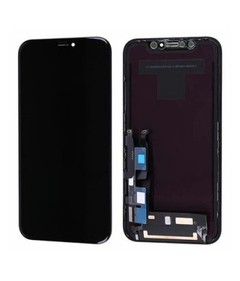
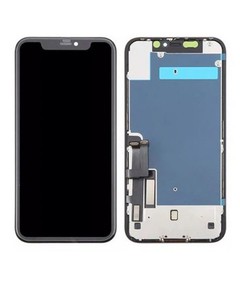
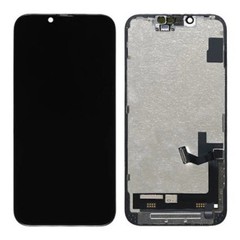

Hey there! As a supplier of iPhone XS Max LCD Screens, I often get asked about the backlight technology behind these nifty displays. So, I thought I'd take a moment to break it down for you in a way that's easy to understand.
Let's start with the basics. The backlight is what makes the LCD screen on your iPhone XS Max come alive. It provides the light that passes through the liquid crystal layer, allowing you to see all those vibrant colors and sharp images. Without a proper backlight, your screen would be nothing but a black rectangle.
The iPhone XS Max uses a type of backlight technology called Edge-lit LED (Light Emitting Diode). In an edge-lit LED system, the LEDs are placed along the edges of the screen. This design has several advantages. First off, it allows for a thinner and more lightweight display. Since the LEDs are not placed directly behind the entire screen, there's no need for a thick layer of backlight components, which helps keep the overall thickness of the device down.
Another benefit of edge-lit LED backlighting is energy efficiency. LEDs are known for using less power compared to other types of lighting, like cold cathode fluorescent lamps (CCFLs) that were used in older LCD displays. This means your iPhone XS Max can run for longer on a single charge, which is always a plus, right?
Now, let's talk about how the light from these edge-mounted LEDs is distributed evenly across the screen. To achieve this, the iPhone XS Max uses a light guide plate (LGP). The LGP is a thin, transparent sheet that sits behind the LCD panel. Its job is to take the light from the edge LEDs and spread it out uniformly across the entire screen. This is crucial because if the light wasn't evenly distributed, you'd end up with bright spots in some areas and dark spots in others, which would make for a pretty lousy viewing experience.
The LGP has tiny patterns etched into its surface. These patterns are designed to reflect and refract the light in such a way that it spreads out evenly. Think of it like a prism that splits and redirects light. The result is a screen that looks bright and consistent from edge to edge.
But that's not all. The iPhone XS Max also has a diffuser layer on top of the LGP. The diffuser helps to further scatter the light, making it even more uniform. It smooths out any remaining inconsistencies in the light distribution, ensuring that you get a clear and sharp image no matter where you're looking at the screen from.
Now, you might be wondering how this backlight technology compares to other iPhone models. Well, the iPhone X also uses edge-lit LED backlighting. You can check out more about the iPhone X LCD Screen on our website. The iPhone XS, on the other hand, has a similar backlight setup, and you can find details about the iPhone XS LCD Screen there too.
Of course, the iPhone XS Max takes things a step further. With its larger screen, Apple had to work even harder to ensure that the backlight provided consistent illumination across the entire display. The engineers at Apple have fine-tuned the design of the LGP and diffuser to make sure that the larger screen of the XS Max looks just as good as its smaller counterparts.
One of the challenges with larger screens is dealing with something called "hotspots." Hotspots are areas on the screen that appear brighter than the rest. They can be caused by the light from the edge LEDs being too concentrated in certain spots. To combat this, Apple has made improvements to the LGP design on the iPhone XS Max. The patterns on the LGP are more precisely engineered to prevent hotspots from forming, giving you a more uniform and enjoyable viewing experience.
In addition to the technical aspects, the backlight technology on the iPhone XS Max also plays a role in color accuracy. The LEDs used in the backlight are carefully selected to provide a wide color gamut. This means that the screen can display a broader range of colors, making your photos, videos, and games look more vivid and lifelike.
The color accuracy is further enhanced by the LCD panel itself. The liquid crystals in the panel can be precisely controlled to filter the light from the backlight, allowing for accurate color reproduction. This is why you can see such rich and vibrant colors on your iPhone XS Max, whether you're scrolling through your Instagram feed or watching a high-definition movie.
So, there you have it! That's a breakdown of the backlight technology behind the iPhone XS Max LCD screen. As a supplier, I'm always impressed by the engineering that goes into these displays. It's amazing how much thought and innovation goes into making sure that you get the best possible viewing experience on your phone.
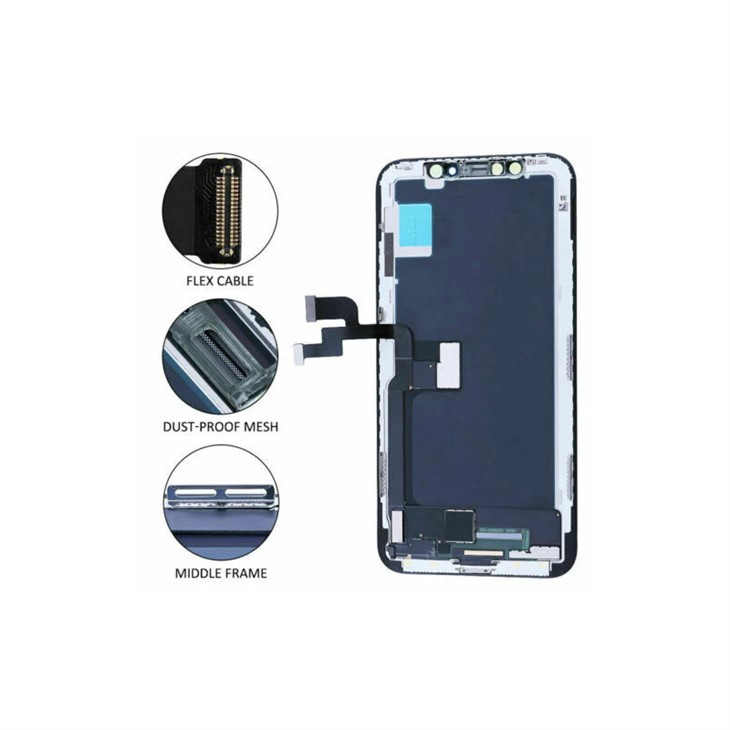
If you're in the market for a replacement iPhone XS Max LCD Screen, we've got you covered. You can find our high-quality iPhone XS Max LCD Screen on our website. Whether you're a repair shop looking to stock up or an individual who wants to fix their phone yourself, we offer reliable products at competitive prices.
We're always happy to answer any questions you might have about our products or the backlight technology. If you're interested in purchasing, feel free to reach out and start a conversation. We're here to help you get the best LCD screen for your needs.

References:
- Apple product documentation
- Industry research on LCD backlight technology


